
Yuhan LinMay 2, 2018
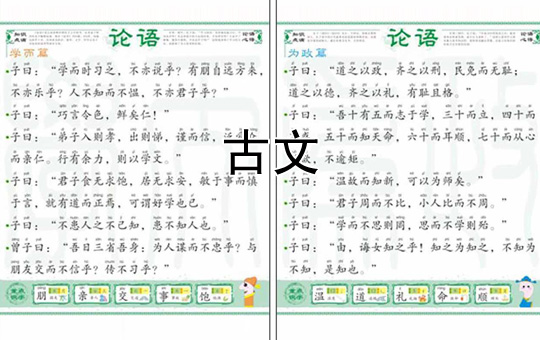
关于“有朋自远方来,不亦乐乎”的“乐”,应该是念“ lè," 用来表示快乐的意思。我刚刚发现这个发音在中文播客上有许多的讨论;因为这个字在对中文母语人士来说没有统一的读法,我仔细查了汉典:
http://www.zdic.net/z/15/xs/4E50.htm
以及询问一位国文老师后,确定是“ lè"。
我在之后的教学也会偏向“ lè"这个读音。
Yuhan LinMay 2, 2018
古文推荐:但愿人长久: A Song song (ChinesePod)https://chinesepod.com/lessons/%E4%BD%86%E6%84%BF%E4%BA%BA%E9%95%BF%E4%B9%85-a- song-song#dialogue- tab
1.但愿人长久-邓丽君(MV)https://www.youtube.com/watch?v=PwCE2XdrkD8
2.但愿人长久-王菲(MV)https://www.youtube.com/watch?v=_XEr9iilYcM
cowenparkseattleDecember 19, 2013
Typo in an Expansion sentence:
翻成译 should be 翻译成
The pinyin is fānyìchéng, and the recording matches the pinyin.
-----------------------------------------------
你把这些资料翻成译日文吧,给日本客户看。
nǐ bǎ zhèxiē zīliào fānyìchéng rìwén ba, gěi Rìběn kèhù kàn


Right-WingnutDecember 11, 2013
A question from the last two lines of the dialog. In the second last line is the question:
那你们都要学古文吗?
The answer is 学. Why isn't the answer 要? We know he is studying, isn't the question about whether he MUST study?
verazhang100December 12, 2013
I think 要 makes more sense in this case. But Chinese people will use 学 in this situation, too. So I will say both are correct.

podsterDecember 12, 2013
I wonder if this relates to the fact that 要 is such a slippery word. At least it seems so in English translation; could be "want to," could be "shall," etc. Since the context is that the subject matter is something that "must" be studied, perhaps the emphasis shifts to the studying rather than the desire or inevitability of studying, i.e., from 要 to 学. Just a random guess on my part; not sourced from anyone's grammar book ;-). My own inclination is the same as yours and Vera's; 要 somehow sounds more natural.

pcheneryNovember 23, 2013
There are some inconsistencies in the Expansion Sentences.
For example, the passive marker: 成 (bei) is not included in two of the example sentences. I believe that 把 (ba) is substituted.

johnnyzuqiuNovember 15, 2013
*Or is it better to say that at one point "le4" was the standard pronunciation for 乐...
johnnyzuqiuNovember 15, 2013
tingyun
I really like your passion for this topic.
Here are some of my thoughts after reading your comments:
1. If, as mentioned above, all children in China are taught the "yue4" pronunciation for this passage in school, then this lesson's dialogue is 100% accurate because that it is what you would hear in this situation in China.
2. I am far from a language expert, but I know that language is constantly changing. Seeing how people today who speak Chinese use different dialects, have different histories, live in different regions, and have different vocabulary and pronuciations, can we really say for certain that 乐 was pronounced a certain way by everyone who spoke the language 2000 years ago, and that this was constant and didn't change for a period of hundreds of years? Or is it better to say that at one point "yue4" was the standard pronunciation for 乐, but it may have evolved from or into something else. After all, the two pronuciations for 乐 (yue4 and le4) must have originated somewhere.
3. And if, as you mentioned, a post on an internet message board cannot be considered scholarly debate, does that then disqualify your above comments from the discussion?
Anyways, thanks for some very interesting posts on this topic.
podsterNovember 15, 2013
For me, I appreciate Tingyun's input. I don't have any separate basis for forming an opinion other than what has been written here, but regarding your points:
1. If "everyone" is given information that is incorrect, that does not then make it beyond reproach. I doubt I will ever end up needing to know this, but if I do I don't want to sound ignorant, even if I could probably get away with it. So (giving Tingyun the benefit of the doubt) a correction is most welcome.
2. The fact that languages are constantly changing would be more relevant if we were discussing the meaning or pronunciation of a word in modern Chinese. Here we are talking about classical. I have neither a time travel machine nor the educational background to answer your question, but if multiple respected dictionaries are in agreement on a subject I would find that fairly compelling.
3. Yes, you are right. If you are publishing a paper you should not cite Tingyun's posts here as scholarly research. Just as you would not footnote "random dudes on the Internet" as your source. His whole point is that "scholarly debate" implies debate among those who are recognized experts in a field, not debate among those who have an opinion about something because they learned something in grade school. And by extension, you would be citing published journal articles, not Chinese Pod posts. But I assume you meant this last point as joke, so no need to point that out to me -- I do have a sense of irony at times at least.

tingyunNovember 15, 2013
Hi johny,
Interesting post - I'll reply point by point.
1) Well, truthfully it was far from all middle schools to begin with. My girlfriend (who went to a top middle school) learned it correctly. And the post cpod links to has different middle school teachers noting that their schools (西安铁一中 and 西安高新一中) have recently changed the way they teach to le4 (the teachers misinterpret this as a change in the standard rather than a correction of an error, but such is of no import). So this will likely soon be confined to a portion of a few generations (the portion unfortunate enough to have teachers with a poor classical education).
Second, the error is by no means universal as a practical matter. In particular, the vast majority of those who received a good classical education would be unlikely to make this error (the post in cpod's link who states that pronouncing it as yue4 will cause people to laugh at you is not completely wrong, though they are unlikely to do so outloud). Basically, the question is whether you want to sound well-educated or not - and if you really want to quote from ancient Chinese, best not to do so like an uneducated country bumpkin. ;)
2) naturally - the Chinese of 2,000 years ago was completely different in sound! There are various reconstructions of what ancient Chinese may have sounded like, but we don't really know.
What we mean when we talk about correct 古文 pronunciations is actually something else - essentially, you could think of it as making sure that things that sounded the same 2,000 years ago still sound the same now. This is because of the way ancient Chinese left us pronunciation guides - they didn't have pinyin, instead they used a system called 反切. Best to explain with an example - if an ancient Chinese commentator wanted to tell you how to pronounce 东, they would write "德红切". What we do is look at the two characters before the 切, and take the consonant of the first one and the vowel and tone of the second. So the first is de2, we take the d, the second is hong2, we take the ong2" and we have 东 dong2 - which of course is slightly incorrect in the tone - we'd have to adjust for the older system of tones. So you see how this system has preserved the fact of things that once sounded close continuing to sound close, as it defines every sound relative to others. But even when sounds drifted a bit, the most significant preservation lies in the idea that when there were multiple pronunciations with different meanings, this is preserved too. This is all a bit of a simplification, but gives the general idea.
Ok, so how does this work in the case of 乐? In ancient times, there were two pronunciations, which whatever they actually sounded like, were ancestors to the modern sounds le4 and yue4. Le4 was used for happiness, yue4 for music. And actually, the exact same division operates in modern Chinese - these same two meanings divided along the same lines. Modern Chinese say le4 to mean happiness, yue4 to mean music.
Which is what makes this particular error so absurd - because it consists of modern people thinking that things were different in ancient times (because they are confusing 乐 with 说, which had a yue4 pronunciation ancient times but not in modern), and then purposefully abandoning their modern speech habits and reversing things to try to imitate an ancient accent - when in fact they would have been right to simply use their normal pronunciation. It is the perfect storm of silliness. ;)
Note that according to most ancient dictionaries 乐 has a third version, a yao4 pronunciation that has disappeared from the modern language but should be used in reading some ancient expessions. Honestly, if someone neglected to use that I would have NO problem - I'm not sure there is that much need to go out of the way to preserve dead pronounciations. But the case of pronouncing it as yue4 here is just too absurd.
3) Certainly! There is nothing about the discussion here, or anything I have said, that could be cited as evidence of what scholars think on any issue. Rather, one should go to the sources I have cited (in particular, the dictionaries). Note that "scholarly debate" i was using to rebut cpod's original assertion that 学者 disagree on the pronunciation (which is patently false), I did not mean "scholarly debate" in the sense of intelligent discourse, which happens as well on the internet as elsewhere. I of course do not mean one cannot learn anything from discussion on the internet - rather, the point is you cannot (as cpod did) say that there is not an academic consensus, or that different scholars (学者) say different things, on the basis of internet posts of random people.
Though this point is largely mute, as the internet discussion they link to is actually overwhelmingly against their own point (as i described above), and paints this yue4 pronunciation as the relic of confused middle school teachers. (I should note - I have the utmost respect for school teachers dedication - but they are most certainly not experts on classical chinese)
tingyunNovember 15, 2013
Hi Podster,
Simultaneous posts - I think you made all the points better than I, and much more succinctly (I'm afraid I couldn't resist a chance to describe the old 反切 system of marking pronunciation).
podsterNovember 15, 2013
Tingyun,
No worries; I learned something new today. (反切) As an armchair linguist I always find these kinds of things interesting. Btw, I think you meant to say "Though this point is largely moot . . ." in your last paragraph. I'm too lazy to actually go and read the posts cited, so thanks for summarizing. Will take your word on that.
tingyunNovember 15, 2013
Haha, my moot court teacher from law school would be ashamed of me. ;). For someone who like to be careful with his Chinese I make all sorts of random careless errors in english - just too lazy to proofread...
johnnyzuqiuNovember 15, 2013
Hi tingyun and podster
Thanks for your responses. Very interesting. You almost buried me with the avalanche of words, but it was worth the read.
I can see why you would be frustrated tingyun, but I think the blame is misplaced. Shouldn't we blame the education system for teaching the alleged "wrong" pronunciation? I think Cpod did well here: they gave us a situation, gave us the vocabulary and pronunciation we are most likely to encounter in that situation, and you were able to go deeper into the topic in the comments section, which gave us a basic idea of the controversy surrounding this kind of issue (and as of yet, no rogue linguists have been called in to dispute your wild claims). The system works! I feel like I'm getting my money's worth here.
Also, maybe in Part 2 of this series, we find out that the girl failed her final exam because she was pronouncing the word incorrectly the whole time...stay tuned!
tingyunNovember 15, 2013
Hi Johny,
No blame at all for them initially getting it wrong - please see my first post, where I explain the origin of the mistake and ask them to fix it.
Some blame for the first reply (where cpod said "有的学者认为读“lè”,有的认为读“yuè”") - making up a nonexistent scholarly debate to try to support your position goes against the trust cpod users place in the employees here. I assume this was an honest mistake (ie, they simply assumed their position had to be viable), but it is recklessly arrogant to assume your opinions are always going to be viable without first checking reputable sources.
Some blame for the second response too - it was very kindly written, and I know Vera meant all the best, but that collection of internet posts did little but alert one to the fact that yue4 was in error (except in the minds of middle school teachers), and it was a clear distortion to imply it showed there was scholarly debate on both sides. More importantly, at that point (if not much sooner), cpod should have simply realized it is time to consult the authoritative reference works, not search around internet message boards or write replies that attempt to justify their position with quotes for the obvious proposition that 'meaning is more important than pronunciation'.
A quick review of the classical dictionaries (or even reputable modern ones) should be enough to convince them of their mistake. Failing to admit this and correct it for the benefit of the students would seem to only arise from 1 of 2 causes - either they still believe they are correct, against the weight of all expert opinion and the simple logic of the situation, or they want to avoid admitting a mistake at any cost. Either is worthy of some blame, and I am sure my attitude on this shows clearly.
Naturally, though, I remain really impressed with cpod and its excellent staff - this is where I spent my first years of chinese language learning, and I have all sorts of nice things I could say about each and every one of them. But there is no harm in admitting a mistake - classical chinese is naturally a bit far outside the expertise of modern language teachers, and everyone makes mistakes. I'm hoping they simply fix this, and I will then have nothing but praise for them and all the great work done at cpod.

RJNovember 16, 2013
Always enjoy your posts Tingyun, but as Mike pointed out, truth is not at the top of the food chain in China. If you are hoping they fix this don't refrain from breathing in the interim. My prediction is they will now go completely mute (correct spelling in this case) on the issue, and nothing will change. Sometimes its frustrating to be right in China. Hell, sometimes its frustrating to be right anywhere. The way I see it their concession to you that there was some "debate" on this issue was their way of saying you were right without saying they were wrong. They no doubt are scratching their heads wondering why that was not enough for you. No wonder they call us laowai. We just dont get it. :-)
johnnyzuqiuNovember 16, 2013
Do you guys ever have any fun learning this language?...because it's kinda hard to tell.
Also, my fake name is spelled johnny, not johny ;)
Right-WingnutNovember 17, 2013
I'm just wondering - based on what different people have written here, what would cause someone else to think that you were having more fun learning the language than them? Or are we meant to interpret the constant digs at people as you having fun?
podsterNovember 17, 2013
RJ,
Yeah, lots of "culture" happening here for sure. I feel a rant coming on, but will stifle it for now. Let's see what happens next. At least the academic team is responsive.
tingyunNovember 17, 2013
I just hope we don't have to go another round with arguments like "a professor says understanding meaning is more important than pronunciation" or "we were taught this way, some people say it this way, we reflect the real Chinese language spoken on the streets" - all are just silly in the context of quote from an ancient language taught by a language learning website with a responsibility to get things right, and ensure that if their students decide to quote from a classical text, they do so without sounding uneducated and do not, to borrow another classical expression, 画虎不成反类狗 (try to paint a tiger and end up with it looking like a dog - ie imitating in a manner that makes it neither this nor that, giving people cause to laugh at you)
I rather hope they fix this - they just have to check a few dictionaries, and then reflect for a moment on how the similerity between 不亦说乎 (Where 说 is pronounced yue4 and stands in for 悦) and 不亦乐乎 got some middle school teachers confused in the first place, and then everything should make perfect sense to them.
podsterNovember 17, 2013
Well, to quote Jenny (telling users who didn't like the new recurring billing on their credit card system to get over it) who cited another saying: 习惯成自然.
Don't know if that's classical. Hope I look smart using it, and not 画虎不成反类狗. 哈哈。
I totally agree that the CPod academic team is great, and unsurpassed at what they do. If you are a case of "the student surpasses the teacher" in this instance they should be proud of you. 希望你不感觉你是教猪吹笛子。
tingyunNovember 17, 2013
Yep, it's been something like 3-4 years since I've actually studied a cpod lesson, but I'll always have fond memories of learning here. I actually exhausted the archives of advanced and media lessons (easier to do back then, naturally) before I moved on - it was a great deal of fun.
Classical Chinese is not their specialty anyway, and further, to quote another classical expression: 人非圣贤,孰能无过!过而能改,善莫大焉。("people are not sages, who can be without a mistake? Make a mistake and then correct it, there is no higher virtue!"). I'm just hoping they implement the last part of that expression. ;)

mikeinewshotNovember 18, 2013
Ah - new recurring billing - I didn't know others had complained. I was caught by that recently and was pretty annoyed at it too.
Where does Jenny 'deal with this' please?
podsterNovember 18, 2013
Read it and weep: https://chinesepod.com/community/conversations/post/13220
tingyunNovember 18, 2013
Hmm no cpod reply yet, does that mean RJ is right, and "mute" is the only response forthcoming?
Or, in a more hopeful note, perhaps time is being taken to check the dictionaries and do some careful research to confirm the error? ;)

podsterMarch 16, 2014
Tingyun, Looks like CPod decided to let this issue quietly die of neglect, (and declined to publish a correction) but in case anybody else cares about classical Chinese, here are a couple of resources I became aware of today, courtesy of the American Mandarin Society:
Chinese Text Project http://ctext.org/
Classical Chinese Dictionary http://wyw.hwxnet.com/
tingyunMarch 19, 2014
Hi Podster,
Looks like. Though I was probably having a little too much fun bullying them - most people have trouble acknowledging the limits of their competency, and while there is no logical reason to expect that teachers of Chinese as a foreign language would have a good education in literary Chinese, I can understand why they would be embarrassed. I could have done a little less antagonistic poking during my posts perhaps, I do have a rather aggressive style of debate.
To add to your recommendations, I'd recommend purchase of Rouzer's book, 'a new practical primer of literary chinese' from amazon, it forms the content of the first year classical chinese course here at Harvard, and will get people through the basics with english explanations. After that, if your modern Chinese becomes sufficient, then 王力's 古代汉语 is a great choice. And if one becomes ready for chinese to chinese dictionaries, either the dictionary at http://www.zdic.net or the 汉语大辞典 available through pleco will serve you well.
podsterMarch 19, 2014
Tingyun, thanks for the additional resources, and as I am soon to join you as a "CPod alumnus" let me agree with you that CPod has been a great resource. Vera does a great job presenting interesting topics and responding to user questions, as do the counselors who also make contributions at times. Best wishes to you and all with your studies.

oakleysteveNovember 15, 2013
This lesson has inspired me to go back and listen to all those old 'Poems with Pete' lessons. I'd forgotten how good they were as a way to understand classical Chinese poetry.
bohan2007November 14, 2013
great dialog
tingyunNovember 14, 2013
Now I wish I could hear the dialogue...I'm rather curious how Cpod treats the subject!
If anyone is interested in learning classical Chinese, Rouzer's “A New Practical Primer of Literary Chinese" is very accessible for beginners, does not really assume any knowledge of modern Chinese, and yet still maintains a very high level of quality (25 dollars or so on amazon). It is the text used for the first year ancient Chinese course here at Harvard, and I'd recommend it to anyone interested in exploring the subject and gaining a basic knowledge.
tingyunNovember 14, 2013
Thanks Bohan!
Critique to Cpod - you've managed to make a very basic error in the showcase example of ancient chinese in the dialogue, repeated twice in the opening.
In 有朋自远方来,不亦乐乎?, the character 乐 is pronounced le4, NOT yue4. This is very common error among Chinese speakers with a poor classical education - I think they vaguely remember from high school that 说 is, in ancient chinese, often pronounced yue4 when meaning happiness (because it is standing in for the modern character 悦), but then associate this with the character 乐 (since it naturally has this pronunciation in its other meaning of music). This association seems driven by the companion sentence from the same text - "学而时习之, 不亦说乎" where we have 不亦说乎 instead of 不亦乐乎 yet in the same meaning and functional role - however, they should not be conflated, 不亦乐乎 is le4, 不亦说乎 is yue4.
In meaning happiness, 乐 is ALWAYS le4, exactly the same whether ancient Chinese or modern. I'd suggest Cpod correct the dialogue - best not to have Cpod learners memorizing an error as their first exposure to classical Chinese.
The truth is the lesson probably gives a much more favorable impression of the prevailing state of knowledge of 古文 among modern chinese speakers than is warranted. Except for those who choose to specifically study Chinese literature or history in college, or those who engage in extensive independent reading as a hobby, most educated people of recent times are essentially illiterate when it comes to classical texts (though they seem largely inexplicably unaware of this, as the already limited knowledge from high school fades day by day). Trotting out the occasional ancient expression (and generally using it incorrectly) represents the prevailing state of classical knowledge for the average speaker.
And, sadly, also represents the prevailing state of knowledge for scriptwriters of tv shows set in ancient China (for example, the very famous, successful, and 'uses at least one chengyu or classical expression incorrectly every scene' writer of Qing palace dramas, 于正)

lujiaojieNovember 14, 2013
“乐”的读音有争议,并没有统一的读法。
有的学者认为读“lè”,有的认为读“yuè”(1”喜悦,2 “奏(音)乐”。)
我们只是采用了“yuè”这种观点。
tingyunNovember 14, 2013
That would be news to me. Please direct me to any scholar who argues it should be read yue4. There is no dispute on this issue on an academic level (only dispute among modern speakers who are confused as to the proper pronunciation).
I just ran a search of Pleco's library of C-C dictionaries - 汉语大词典, the Taiwan ministry of education dictionary, 现代汉语规范词典, a prominent Chengyu dictionary, the Longman advanced chinese dictionary, 古汉语词典, all agree that it is le4. 汉语大词典 is the most authoritative dictionary, but ANY reputable dictionary has the exact same answer (there might be some poorly implemented online dictionary that has such a mistake, but even there it would only be because some random person edited it following their own mistaken understanding)
In fact, the error in reading it yue4 won the title of the most common language error of 2008 - quote from 咬文嚼字:
"“有朋自远方来,不亦乐乎”,北京奥运会开幕式用《论语》中的这句话欢迎全球来宾。然而,电视节目主持人却将lè误读成了yuè。2008年,这是国人在引用名言时经常读错的字。 "
When you make a mistake as clear as this, it is best to admit it, not make up a mythical scholarly debate. ;)
anli1520November 14, 2013
So glad to see you back. Your posts are classic. Hope the Japanese immersion
went well. For beginners of Chinese history, the Harvard course, which is
presently being taught on the web, is not bad place to start. The price
is right.
tingyunNovember 14, 2013
Bohan,
Though sadly the result of your help is I'm once again ranting on and on...;)
I do hope Cpod fixes this - it would be a shame to teach users an error in order to save face and avoid admitting a mistake, especially in many users first exposure to 古文.
Though my girlfriend (native chinese) told me the favorite tactic of grade-school teachers in china confronted with an error is to assert that there is undefined "scholarly debate", so this is interesting cultural exposure if nothing else!
(And seriously, we scholars of ancient China debate much more interesting things than this...well, at least things we perceive as more interesting, and naturally things where there is actually room for reasonable disagreement.) ;)
Anli1520,
Glad to see you too!
Really, they made a course available online? I love this open direction education is going...
verazhang100November 15, 2013
我们的用户中文水平都很高啊!真让我们觉得高兴!有讨论才会有进步嘛。
这个问题我们在做课的时候是考虑过的。这个字的读音产生争议是在2008年,就是你提到的《咬文嚼字》提出的观点。认为“le4"是正确的读音。但是这个字到底有没有争议呢?可以参考一下http://ssjdd.snnu.edu.cn/thread.aspx?id=160
从这篇文章可以看到,中学老师、大学老师、教授们对此都有不同的看法。那为什么我们会采用”yue4"这个读音呢?主要是根据我们所受的教育是“yue4". 当然,我们没有办法说”yue4“是对的或者”le4“是对的。我们只是用了其中的一个读音而已。
我们真的很高兴能有那么好的问题。也希望大家能多提这样的问题。这样才能”教学相长“。
It's nice that we can have such a high-level debat here. We always learnt from question.
Actually we discussed this when we were producing this lesson. When we were in school, ‘yue4' is the only pronouncation. The dispute comes from 《咬文嚼字》in 2008. It brought 'le4’ should be the right pronouncation. Please take a look at this as reference: http://ssjdd.snnu.edu.cn/thread.aspx?id=160 You can tell middle school teachers, college teachers or professors all have different views on it.
For me, I agree Professor Chen xiaoming's view 在古汉语中,还有许多没有定性的东西。不管读lè还是yuè,只要能把这个意思理解清楚就行了,“仁者见仁,智者见智”。
Again, we are glad that we can discussed this on ChinesePod. And we hope more and more users bring your questions to us. We believe that helps both users and us.
tingyunNovember 15, 2013
I appreciate the time you spent putting together a response - but there seems to be a deep epistemological confusion here.
A post on an internet message board describing the opinions of random middle school and high school teachers, and finding that they too are under this misunderstanding, is not scholarly debate. Random commentators on the internet saying "but that's what we were taught in school" is also not scholarly debate. And the observation that there are many open debates on issues of pronunciation within 古文 does not mean there is an open debate on this particular issue.
There is NO reputable dictionary that lists this as the pronunciation. Because there is NO reasonable argument on this issue. There is just a large group of confused grade-school teachers, and the confused students that they taught (none of whom count as "学者" from cpods original reply) working together to make this one of the most common mistakes.
I have listed 6 respected published dictinaries that show the pronunciation as le4, including the most authoritative, well respected one, 汉语大词典- find me one respected title (that isn't an online, editable format), just one, that shows yue4. Random posts on the internet listing the opinions of confused grade-school teachers are not evidence of anything, except that this is a overwhelmingly COMMON mistake, which I noted in my initial post.
As for the final comment, of course the meaning is the most important thing, pronunciation is secondary. But given Cpod's role, they have a responsibility to get things right on all accounts when they create a lesson like this, and not perpetuate a common mistake under the cover that a bunch of random dudes on the internet are just as confused.
mikeinewshotNovember 15, 2013
You are trying to make Chinesepod lose face! You forget that nothing else matters (ie not losing face)
tingyunNovember 15, 2013
Hi Mike,
Yah, normally I'd be a little more gentle, but Cpod's response on this issue is hard to take seriously.
I mean, if you are going to use random internet discussions as your evidence, at least make sure it supports your case. To summarize what they link to as "middle school teachers, college teachers or professors all have different views on it" is, well, hilarious, and makes me wonder whether they even read their own link.
Their link actually trots out several middle school teachers, all of whom express surprise at the le4 pronounciation, or express the belief that this is a recent change.
Then, the one college professor who actually gives an opinion on the correct pronunciation states, not once, but twice, that yue4 was NEVER correct in this context, that this was always a mistake - "全错了".
"“有朋自远方来,不亦乐乎?”中的“乐”应该读lè。“乐”在这里从来就没有通假过“悦”,它要表达的就是快乐的意思。根据对古汉语的研究,“乐”一旦读成yuè,一般就指乐器,从来没有快乐的意思,“以前关于‘乐’读yuè的教育全错了”。"
Then the post ends with a statement that asserts meaning is more important than pronunciation (undoubtedly true), then a bunch of random posts later where people talk about how pronouncing 不亦乐乎 as yue4 will "贻人笑柄" ("give people reason to laugh at you"), and then a bunch of posts exploring the pronunciation of 乐 in other passages and ancient texts.
So Cpod's statement that there is disagreement among middle school teachers and college professors is true - in the sense that college professors say the middle school teachers are wrong, and were always wrong. ;)
Not that I think polling random college professors is some kind of accurate way to address this problem - random 'college professor' is really not that much better than random 'middle school teacher' on this issue. 古文 is a specialized research topic, of which there are experts - like, for example, the hundreds of experts who participated in the compilation of 汉语大词典 (there is a reason we scholars of ancient China rely on it as the most authoritative and respected dictionary of ancient Chinese language), or the smaller, but still qualified editorial teams of the other ancient Chinese and even respected modern dictionaries. And they all agree that it is NOT yue4, but rather le4 in this expression.
Though what is most surprising is the opinion expressed by Cpod that this issue started with the《咬文嚼字》article I cited (declaring yue4 the most common language mistake of 2008), and that "When we were in school, ‘yue4' is the only pronouncation". 汉语大词典 was compiled and published from 1975-1993, and I think the other dictionaries I cite were all published before 2008. Just because you were taught something in middle-school, does not mean it was EVER correct, and the article that brought the error to public attention did NOT create some kind of a new pronunciation competing with the old standard. No, your middle school teacher was simply wrong and mixing up two similar expressions. Sigh - Too bad Confucius did not foresee the inability middle school teachers to remember the difference between学而时习之, 不亦说乎 and 有朋自远方来,不亦乐乎...
I'm still hoping Cpod just admits the mistake and corrects this - the first line of 古文 that Cpod users learn should not contain such a glaring error. I understand the desire to save face, but sometimes there are more important considerations in play - like teaching paying, dedicated customers correctly.
doodle16November 13, 2013
I absolutely love these historical/classics lessons! I eat them up. Can we expect more of these kinds of lessons? I know besides this classical Chinese lesson there is also a romance of the three kingdoms lesson. I wouldn't mind seeing a 红楼梦 Lesson in the near future :P

rosamagliolaNovember 14, 2013
Hi 曌,I found your Chinese name fascinating. Just want to compliment you for your courage to adopt such a personal ID. Tang empress Wu Ze Tien is considered the pioneer women liber, way ahead of hers and our time. She made up such a word, definitely has no issue in her self-esteem, self-sustaining...
By the way, I, a chinese, married to a Canadian living in the States. He is super nice guy.
The world has become smaller.
From 武則天 to 髙宗玉 is only an email away. Cheers, 為世界和平乾杯。
tingyunNovember 14, 2013
Describing Wu Zetian as a 'pioneer in women's liberation' is a reflection of modern people's tendency to read into history modern values and concepts - not any kind of an accurate description of history. It's like when the Song general Yue Fei is taught as a hero of the Han ethnicity (when there was no concept of Han as an ethnic group at the time), or Ghenghis Khan is described as a Chinese hero who unified the country (he would have been quite surprised by such a description). Wu Zetian was a power hungry, bloodthirsty tyrant, much like most emperors who seized control rather than inheriting it - not a feminist.
To doodle16 - there is already a 红楼梦 lesson in the advanced archives (I still remember listening to it many years ago - at the time, it was my first exposure). Also a lesson on 西游记, titled monkey king or some such...might be a 水浒传 one too, not sure.
But if you are interested in historical lessons, I'd highly recommend audiobooks of the series 上下五千年 - about 350 excellent lessons, each 5 or so minutes long, on Chinese history, complete with transcripts. I know Mark has also started using it, so I am likely not the only person who would recommend it. A second ago I went to look for a purchasing link on chinese amazon - but it seems someone decided to make it into a free app for ios. I'm going to download and ensure this is the same version. At any rate, I encourage you to search it out as a source.
dinafaeh159November 16, 2013
i would like a similar lesson which gives the proceding of that poem 有朋自远方来,不亦 . . . I would like to understand that whole poem! Greetings from Switzerland
podsterNovember 16, 2013
If you are interested in Chinese poetry you may enjoy the "Poems with Pete" lessons on ChinesePod.
https://chinesepod.com/library/channels/list/Poems+with+Pete
tingyunNovember 16, 2013
It's from 论语 lun2yu3. I'll make a quick annotation of difficult characters and translation for you, to hold you off until you get your full lesson ;)
Original:"子曰:学而时习之,不亦说乎?有朋自远方来,不亦乐乎?人不知而不愠,不亦君子乎?"
Annotated: 子(indicates Confucius)曰(yue1, said, says):学而时(means 'frequently' here)习之(means 那,这, here refers to that which you studied)),不亦说(here read yue4, standing in for the modern 悦)乎?有朋自远方来,不亦乐(le4 ;) )乎?人不知而不愠(yun4, angry),不亦君子乎?
Translation : confucius said: Studying and then frequently practicing/reviewing, is it not a very joyful thing? Having people who share your values come from distant places to visit, is it not a very happy thing? When people do not understand you and yet you do not get angry, is this not a person with good morals/upright behavior?
Note that the final 知 here is a bit ambiguous - you might be able to make a case for interpreting it as standing in for 智 instead of representing the modern 知 (similar to the 说 stands in for 悦 - in ancient times alot of the chaacters we love had yet to be born in or come into their own). My own research is not in this field (classical Chinese philosophy), and I lack the expertise to decide whether that would be a viable interpretation or not, so I kept it as 知 in the translation.

TalNovember 17, 2013
"Wu Zetian was a power hungry, bloodthirsty tyrant...".
Yeah, but dude, in China they are the heroes. Every schoolchild and student here believes that Genghis Khan was a great Chinese hero. I always thought that one legend that would always be retold in any culture would be the story of Popeye. Maybe we're all just too western in this thing.
doodle16November 17, 2013
Thank you! When I actually adopted that name as my 姓 I had many a strange looks. I picked it because it sounds like my last name and because I have a great passion for history and admiration for 武则天. Maybe someone for me to live up to? ;)
It's actually kinda strange though when you take into account that I am a guy.
@tingyun: Thanks for the information! and please allow me to come to the defence of my name sake. She may not be a modern feminist but I would go far as to say she is a particularly bloodthirsty tyrant. There have been many grizzly tails written about her but not all of them necessarily have a basis in fact (such as the story of her killing her daughter which has no true evidence of happening). Past rulers are often written out to be far more tyrannical than they really were to the benefit of their successor (such as horrific portrayal of Caligula and Hannibal).
I would like to go as far as to say that when it came to her rule, she was neither particularly forward thinking nor particularly brutal. She was just like all the other emperors. In the end she is the same, and that should say something about women when it comes to leadership.
tingyunNovember 17, 2013
Hi Tal,
Yep - My point is just that if you want to make a hero out of a brilliant conqueror, don't try to dress it up as something egalitarian. ;)
Hi Doodle,
We don't seem to disagree on anything - I did say "much like most emperors who seized control rather than inheriting it" (that is perhaps the only possible area of disagreement, I think you can't compare her to ones that inherited within a stable succession). I didn't mean any of those random stories - to me, random incidents of violence against isolated individuals will never stand as significant in the contexts we are talking about.
And agreed on her very, very impressive ability.
doodle16November 18, 2013
Oh right, I suppose where we disagree is on is if the emperors were tyrants to begin with. Being from a monarchy myself, I would say I'm certainly biased to one side.
However if you have any specific sources or recommended reading about Wuzetian and her reign, I'd love to learn more about my name sake.
dinafaeh159November 18, 2013
Ting Yun, thank you very much for taking the trouble and giving explanation. Whish you a nice day! D.
tingyunNovember 18, 2013
Hi Doodle,
Actually, I should make this clear - I only used language like 'tyrant' and 'bloodthirsty', which is loaded with modern moral sensibilities and judgments, to satirize the silliness of looking at these sorts of historical figures and assigning positive modern moral judgments like feminist and woman's liberation. My point was that if you look at any of these conquering emperors from a modern moral perspective, you are going to cringe, not say "you go girl!" - but that does not mean I think any such moralizing about the past is useful (I do not).
As for your question about interesting reading, since we broached the subject of moral judgments, have you read the concluding moral evaluations of wu zetian contained in the Tang histories? Always interesting to see how the ancients dealt with such historical judgements, and what implicit moral standards they chose to use, as well as where they chose to praise and where they chose to condemn.
《旧唐书》:史臣曰:治乱,时也,存亡,势也。使桀、纣在上,虽十尧不能治;使尧、舜在上,虽十桀不能乱;使懦夫女子乘时得势,亦足坐制群生之命,肆行不义之威。观夫武氏称制之年,英才接轸,靡不痛心于家索,扼腕于朝危,竟不能报先帝之恩,卫吾君之子。俄至无辜被陷,引颈就诛,天地为笼,去将安所?悲夫!
昔掩鼻之谗,古称其毒;人彘之酷,世以为冤。武后夺嫡之谋也,振喉绝襁褓之儿,菹醢碎椒涂之骨,其不道也甚矣,亦奸人妒妇之恒态也。然犹泛延谠议,时礼正人。初虽牝鸡司晨,终能复子明辟,飞语辩元忠之罪,善言慰仁杰之心,尊时宪而抑幸臣,听忠言而诛酷吏。有旨哉,有旨哉!
赞曰:龙漦易貌,丙殿昌储。胡为穹昊,生此夔魖?夺攘神器,秽亵皇居。穷妖白首,降鉴何如。
《新唐书》:昔都孔子作《春秋》而乱臣贼子惧,其于杀君篡国之主,皆不黜绝之,岂以其盗而有之者,莫大之罪也,不没其实,所以著其大恶而不隐欤?自司马迁、班固皆作《高后纪》,吕氏虽非篡汉,而盗执其国政,遂不敢没其实,岂其得圣人之意欤?抑亦偶合于《春秋》之法也。唐之旧史因之,列武后于本纪,盖其所从来远矣。夫吉凶之于人,犹影响也,而为善者得吉常多,其不幸而罹于凶者有矣;为恶者未始不及于凶,其幸而免者亦时有焉。而小人之虑,遂以为天道难知,为善未必福,而为恶未必祸也。武后之恶,不及于大戮,所谓幸免者也。至中宗韦氏,则祸不旋踵矣。然其亲遭母后之难,而躬自蹈之,所谓下愚之不移者欤!
What did you notice in this lesson?
You are posting as a guest. Your reply is reviewed before it appears. Log in to post without review.