
frac001April 20, 2014
Any chance to get more 石油 lessons? I am guessing tat I am not the only \"oil guy\" on chinesepod?

verazhang100April 21, 2014
Sure. Any suggestion? Since we are not professional, we would like to get some professional advice.

xiaomai5September 5, 2013
女人不能一天到晚地生气抱怨,那样会很容易老. Why is there a '地' in this sentence? Thanks

podsterSeptember 5, 2013
一天到晚 is used here as an adverb to describe the way in which one could 生气. So you add the particle 地 to get " . . . 一天到晚地生气 . . ." -- "get mad all day long" Sort of like adding "~ly" to words in English to make them adverbs, like "slowly." Maybe not so obvious in this case because in English we would not say "all day longishly" ;-).
A shorter example: 我一天到晚地学中文。 I study Chinese all day long.
mattconger157August 2, 2013
Sorry my comment got posted prematurely. I was saying if anyone else works in oil & gas or the broader energy industry, I'd be interested in comparing notes. I've worked in solar and energy efficiency in the U.S. and China for the past few years.


and0709July 24, 2013
Some years ago, I was running a training course for some Chinese engineers. I used to conclude the classes with a general knowledge quiz.
One day, I asked them to name 3 countries beginning with the letter 'u'. I figured the first one might be easy enough (hey, John). After much head-scratching, one guy uttered, "Europe..."
Enough said.

xiaopaulJanuary 21, 2014
"Name of a country starting with a U...."
https://www.youtube.com/watch?v=NAWe7Xk5e4A
adam_p_laxJuly 22, 2013
好什么呀,石油帮了他们,也害了他们。
i wish this statement could've been explained in more detail in this dialogue.
maybe this subject would be more suited for upper intermediate to allow for a more detailed dialogue about this issue.
verazhang100July 22, 2013
I guess the girl thinks all those fights in Middle East are caused by oil.
adam_p_laxJuly 23, 2013
I just would like to see it explained in Chinese, how to go into detail about this topic in chinese

jerryrockJuly 22, 2013
To see if I have recent lessons correct, I believe that you can transform the somewhat cynical statement in the dialogue into a kuī statement as below:
Dialogue
哎哟,你有没有学过地理啊?是巴勒斯坦,不是巴基斯坦。 (Jeez, did you study geography? It's Palestine, not Pakistan.)
Revised using kuī.
亏你学过地理啊。 是巴勒斯坦不是巴基斯坦。
(It’s a good thing that you studied geography. It’s Palestine, not Pakistan.)
Any correction will be appreciated.
jerryrockJuly 23, 2013
I presume that 还 is for emphasis. So the translation might be something like Indeed! It's a good thing that you studied geography. (said in a cynical manner)
bohan2007July 22, 2013
The intro to this lesson looks like it needs to be revised. The second sentence doesn't make sense. I know this is Chinesepod, but if English is going to be used for the lesson intros, then it should be intelligible and properly written.
bohan2007July 22, 2013
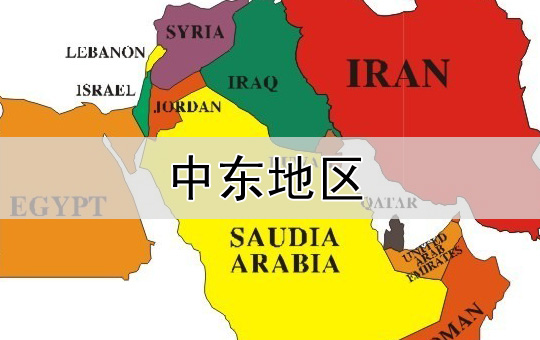
"In this lesson, two friends talk about the Middle East and its relationship to its most famous export."
(Sounds super awkward. I'm only mentioning this to reply to your suggestion. The intro is also really ignorant. Not all so called "Middle East" countries have oil. Afghanistan doesn't have much oil, which is one of the reasons it's so poor. Egypt doesn't have a lot of oil, and Israel and Palestine don't have much oil either. It's a big stereotype that's magnified in China. I liked the Chinese language elements to this lesson and think they're valuable, but besides that, this lesson mostly exudes ignorance.)
xiaomai5September 5, 2013
I think the point is that this is a language lesson not a serious economic debate about who does or doesn't have much oil... jeez

byronmeinerthOctober 28, 2013
You bring up some good points, but I think it's good to not be too aggressive about these issues. I could point out that you refering to Afghanistan as being in the Middle East is ignorant, because it's rarely considered as part of that region, nor has it ever been.
Anyway, no reason to harp on that, because you do bring up some good issues. With that said, Iran, Iraq, Saudi Arabia, Kuwait, and the UAE control more than half of the world's remaining conventional oil. The stereotype holds with them.
byronmeinerthOctober 28, 2013
xiaomai5's point here should also be heeded. If we really wanted a lesson on oil-producing countries, it would be better to focus on Russia, the US, and China, in addition to the ones I mentioned before. Those three countries rarely get much focus though, because they're not petro-states.


wotingyuJuly 21, 2013
Would be nice to get some of the following related vocabulary. Not sure if it can be found consolidated someplace else:OPECCartelFuel Efficiency (Fuel Economy) ---for carsNatural GasFracking Refine (to refine oil)Refinery
Are ther a fair number of Chinese who share the viewpoint that being born in Saudia Irabia or UAE would be a lot better?
verazhang100July 22, 2013
OPEC 欧 佩 克 ōu pèi kè
Cartel 卡塔尔 kǎ tǎ ěr
Fuel Efficiency (Fuel Economy) ---for cars 燃料效率rán liào xiào lǜ
Natural Gas 天然气 tiān rán qì
Fracking 液压破裂法 yè yā pò liè fǎ (I have no idea about the Chinese word. I searched it online.)
Refine (to refine oil) 'plasmaftw' is right. ti2lian4
Refinery 炼油厂 liàn yóu chǎnɡ
verazhang100July 22, 2013
Are ther a fair number of Chinese who share the viewpoint that being born in Saudia Irabia or UAE would be a lot better?
Not really. Since culture is so different, actually a lot of Chinese don't really know about those countries.
laotourpiaoJuly 23, 2013
我猜 wotingyu 写的 cartel 的翻译应该是 卡特尔 (kǎtèěr) 。
OPEC 是个 卡特尔。 在百度上 卡特尔 的意思是形容为 垄断利益集团 的 (an interest group set up to monopolize a market)。
卡塔尔 和 卡特尔 那两个单词是很容易 分不清楚 的 ;-))
man-fongAugust 3, 2013
I am a Australian Chinese but I don't share the same veiw. I believe that there are rich people in those countries but consider their small population and social and political system. I am not sure how many local people would benefit from the wealth which they accumulated from the oil business.
What did you notice in this lesson?
You are posting as a guest. Your reply is reviewed before it appears. Log in to post without review.