tsugihara80September 15, 2011
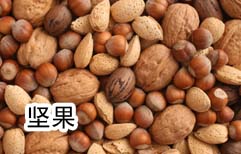
Could help me please? What Jenny mean when she say gaoji de jianguo at end? Xiexie.

lujiaojieSeptember 15, 2011
她觉得“杏仁”是很“高级”的坚果。
杏仁 xìngrén n. almond
高级 gāojí adj. high-level; high-grade
bertson135April 19, 2011
Duìhuà jùzi sì yǒu 'nǎ' fāyīn 'méi' hé jùzi wǔ yīngwén de fānyì yīngāi shì "Walnuts, want to eat?"
'Expansion' jùzi ba yīngwén de fānyì yīngāi shì "Tangerine skins are very good to peel. Orange skins are very hard to peel." Jùzi shí qī yīngwén fānyì yīngāi shì "I tried using it a week. I think it's very good."

hebertinchinaMarch 22, 2011
In the expansion, the last character of this sentence is pronounced "zar" instead of "zi":
宝宝还不会剥瓜子。
bǎobao hái bù huì bō guāzi.
The baby still can't shell sun-flower seeds.
Well, at least to me it sounds that way. I'd image its a northern thing like Nǎlǐ/nar3 and yīdiǎn/yīdianr3, but I've never come across someone adding an "r" to zi. Am I correct in my assumption?

johnbMarch 22, 2011
I think adding the 儿 to 子 is pretty uncommon, but it definitely happens with 瓜子 (my wife pronounces it exactly the way it is in the expansion sentence).

tingyunMarch 22, 2011
There is actually a pretty logical explanation for this - 子 has two very separate uses, one is to serve as a noun suffix and is pronounced in neutral tone. This is the most common use, and it won't have an 儿 suffix added - it already is the suffix.
The second use, pronounced in the third tone, means 'son', 'seed', etc. In this use it is as likely to pick up an 儿 suffix as any other noun. 瓜子 is a good example, another would be 败家子 (a bad son who wastes the family's money), both are often heard with an 儿 added to the 子.
Its easy to tell the difference between the two - just ask yourself whether 子 is actually contributing meaning to the word, if so, its the second use, and might have a 儿 depending on the speaker.
hebertinchinaMarch 23, 2011
Thanks! I wasn't expecting a different explanation other than the Northern accent.


kdogg36May 27, 2010
I have a question about transliterations. I know that Mandarin phonotactics limit the "fidelity" of transliterations from other languages, but it seems that we could do a lot better than 夏威夷 - say, 哈外夷. Does Chinese limit itself still further by taking some syllables out of contention? :)

changyeMay 27, 2010
Hi kdogg36
“夏威夷” is a word that was transliterated based on the sound system of a southern Chinese dialect, probably Cantonese, as is often the case with foreign words in Mandarin. The Cantonese reading of “夏威夷” is “ha-wai-i”.

tangxiaojieApril 27, 2010
I heard something else about nuts (also in China), but not a good thing. I was told eating too many can cause constipation. Plus it raises your fire element. No-go for me then as my fire element's always too high!!

zaphekiahApril 21, 2010
My Chinese friend is especially convinced that walnuts make you more intelligent. I think it is because they look like little brains.
martin2010April 21, 2010
ha, so interesting ! I never thought about it .
you can be interpreted as bō+verb,for example 剥削 剥夺,but bāo+noun, like 剥壳 剥皮.

kellylApril 21, 2010
I'm a little confused about the use of the character 剥. In the dialog the pronunciation is bō. My dictionary lists it as both bō and bāo, though both having the meaning to shell or to peel.
nciku seems to indicate that bāo is the single syllable word, and says that bō is "limited to use in compound words and idiomatic phrase", though it seems to be used here on it's own.
Are the bō and bāo pronunciations interchangeable then?
Thanks!
lujiaojieApril 21, 2010
In the dictionary we should say: bō+verb like 剥削 bōxuē 剥夺 bōduó and bāo+noun like 剥皮 bāopí .
Actually, we often use bō for both. I never say 剥皮 bāopí .

pinkjeansApril 21, 2010
Cashewnut 是不是腰豆啊?That's what I hear people call them, but a web dictionary gave the translation as 腰果。



mandarinkoalaApril 19, 2010
Nuts! Yes, I've noticed that the solution to all ailiments is to "eat" and/or drink (water/tea). May explain why there are so many of them.
lamps5jam3April 16, 2010
I'm surprised there hasn't been a discussion here about bian4 vs. bian4cheng2. It seems to me that bian4cheng2 is when something changes into something concrete (a noun), but I'm not sure that's the end of the story.
bodaweiApril 16, 2010
This lesson made me wonder again about the topic : Do ChinesePod lessons have a western attitude? (subject of a Group discussion that petered out mid-2007.) Of course they do, but sometimes you are taken to a very strange world, where Chinese people are heard discussing things that Chinese people would never discuss, or saying things in ways that Chinese people would never use. I don't want to overstate the case, but sometimes these lessons are quite surreal. Entertaining, but surreal. I think living in China I prefer topics and situations that are authentic; at least things that are culturally relevant. ChinesePod has to find a 'middle way' between authenticity and entertainment. Entertaining AND authentic is best. :) Sometimes ChinesePod errs on the side of entertainment. I don't expect ChinesePod to just cater to my taste of course.
Don't worry ChinesePod: poddies are here to keep you on the straight and narrow as much as possible.
frank09April 16, 2010
I can see exactly what you mean. The Chinese can be a bit more authentic, even if it means it's harder to learn/explain. I really want to see a lesson on straight up frequently used rude swear words that you'd hear low life scum using
suansuanruApril 16, 2010
最近中国人经常说:
被雷到了……
囧。
很纠结。
and i found them among the topics.That's amazing!!!
bodaweiApril 16, 2010
Hi Suansuanru
Finding these in the lessons WOULD be amazing - is that what you mean by 'topics'? You saw these expressions in lessons?
You may find them in conversations by poddies; that is a different matter.
But I am talking about 情节 (the action, the plot, the circumstances) in lessons that are not realistic. 不真实的。 The odd colloquial expression does not make the scenario authentic.
suansuanruApril 17, 2010
hehe,i did mean "the conversations"when i mentioned "topics".
I know exactly what you mean by saying"circumstances",it perhaps just like the dialogues of"how are you""fine,thanks,and you" are commonly used in some English textbooks while most of the English people would like to say"how are you doing""how have you been"when in realistic. Am I right?
bodaweiApril 17, 2010
In Australia we say 'ow ya goin' mate?'
Transation: Hullo.. [not necessarily said to your friend].

waiguorenApril 15, 2010
我很喜长寿果, 但是有一点儿贵。
wǒ hěn xǐhuān chángshouguǒ, dànshì yǒu yīdiǎnr guì.
I really like 'chángshougǒu' nuts, but they're a little bit expensive.
I think they taste a bit like chocolate!
waiguorenApril 16, 2010
I have just learned from John's blog at:
http://www.sinosplice.com/life/archives/2010/04/14/the-big-bang-theory-sheldons-chinese
That 长寿 (chángshòu) means 'long life'. So, I suppose that means I like 'long-life' nuts...
rocky26April 14, 2010
I have a question! In the second line of dialoge, the speaker says "我同事說,吃堅果可以變聰明". Why isn't there a 的 between 我and 同事 ? I thought that the 的 can only be omitted if the speaker is very close with the person he/she is speaking of. For example, "我媽媽" or "我太太". But the speaker is talking about his/her coworker, so why is the 的 omitted?
Please help!
changyeApril 14, 2010
Hi rocky26
“同屋” is a roommate, who is not your family, but you can omit 的 just like you can do so with 同事 (colleague) and 同学 (classmate). The character “同” implies a kind of "attachment", and this is the reason you can omit 的. The same holds true for “同桌”.
rocky26April 15, 2010
okay, then what about for 朋友( ordinary friends) ? Should I say 我的朋友for ordinary friends, or should I leave out the 的 ?
changyeApril 15, 2010
Hi rocky26
“的” can be omitted before “朋友”. It's up to you. I prefer placing “的” when it's “我的朋友是中国人”, for example. On one hand, I don't use “的” in the case of “我朋友的父亲是老师” because I hate to use two “的” in a phrase.
bodaweiApril 15, 2010
I received an invitation yesterday that starts:
各界友人.. (Dear friends from all walks of life..)
I think it is very cool, friendly and embracing, but it suggests to me that the word 'friend' is not a very accurate translation for the Chinese expression. The writer has never met any of the people receiving the invitation. What do you think?
bodaweiApril 16, 2010
We might say 'To Whom It May Concern' - it sounds formal but it is used quite a lot.
bodaweiApril 14, 2010
This is rather like New Zealanders pinching 猕猴桃 míhóutáo (Chinese gooseberry) from China and marketing them as the Kiwi fruit? Although, the difference is that everyone has heard of the Kiwi fruit; I have never heard or read of the Hawaii Nut. Would any American poddies like to comment on whether they have heard this name before? It is a curious word for ChinesePod to use. It is not in my admittedly modest dictionaries. I wonder if this is Shanghaihua? Or are they just having a lend of us?

pretzellogicApril 14, 2010
I've never heard of the "Hawaii nut". In Hawaii, macadamia nuts are the rage, or at least they were in the past.

JasonSchApril 14, 2010
This was a good refresher for me as although I think I have learned a word for macadamia nut before, I'd completely forgotten it by the time this lesson came up.
In English, I've only ever known them as 'macadamia nuts'. I don't think 'Hawaiian nut' is ever a term for them in English. It's only translated that way in the dialog because of the literalness with which the speaker is trying to understand the name.
As to 夏威夷果, it seems to be in less dictionaries than 澳洲坚果, but pull as many/more google/baidu search results, which is a good indicator that it's a widely used name as well. (you can also find some examples of it being used on packaging)

zhong_bideApril 15, 2010
I was aware that the Americans had marketed it in the past as "Hawaiian Nut" - similar to the Kiwis and the "kiwi fruit" actually a Chinese gooseberry. The Australians, shame on them, were a bit slow to experiment with the Queensland Nuts, develop better varieties, and market them. The Americans grew them on Hawaii commercially first - hence the Hawaiian name. If I was a patriotic American developing and growing them commercially as a pioneer I might have marketed them similarly.
Now, of course the nuts are grown commercially and extensively in Oz. As a patriotic Australian I am just a bit annoyed that they might still be known in China as "Hawaiian". Hey! I'm not blaming CPod for this!
The Chinese might be annoyed about "kiwi fruit"!!
riceeaterApril 18, 2010
I'm from Hawaii and there they are known by only one name that I know of : Macadamia Nuts.
Here in Taiwan they are known by yet another name in Chinese: 火山豆 or "Volcano bean/nut"
zhong_bideApril 14, 2010
:夏威夷果? 是夏威夷产的吗?
Xiàwēiyí guǒ? Xiàwēiyí chǎn de ma?
Indeed a strange name. Like Bodawei said.
Since I am an advocate fro growing Australian Native Plants and Bush Tucker I can't let it go without comment. Macadamia nuts 澳洲堅果 [àozhōujiānguǒ] have been grown extensively in Hawaii, but are native to the Australian states of Queensland [昆士兰州 kūnshìlán] and New South Wales,and grown and exported from there. Obviously the Australians had better market them in China under the correct name! [昆士兰堅果比较好]. The photo (my tree) shows the nuts on the tree. The hard-shelled nut is inside the green fruits. It takes much effort to crack open the the brown shell to get at the tasty round white nut inside.
riceeaterApril 18, 2010
I'm from Hawaii and there they are known by only one name that I know of : Macadamia Nuts.
Here in Taiwan they are known by yet another name in Chinese: 火山豆 or "Volcano nut" which is probably another variant of "Hawaii nut."
When I was on traveling with my in-laws as part of a tour group from Taiwan I heard "火山豆" used by Chinese in both Thailand and Hawaii as they tried to sell chocolate covered macadamia nuts to us.

chanelle77April 14, 2010
Be careful when selling
betel nuts in Taiwan.
bodaweiApril 14, 2010
在巴布亚新几内亚他们一般槟榔和石灰(lime)一起吃。
The betel nut (buai), lime (kambang) and a mustard seed (daka) are chewed together (the step by step process is available on the Internet) and the physical result is mild euphoria. It is a kind of substitute for smoking and serves a similar social purpose. Your teeth go red, then the ground/footpath goes red also as the fibres of the nut are spat out (they say swallowing the fibres gives you a stomach ache.) The practice is linked with cancer. I wonder if this is what they do in Taiwan?

bababardwanApril 14, 2010
I dunno about the lime and mustard seed in Taiwan ,but the rest of it sounds right. I remember a taxi driver had a cup he'd spit it into [and then he offered me some].

shanghai_heliosApril 14, 2010
Great lesson.
We bought 夏威夷果 at 龙虎山 in 江西省 near the birthplace of Daoism. The vendor gave away openers that are used to crack the shells.
Can someone post a list of some of the nuts one is likely to see for sale in markets in China?
bodaweiApril 14, 2010
There are too many to name. :)
I can't believe that Chinese people call them 夏威夷果 - I will have to make enquiries. I think that this might be a Shanghai special.
bababardwanApril 14, 2010
stay on 'em mate. mdbg has macadamia nuts as 澳大利亚坚果 and doesn't recognise 夏威夷果...I think you may well be right ...someone's trying to take us for a ride :)
bodaweiApril 14, 2010
Okay, I have Googled it in Chinese and it comes up in this order on Baidu:
昆士兰栗、(Queensland Nut)
澳洲胡桃、(Australian 'walnut')
夏威夷果 (Hawaii fruit)
The nut was originally called (in English) a Queensland Nut and subsequently, sometime in the last say two or three decades from my experience in Australia, became known as the macadamia.

JohnApril 14, 2010
I ran a few searches for you. Google's and Baidu's counts should give you a more accurate picture of which terms are most often used. Here's what I found:
昆士兰栗 - Google: 40k, Baidu: 33.3k
澳洲胡桃 - Google: 820k, Baidu: 201k
澳洲坚果 - Google: 614k, Baidu: 244k
夏威夷果 - Google: 657k, Baidu: 389k
So while 夏威夷果 is competitive with 澳洲胡桃 and 澳洲坚果 individually (especially on Baidu), the combined might of 澳洲胡桃 and 澳洲坚果 shows Oz defeating the States in this particular battle. :)
If you're serious about your Macadamia nuts (and especially if you're Aussie), I recommend you know all three terms: 夏威夷果、澳洲胡桃、澳洲坚果.
bodaweiApril 15, 2010
Good point John, and thanks for your good natured response to the debate. Fascinating stuff watching languages develop and deal with foreign terms, As a Queenslander by origin I would like to see 昆士兰坚果 used - you didn't test that. But, I think that anyone who has followed this thread now knows at least three Chinese terms for Macadamia AND knows about the Sunshine State (Queensland)! I thought you might like that as it is where a lot of Australians go to retire. Like Florida, I mean. :) Not suggesting that you personally are ready for retirement.
bababardwanApril 15, 2010
thanks for your good natured response
。。我同意
昆士兰坚果: Google 35k,Baidu 30k
I recommend you know all three terms
很好的主意
serious about your Macadamia nuts
。。你的意思是“疯了”对”坚果“ 【nuts about nuts].
我最喜欢昆士兰坚果的味道
riceeaterApril 18, 2010
I'm from Hawaii and there they are known by only one name that I know of : Macadamia Nuts.
Here in Taiwan they are known by yet another name in Chinese: 火山豆 or "Volcano bean/nut"
So, I guess that means you need to learn four terms for Macadamia nuts.
riceeaterApril 18, 2010
I googled 火山豆 (Volcano Nut) to see how common it is and Google came up with
"About 8,950,000 results in (0.21 seconds) "
According to Google the next most common term was 澳洲坚果 (Australian Walnut)
with "About 1,160,000 results (0.06 seconds) "
Followed by 夏威夷果 (Hawaii nut)
showing "About 636,000 results (0.27 seconds)"
Bringing up the rear was "昆士兰坚果" (Queensland walnut)
With only "About 34,800 results (0.45 seconds)"
Terms Googled on 4/18/2010
laura84April 14, 2010
Ok I'm turning insane there. I want to use Anki !!!

RJApril 14, 2010
Hi Laura
sorry, try this - after exporting from cpod using the anki export function and saving the txt file. Go into Anki - hit "File" , "import" and it will take you to a change delimiter menu screen. You shouldnt have to choose anything - just hit the import button and it will populate Anki. IF that doesnt work perhaps Anki is not installed with all its needed add ons properly. I remember Anki was fussy that way and you had to search for and add some plug ins. Let me know if that works and we can go from there.
laura84April 14, 2010
Ah, ok, so one space means what exactly ?
like
麻烦 mǎfan problematic 蛋糕 dangao cake
and so on ?
or should I go down once between each word /
aya...
RJApril 14, 2010
Laura,
you may have to mess with the delimiters in the txt file. (spaces). It should import easily as cpod claims it is in format for anki but .....
I find ZDT is easier to work with but it does not employ spaced repetition. If you install ZDT, files are easy to create and share for importation.
RJApril 14, 2010
Laura84
save that txt file on your computer. Go into Anki, click file, download, personal deck and follow the prompts. Unfortunately the import is often scrambled. See if you have better luck than me.
laura84April 14, 2010
that's pretty much what I did, and it didn't work at all... i'll try again...
thanks !
laura84April 14, 2010
Help !
I installed Anki on my computer, but I can't find a way to export the vocabulary. CP export gives me a Notepad file (.txt) that seems to be impossible to add to Anki...
RJApril 14, 2010
@changye
Thanks for mentioning the aflatoxin issue. Aflatoxins are contained in the mold that grows on nuts in storage and is one of the most powerful carcinogens known. In the west there are tests and controls in place for things like peanut butter. In China I have been served warm wet peanuts still in the shell. I will not eat these.
@bodawei - unlike smoking, aflatoxins can cause cancer with one dose.
bodaweiApril 14, 2010
I'm just wondering how many people die from cancer caused by Aflatoxin versus smoking. Those SuperFreakonomics guys have analysed the data about a lot of scary things that we have no reason to be afraid of (if we take the usual precautions.) Eg. sharks - scary things. Annual death toll, world wide: 4. Drink driving (very scary). In the US you have a higher chance of dying if you walk drunk than if you drive drunk.

sebireApril 14, 2010
Do you have a higher chance of dying if walked into by a drunk rather than a drunk driver?
bodaweiApril 14, 2010
The data does not seem to explore the damage done by the drunk person (comparing drivers to pedestrians) but I imagine that third parties involved in fatalities would suffer similarly, at least psychologically, whether they ran into a drunk pedestrian, or ran into a car driven by a drunk driver.
changyeApril 14, 2010
I always wonder how many drunken people die after falling into a cover-less manhole in the PRC every year.

TalApril 14, 2010
Seems like a remarkably low figure... sure you've not been overdosing on Douglas Adams, RJ?
Speaking of coverless manholes, there was one close to my home here in Guangdong for ever such a long time, but the workers (?) had thoughfully inserted a torn-off tree branch into it to prevent accidents. It struck me as both a creative and a considerate action.
changyeApril 14, 2010
Hi rjberki and tal
在中国“后果自负”就是硬道理!连我家的小胖狗都清清楚楚了解这个不可不知的原则。她走路非常小心,很怕掉进“陷阱”。这里隐患太多了!
tangxiaojieApril 27, 2010
@bodawei - so if we get drunk we should drive home?!
That reminds me of a lecturer who seemed to be pushing us onto harder stuff by saying that tobacco and alcohol are far more dangerous than cocaine. I don't think he realised what he was saying...d'oh.


bodaweiApril 14, 2010
夏威夷果 ????? This is just a bit too American-centric for me!!! You must be joking. These nuts are of course native to Australia. They were first eaten by Australian aborigines, then appreciated by white settlers in the early 1800s. They were not introduced into Hawaii until the 1920s.
The dictionary definition of 澳大利亚坚果 is macadamia nut, but for me it will always be 昆士兰州坚果.

si1teng2April 14, 2010
“很不公平!”哈哈! 真的不公平。我以前住在夏威夷,一直以爲它們是夏威夷果。 But I wonder what the aboriginal name for them is.
JohnApril 14, 2010
You'll have to take this issue up with the Chinese people. Even we Americans don't use such an American-centric name for them. :)
mandarinkoalaApril 19, 2010
Good to hear John. Yes, since coming to the Middle Kingdom, I was distressed at groosly wrong knowledge of where they come from. They are from my home of Queensland, hence "Queensland Nut", or more correctly "Macadamia Nut". They are a Rainforrest nut.
They were taken by some asute American businessmen in the 30's I heard.
TalApril 13, 2010
Seems like the sound production on the Audio Review MP3 for this lesson (and actually just recently for others) is somewhat less than perfect. Connie's wonderful voice sounds like it was recorded on an old style cassette recorder, maybe while she was stuck in the 厕所. What's going on?

go_manlyApril 13, 2010
Cpod, in your 8th expansion sentence, your mouseover pinyin gives chēngzi for 橙子 instead of chéngzi.
changyeApril 13, 2010
请大家注意,中国花生有黄曲霉毒素(aflatoxin)污染的风险,特别是多吃潮湿的花生很危险,有可能导致肝癌的发生。
bodaweiApril 14, 2010
People in China are more likely to get liver cancer from smoking and/or Hepatitis. Actually to avoid liver cancer it helps to be young and female. (I better stop reading Wikipaedia.) Actually the toxin infects almost every food known to mankind. I may not sleep well tonight, because I like peanuts.
suansuanruApril 14, 2010
http://i942.photobucket.com/albums/ad270/capture_01/onna_no_naka_ni_iru_tanin_naruse196.jpg
你的话让我想起了一部日本电影,看看这张图片。
changyeApril 18, 2010
Hi janeli
你说的很对,这并不是中国特有的问题,而是储藏技术上的问题,所以每个国家多多少少都有发生这种情况的可能性。如果花生保管不善而发霉,很容易就受黄曲霉素污染。在中国花生储藏管理怎么样?

dropped_chopstickApril 13, 2010
Be careful when you say bo qilai (peel/de-shell)
that you don't say bo (2nd tone)! qilai
勃起来。。。
totally different meaning!
changyeApril 14, 2010
I feel rather embarrassed to say this, but it's not necessarily "totally different meaning". They have a little bit of something in common.... I leave it to your imagination.

henningApril 14, 2010
This is why I love the Forums. You learn something new every day.
Thanks, dropped_chopsticks.
dropped_chopstickApril 14, 2010
it was one of the first phrases i learned!
how do you say nutcracker?


jbaldwi1April 13, 2010
Peanuts are not a nut, they're a legume, like a bean or a pea.
JohnApril 13, 2010
...and tomatoes are a fruit?
Fair enough. We kept peanuts out of the dialogue, anyway.
jbaldwi1April 14, 2010
If you're a Botanist then a tomato is a fruit, but if you're a Cook or Chef then it's a a vegetable.
riceeaterApril 14, 2010
I explain it to my English students this way: When it comes to food, if you eat it raw, on its own, and enjoy its sweet taste. We call it a fruit. If you cut it up and use it as an ingredient it is considered a vegetable.
The following are technically "fruits," from a botanist's perspective, but treated as vegetables in the kitchen.
tomatoes, cucumbers, squash, pumpkins, egg plant, bitter melon, bell peppers,
These are but a few of the seed bearing fruits of flowering plants widely considered to be vegetables when speaking of food.
changyeApril 14, 2010
I hear that tomatoes were regarded as a kind of ornamental plant when they were first introduced in Europe. In Japan, people (me included) generally think tomatoes are a vegetable, but not a fruit.

AfaaApril 14, 2010
my reply is to John... "...and tomatoes are a fruit..."
that's pretty funny... 我聽到了的時候,就笑了--阿發
jbaldwi1April 14, 2010
Tomatoes are part of the nightshade family, so when they were introduced to Europe people wouldn't eat them because they thought tomatoes were poisonous.
Functionally, a tomato is a veggie. I don't know of anyone making tomato jam or jelly.
jbaldwi1April 15, 2010
I assume the Spanish were the first Europeans to eat them (not everyone thought they were poisonous).

iwatachiefApril 16, 2010
Hi there! In France, we do make tomato jam! I don't know if it is a special type of tomato but we call it: "confiture de tomates vertes" ie Green tomato jam! And believe me, it is delicious! 真的很好吃!
AfaaApril 17, 2010
Tomato jam? Now that's the first time I've heard of that...I'll ave to try it when I get to France...again...haven't been in eight years. 八年我还没回来。。。
What did you notice in this lesson?
You are posting as a guest. Your reply is reviewed before it appears. Log in to post without review.