tysondJune 22, 2013
Good lesson, but I don't understand John's story at the end.
If he had to change Ayi because of her Dongbei cooking, presumably the new Ayi would cook a different style. So why is the new Ayi not doing any cooking? Mysterious...


ejrungeJune 17, 2013
Good topic that many people can relate to. I got so tired of my wife complaining about our 阿姨 of five years, that I said why don't you just fire her? My wife went on a home leave trip, and said, oh by the way, fire the 阿姨 while I am gone. After a lot of searching, I found a 四川阿姨. I love her cooking, but I think she is secretly drinking my Jose Cuervo Silver tequila.


bohan2007June 10, 2013
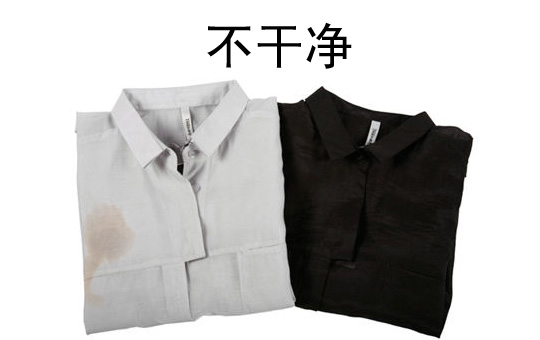
the only part of the dialog that I don't really understand is the part when the guy says 这不是我的衬衫吗。 Why is he asking this question? If he's the only adult male in the house, then it should be absolutely obvious that it's his shirt, so why is he asking? I don't get it. I think John knows what I mean, because he said "He's pretty perceptive, he recognizes his own clothes here", implying that it should be obvious.
I've come to realize that a lot of times in Chinese conversations, things like this are the most confusing because I often hear Chinese people say things that seem out of place and they throw me off. It's not that the sentence is difficult, it's that when I hear things like this, I often think "he/she must mean something else, because otherwise it doesn't make sense"

luobinzhenmeiJune 10, 2013
We too have been surprised by Chinese saying completely obvious things, often in the form of a question.
For a long while we thought there must be a message, probably sarcastic or somehow critical. "啊,你来了? Oh, you've come?"
"What, should I have come earlier? Does she not want me here? Why did she say that?" we think.
But we have been reassured that it is merely meant as a conversation filler, a kind of acknowledgement and an invitation to continue talking. So if the guy were Western he might have said, "right. It's really dirty." or some thing that maybe Chinese would find weird. I can imagine a Chinese thinking "why did he say that? That's what I already said. Did he doubt me? Is he being sarcastic?"
Ah, those small cultural differences that no one tells us about because they are so tiny, and they are the ones that drives us crazy.
P.S. We now say to our Chinese friends when we see them "啊,你来了?“ too.

markJune 10, 2013
Oh, I never interpreted "啊,你来了“ as a question. I always just took it as, "You're here." There isn't any question particle, and no one seems to have taken it amiss when I respond by just launching into whatever topic brought me. I think it falls into a class of speech that I've heard called, pragmatics; stuff you just say in particular situations. There are lots of English phrases that we routinely say that are really weird, if you think about them too much. For example, "what's up?".
bohan2007June 10, 2013
it looks like there's a typo in the third sentence of the lesson intro.
"Having someone else do your work for you means that it would always be the way that you like it."
It should be with "won't" instead of "would"
bohan2007June 10, 2013
cool lesson. It was a bit simple for intermediate, but that's alright. Question:
If the housekeeper is a male, what Chinese word do we use? I know we can't say 阿姨, because the 阿姨 comes from the word "aunt" from what I understand. I know that a male housekeeper would be unheard of in China, but some people have male housekeepers in the West, such as Jerry Seinfeld

rosamagliolaJune 14, 2013
I only can tell you what we do in Taiwan. When I grew up in Taipei, my mom had a chef (live-in) who is from the same province ,山東,with my dad , so he cooked 北方菜 suitable to my father's taste. his last name is wang, we called him 老王。I imagine if he was younger, we would have called him 小王。people outside the family always called him 王師傅。by the way , for female helpers in Taiwan, the slang is 下女,my parents were strongly against that term, so we called them 王媽,張媽,阿姨,李姐,小妹 according to their ages. FYI , hope it helps.

serupJune 10, 2013
having problems when trying to access the exercise tab - just shows discussion tab instead
What did you notice in this lesson?
You are posting as a guest. Your reply is reviewed before it appears. Log in to post without review.