anonymous1019597December 22, 2017
Is there a difference between using 多大 and 多大了? I've seen them both for common ways to ask how big a child is. Also, with the response 八个月 vs 八个月了. Thanks!
Jason

serupMay 12, 2013
why is " 给 " needed in this sentence? is " 带 " not enough to express bringing some to everybody?
我给大家带了一些巧克力。

toianwMay 12, 2013
Hi serup,
In this sentence 给 is acting as a preposition (equivalent to the English 'for'). So the Chinglish version would be "I for everyone bought some chocolate". Note the prepositional phrase ("for someone") generally comes before the verb in Chinese, whereas we'd put it after the verb in English.

xiaomai4April 18, 2013
In the expansion - 我们再喝一杯吧 - is translated as 'Let's drink another glass', which sounds a bit unnatural in English... would we not say let's have another drink? or just let's have another?

TomMangioneApril 19, 2013
You could definitely translate this as "let's have another" or "let's have another drink".
As this is an elementary lesson, I decided to translate the sentence a bit more literally to show what the Chinese is doing.
Personally, I could see myself saying "Let's drink another glass", but only if I were talking about something specifically sold by the glass (like wine for example).
xiaomai4April 19, 2013
Thanks for the reply Tom. Wine is a good example. Although I would probably still say 'let's have another glass' as the drinking part is implied.
I will save my comments for the intermediate section though, as like you say this is an ellie! I would also like to be a translator someday so these odd sentences tend to stick out to me, cheers!
bohan2007March 18, 2013
this was a cool lesson. I think this was one of the richest elementary lessons I've listened on Chinesepod, because it includes two very ubiquitous Chinese things that could have been left out, but made the lesson much richer with their addition. Those two things are the 斤jin1, and the 开裆裤kai1dang1ku4
I've never seen 开裆裤 (kāidāngkù) in any country other than China, but I haven't been to many places so who knows....maybe there are lots of countries that have them. Has anyone been to another country that has these, or something similar?

mala_counselorMarch 19, 2013
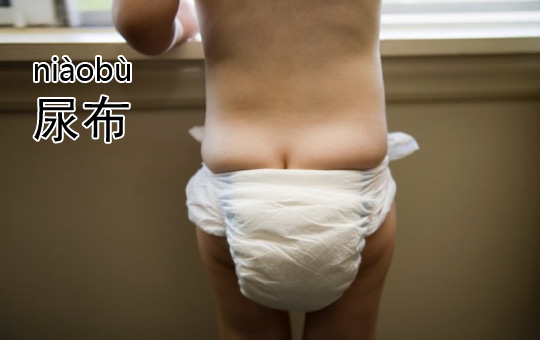
开裆裤Is less popular in shanghai. My son doesn't wear it. I guess it's because we use diaper now. In the past, we didn't have diaper so the babies definitely wear 开裆裤, otherwise the pants got wet easily.
bohan2007March 19, 2013
congratulations on having a son. I hope i can be a father someday. I guess it really doesn't matter much where/how babies poo and pee

veronique21March 18, 2013
Hi there ! I've got a question. I've always been told that the question for young people is with 几岁 . Must I use 多大 for babies as well ? I'm a little bit confused now...
toianwMarch 18, 2013
I wonder if "几岁了?" might not be as appropriate for really young babies because using 几 you'd be expecting an answer in terms of "a number of years" and this baby is not yet one year old. Is there any truth to that?
mala_counselorMarch 19, 2013
Hi you are right, we don't use 几岁for a baby if he or she is not yet one year old. In this case, we just say "几个月?or 多大了? 几岁for the kids between 1 years old to 10 years old.
veronique21March 19, 2013
Thank you so much for your explanation. Now it's clear. I had never thought of that point before.
mala_counselorMarch 18, 2013
你要买尿布吗?it is acceptable.
你要给宝宝买尿布吗?that's the correct order. I you want to buy something for someone, we can use "给"
我要给爸爸买一双鞋子。I'd like to buy a pair of shoes for my father.

mafanniMarch 17, 2013
你要买尿布吗? is this also acceptable and 给买宝宝尿布吗 heard more often and/or more colloquial ?
I have not heard 给 being used with 买 to buy something.
What did you notice in this lesson?
You are posting as a guest. Your reply is reviewed before it appears. Log in to post without review.