anonymous1019597December 28, 2017
Can you also say 可能是吃了太多东西了 or 可能吃太多东西了? Or is there a difference between the meaning? Thanks!
thomillMarch 8, 2013
I have two questions regarding the use of 'gāi...le'.
First, is this interchangable with 'yīng gāi...le' or should the 'yīng' not be used at all in this construct?
Second, does this construct mean 'ought to do ... now/immediately'?
Thank you.

verazhang100March 11, 2013
You are right. 'gāi...le' is more like 'ought to do ... now/immediately'. 'yīng gāi...le'
'yīng gāi...le' is same as 'yīng gāi...le'
thomillMarch 8, 2013
I have a question on the use of shape word, round. Forgive me, but I am on a work PC right now so cannot type the Chinese characters.
Going back to the Elementary lesson "Basic Shapes", I was under the impression that adjective versions of shapes had to be followed by a 'de'. For example, 'yuán de' and 'fāng de'. In this lesson, there is no 'de' after the 'yuán'. Why is that, please?
Thank you.
verazhang100March 11, 2013
Technically, 圆的 is for 'adj' before the noun. 圆的桌子;圆的脸。
If 圆的 is 'adj' after 'be', ... is round. It could be ‘...很圆’ ‘的' is unnecessary.
KethFebruary 27, 2013
Check out the Task I uploaded for this lesson! Download
KethFebruary 27, 2013
Fat Task
Use the following words to make sentences. Make one sentence with each word. Read your sentences and upload.
胖 pàng
可能 kěnéng
该 gāi
一起 yīqǐ
太 tài

butterflyvalerieFebruary 24, 2013
My little pug Potato thinks that human food is produced solely for the pleasure of his taste buds. I am sure Chinese people would have had some blunt things to say about his weight too :)
daenafFebruary 23, 2013
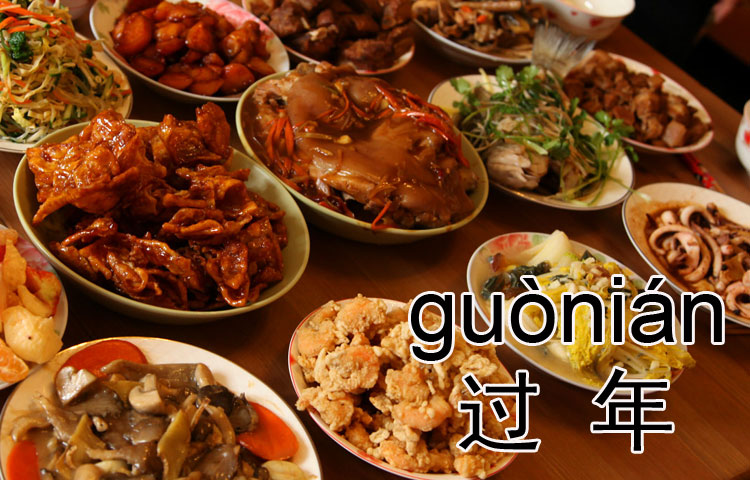
John first translates the sentence 过年以后都这样, as 'After celebrating New Year I am always like this', later he and Jenny (and the dialogue tab) translate it as 'After celebrating New Year everyone is like this'. Does that mean that, in this sentence, 'dou' can be interpreted either way, as 'always', or 'everyone'?
verazhang100February 24, 2013
It's a mistake. Thank you for pointing out. It is fixed now. It should be 'After celebrating New Year everyone is like this'


What did you notice in this lesson?
You are posting as a guest. Your reply is reviewed before it appears. Log in to post without review.