

marina169June 8, 2013
自豪和骄傲有什么区别?
marina169June 9, 2013
"I am proud of you" you can say
我为你感到自豪,我替你骄傲,我为你感到骄傲。
Are these sentences interchangeable?
adam_p_laxJune 10, 2013
im sure you can say Im just saying if you want to shorten your speech a bit you dont need to use 感到

TalJuly 16, 2012
Ah, I do enjoy lessons based on folk tales, thanks for this, it was new to me. If other poddies also enjoy using traditional stories for study purposes a small collection may be enjoyed here.
cowenparkseattleJune 26, 2012
In the grammar tab, the sound level of the sentences varies wildly. The last group of sentences is practically inaudible.

GregEJune 27, 2012
Thanks for your comment, this is actually the first we're hearing of this problem, so we do sincerely apologize.
To explain a bit, the audio for the grammar tabs is pulled from past lessons, so it's actually exceptionally difficult to track down each individual sentence that serves as the audio source and, unfortunately, just not feasible given our current set-up.
What we can do is ensure that all future recordings as well as re-recordings of past materials (which we frequently do to ensure quality) will be made using our up-to-date recording equipment and with volume level and audio clarity in mind.
Thanks again for pointing out this situation - we're always committed to doing whatever it takes to enchance the educational experience for our learners. Best of luck with all your studies!
JJ2016May 20, 2012
hi,
Another quick question:
Why isn't there a le in the second clause of this sentence? Is it something to do with the wan2cheng2 verb (i.e. does that imply past tense?). The translation given is in the past tense, but the other two examples include a le in their clauses - so you might be tempted to think this sentence is saying 'in order to finish this project, we are working overtime every day this month.'
为了完成这个项目,这个月我们天天加班。
GregEMay 21, 2012
Hey dannnbell,
Both your translation and the original are correct! The reason there's no 了 in this sentence is because words like 天天,经常,常常 etc. can't be used with 了。Depending on the context and interpretation, the speaker could still be working overtime to finish the project or the project could already be finished.
tribalsushiMay 18, 2012
It was mentioned in the podcast that using 感到 is fairly formal. There's a few words I've only learnt to use together with 感到, e.g 骄傲:对孩子感到骄傲
Can 感到 be replaced or removed somehow to make the sentence less formal? e.g. 妈妈对孩子感到骄傲 -> 妈妈对孩子很骄傲 ?



hiewhongliangMay 17, 2012
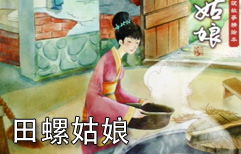
In the version of the story I know, 田螺姑娘 is a fairy goddess from the heavens, sent down as reward for the young man who was an orphan all his life, lived a life of hardship and loneliness, yet turned out honest and hardworking. This story helps Chinese parents teach their boys to study hard and be honest, bear with loneliness during our teens (ie. no dating), and one day the gods will reward us with our own 田螺姑娘 who will 烧饭 for us.
Unfortunately Chinese girls have long ago wised up to this nonsense and no longer prepare themselves for the role of 田螺姑娘, which of course leaves us poor Chinese boys with no choice but to 烧 our own 饭 for the rest of our days!
田螺姑娘, 田螺姑娘, wherefore art thou 田螺姑娘?
:-)

bababardwanMay 19, 2012
" 田螺姑娘, 田螺姑娘, wherefore art thou 田螺姑娘?"
...haha, love it...except I should point out that when Juliet lamented:
"Romeo, Romeo wherefore art thou Romeo"
..she was bewailing that he was a Montague [as their families were feuding] and thus her "wherefore" was questioning "why?" it had to be so. Whereas I suspect you are searching for "where" is your 田螺姑娘 [to come and cook for you]
hiewhongliangMay 20, 2012
Haha, well spotted. Shows how much attention I was paying in my English Literature classes! :-)

elikuMay 17, 2012
她辞职了,为了照顾女儿。
Think the translation is supposed to be she quit her job
not I quit my job :)

guolanMay 16, 2012
Thanks, Cpod, it's cool to know how to say the equivalent of "Once upon a time". I've wanted to know how to say it every time I've told a story to my students, but I've never actually gone and looked it up! (Hmm, a truly good teacher would have looked it up!)




markMay 16, 2012
Don't let the American right hear about this. I don't want to see a bunch of ballet initiatives forbidding the mariage of people to snails.
guolanMay 16, 2012
"ballot" - hehe, it took me a few rereads to get your meaning. I kept trying to figure out whether I'd missed something about ballet in the lesson, or whether ballet had suddenly become an issue dear to the heart of the American right! :)
guolanMay 16, 2012
Mine neither. I guess this is where I should admit I had to look up the spelling for "ballot" before typing my post. :)


RJMay 17, 2012
Hehe, don't sweat it Mark. I have never seen you misspell a Chinese character. And you're right about the "right". I'm sure they would consider snailamony a forbidden and slippery slope. Mark's character website:
http://huamake.com/home.htm?thePage=huamakefaqnew
guolanMay 17, 2012
Mark, that website is impressive. My husband will begin studying for the HSK soon; I'll direct him to your vocab lists.
RJ, thanks for listing the address.
perdutaenelboscMay 21, 2012
lol - I think he meant to write "(one of my) strong suits," :P as in one of his fortes; the expression comes from poker or some other card game(s) where it's possible to have a long suit with high cards, I'm pretty sure. I definitely agree with you and guolan, though - that website is quite impressive. I'm planning on taking the HSK in the fall, so I reckon I'll be visiting it quite a lot :) Thanks for recommending it, RJ! And, of course, thanks for running it, Mark :)!
jacobMay 22, 2012
I know i'll probably get hated for this, but I find it offensive that talk of issues such as children having both male and female role models (or even that there are gener roles at all) is banned.

What did you notice in this lesson?
You are posting as a guest. Your reply is reviewed before it appears. Log in to post without review.