bohan2007January 22, 2013
Is there a difference between 空气净化器 and 空气清新机? Is there one that is more common?





chrisJanuary 22, 2012
Lesson transcript being prepared here:-
https://chinesepod.com/community/conversations/post/12533
dougsmifJanuary 14, 2012
Timely satellite images and discussion directly relevant to this lesson at
http://earthobservatory.nasa.gov/IOTD/view.php?id=76935

GrambersJanuary 10, 2012
我高兴极了!This lesson taught me the adjectival phrase 灰蒙蒙 and, lo, a few days later I come across the same word in a book I'm currently reading. I love it when a plan comes together!

ouyangjun116January 10, 2012
Definitely rewarding and kick a$$ when that happens. Seems the more studying one does, the more the chinese language stars and moons align and things just come together... awesome.
GrambersJanuary 5, 2012
Aaaargh - 别看 means 'despite' (according to the grammar section)?!? This is twisting my melons man. I thought 别看 meant only 'don't look' but not you're telling me it means 'despite'!?! I know, I know. English has plenty of words which have the same spelling but different meanings, but most of them are bog standard nouns, right?

weilanshuijingJanuary 4, 2012
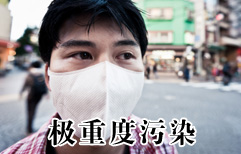
2004 年十月时,我刚来到北京还觉得奇怪从月初到月尾没有几天是可以看清楚的。当时每天都灰蒙蒙的,连阳光不能通过烟雾了。然后有一天有了大风以后,我竟然发现在北京的可见度却不要一直那么有限,在城市的西边还可以清楚地看到美丽的山体,夜晚时也可以观星。我在中国首都度过了三年,这段时间里北京的空气越来越差,P.M. 监测数据经常都暴表了。最然环境的情况很明显,但是那时候在报纸上还不命名的说空气属于机重度污染。最后,环空气让我决定离开北京,就是因为我的肺既伤不起了,而且我却受不了每次出门两鼻孔就灌满了灰尘了。我很同情在北京住的人,他们真的吃亏!

GrambersJanuary 4, 2012
Oh dear. Just a few minutes after finding a sentence I love, here's one I hate. I couldn't understand the Chinese at all, but felt much about this when I read the English translation and didn't understand a word of that either! - 他那个人性格很极端,他得不到的东西,别人也休想得到。(That guy's personality is really extreme. Things that he can't obtain other people can't even dream of getting.)

hugorestallJanuary 4, 2012
A better translation might be: If he can't have something, then nobody else can either.
GrambersJanuary 5, 2012
Thanks. I'm still not clear why this makes his personality 'extreme', per se, but your translation does make a lot more sense!


dubaobaoJanuary 16, 2012
I can't remember hearing 极端 used in this way, but my guess is this is one of those cases where the Chinese word is much broader in meaning than the usual Chinese-English dictionary would lead you to believe. So I think it's something like "That guy is really an outlier [in the sense of "unusual, extraordinary"]. Things that he can't achieve [or "get"], other people shouldn't even bother thinking about." Just my best guess!
GrambersJanuary 4, 2012
I love this sentence: 多少活生生的例子摆在眼前,就是不能吸取教训。 Think I will learn it by heart!
GrambersJanuary 4, 2012
I heard "频繁" as "平凡" in this dialogue. It's not often you get a two-character word prounced in precisely the same way (well nearly - it's very hard to hear that final 'g' at full speed) which seems to make perfect sense in the context and has very nearly the same meaning. Or is it? Would 平凡 work as a replacement for 频繁 in this sentence: 极端天气来得越来越频繁了?

zhenlijiangJanuary 4, 2012
频繁 is "frequent". In the context of this sentence it can be translated as "common", "commonplace" as in "frequently seen". 平凡 is "unremarkable", "ordinary" often used in a negative sense describing a person and his life, or a creative work, accomplishments etc. I'm pretty sure it couldn't work in this sentence about extreme weather.

GrambersJanuary 5, 2012
Thanks Connie and zhenlijiang: I appreciate that 频繁 and 平凡 do not have exactly the same meaning, but was under the impression 平凡 meant 'commonplace', and so the sentence would read something like: "extreme weather is now more and more commonplace", which - in English, obviously - makes sense. Of course, you can say "extreme weather is becoming more and more frequent" (极端天气来得越来越频繁了) but how to say “extreme weather is becoming more and more normal" (although I can see how this could be a contradiction in terms, as if it's 'normal', it manifestly can't be 'extreme' - but hopefully you get my point!)? Is there definitely no way to use 平凡?

GrambersJanuary 6, 2012
谢谢你详细的解释,反正我感觉绕了一圈!平凡的意思是很平常,不特别的话,为什么不能用在原来句子里:“极端天气来得越来越平凡了”?我知道不能用平凡来代替频繁,可是我刚写的句子在语法方面也没错吧?
zhenlijiangJanuary 6, 2012
Hi Grambers, banish from your mind for a moment the English translation common / commonplace, because that has to be why you're having these questions. Having said that, let me offer that a sentence like "Extreme weather is becoming increasingly mediocre (another possible translation for 平凡)" does not work. And that's why 极端天气来得越来越平凡了 doesn't work. I think it would be much easier to go to an antonym dictionary to clear this up. When we say 平凡 it's a judgment, not just a comment on quality but also imparting how we feel about that ordinariness (resigned / dismissive / content). You're saying how great or remarkable something isn't. Does this help any?
The 家常便饭 expression Connie gave us is great! I'm making a note of it.
GrambersJanuary 6, 2012
Thanks Zhen. Yes, this does help a lot, thanks! If I translate 平凡 as 'commonplace' or 'normal', the sentence appears to make perfect sense (hence why I may appear frustrated in not being able to get my head around it). However, you are right, if I choose another of 平凡's possible translations which have more of an association with quality ('ordinary', 'mediocre') it doesn't fit properly at all. So 平凡 is a comment on 'quality' and as a negative connotation, huh? OK, this is starting to making sense. Just:)
zhenlijiangJanuary 6, 2012
It can also be a good thing, as in the example Jenny gave 平凡的家庭生活是最快乐的--uneventful, nothing that sets you apart from the crowd but you're appreciative that there are no major tragedies either. It's good, you're content. Japanese say that a lot too.
zhenlijiangJanuary 8, 2012
Ah just realized that 家常便饭 to say that something occurs all the time was taught quite recently in this UI lesson:
Driving in China
And in Japanese we have the expression 日常茶飯事 nichijo sahan-ji, I almost forgot to make that mental connection.


mblangerJanuary 3, 2012
Funny how the factories operating within the fifth ring road, closed in the run-up to the Olympics, to reduce pollution, are now chugging away with a vengeance. Oh, but it must be just steam--perhaps from steamed vegetables--coming from the smokestacks, right?
garstJanuary 3, 2012
What a great lesson, topical, plus lots of really good vocab. Best of all, the usual excellent pointers on how to say things like Chinese people. Well done!!!
quasifrogJanuary 3, 2012
This one strikes me as odd. Is there a 不 where there shouldn't be?
他那个人性格很极端,他得不到的东西,别人也休想得到
ouyangjun116January 3, 2012
我还没听过这本课,但是我住在上海而感觉上海的污染越来越严重。几年前上海的污染果然比我家乡多,但是我以前感觉在中国城市其中上海的污染情况比较好,但是如今我的想法改了。

shi3ke4li4January 2, 2012
Great Lesson. If Beijing has an environmental problem, we all have an environmental problem.

pretzellogicJanuary 2, 2012
Poor Beijing. The latest reading is
01-03-2012; 09:00; PM2.5; 16.0; 52; Moderate (at 24-hour exposure at this level) // Ozone; 0.0; 0; No Reading
Visibility is good. You can see Terminal 3 at Beijing airport, and also see the CCTV Tower from a strategically located place in Chaoyang. So you could call it a "10-mile day" this morning.

cinnamonfernJanuary 2, 2012
And the main reason for the particulate matter is...that China accounts for nearly one-half of the annual worldwide coal consumption. (Not to mention on-field burning of crop residues...) Thanks for a lesson topic related to my research! Now I need to listen to it. :D
What did you notice in this lesson?
You are posting as a guest. Your reply is reviewed before it appears. Log in to post without review.