bohan2007March 10, 2013
2 Questions:
1. In this lesson, we learned that 旅途怎么样 means how was your flight, or train ride, or car/bus ride. So, how do we say "How was your trip", meaning all of the things the person did during their time away ?
2. Which is more common "路上怎么样" or "旅途怎么样" ?

connieMarch 10, 2013
1. "How was your trip"可以说,旅途怎么样?Lǚtú zěnmeyàng?
旅行怎么样?Lǚxíng zěnmeyàng?
玩得怎么样?Wán de zěnmeyàng?
2. 如果是坐汽车,坐火车,走路, "路上怎么样"更常用。
如果是坐飞机,"旅途怎么样" 更常用。
bohan2007March 11, 2013
Hi Connie,
但是在课里,John 说 “旅途怎么样”这句话的意思只包括路上的, 比如我从上海到北京,然后从北京回来上海,到了上海有人问我“旅途怎么样”, 他的意思不是说“路上怎么样”吗? (比如,坐火车,坐汽车, 坐飞机, 等等)
Because John said that 旅途怎么样 only means the part where one is in transit, like being on a train, car, or airplane. So how do we say "How was your trip", to include all of the other things such as sightseeing, and eating ?
bohan2007March 10, 2013
Question:
Why does are 晕车,晕船,and 晕机 all with yūn ? My dictionaries all say it should be 4th tone (yùn) for these three words. Also, I actually heard a Chinese person say 晕车 and 晕船 today, and she said it with a 4th tone, which is even more confusing

timlbJuly 18, 2011
For me there is an obvious question hanging over this: what would two lovers talk about that's different from this dialogue? Maybe leave out the "thank you" -- that's understandable; but wouldn't a boyfriend also want to know about the experience of the trip and the flight back?

shi3ke4li4June 21, 2011
In the expansion, under the 转机,is the sentence; 转机 的时候需要签证吗?In this sentence the word 需要 is translated as; need; necessary; must.
Are 得, 必要, acceptable substitutes for 需要.
Great lesson. Thank you.

darkstar94June 21, 2011
Hi, here is a Qingwen discussing these https://chinesepod.com/lessons/must-have-modals/dialogue
luokefengFebruary 19, 2011
I have a vocabulary question: What is the difference between the words 航班 (used in this lesson) and 班机? Are they interchangeable synonyms?

bababardwanFebruary 19, 2011
航班 we know as the plane flight. I have not struck 班机 before but immediately the 机 tells us it's referring to a machine so in this case it's referring to the plane itself. I wonder how often 班机 is used and whether there is any difference between that and 飞机 which is what I'd use to refer to the plane.

toianwFebruary 20, 2011
班机 is a new word for me too! Perhaps Pretzellogic will be able to help us out:)
The 班 here suggests to me that it refers to a scheduled flight, so I'd guess 班机 is used more to describe passenger planes whereas 飞机 is more general.
A quick scout for usage on the internet seems to indicate it does also overlap with 航班 in usage (corresponding to the English word flight), though at the airport I've only ever heard 航班. Coincidently, I'm going to the airport tonight to 接 a 朋友 so I'll keep my eyes and ears open - see if I can find it lurking around anywhere.
luokefengFebruary 20, 2011
I encountered 班机 in a text book which translated it as "scheduled flight." Here is an example sentence: 有没有从洛杉矶直飞北京的班机?(Is there a direct flight from Los Angeles to Beijing?)
Perhaps in this usage the speaker is referring to the route (flights from LA to Beijing) rather than to a flight at a specific time (Cathay flight number 881 leaving at 1:05AM), but I can't find any definitions in a dictionary that clearly state the difference. Or maybe this word isn't commonly used anymore?
bababardwanFebruary 20, 2011
I dunno mate, but my feeling is that the translation:
Is there a direct flight from Los Angeles to Beijing?
is somewhat idiomatic and not a word for word translation. In that example sentence 直飞 is the bit that refers to "direct flight" and 班机 could still be referring to the plane or the airline. So getting a little closer to the literal it could have been translated as:
Is there from LA direct flight to Beijing plane[/airline]
..in other words
do any airlines fly direct from LA to Beijing?
I hope you get a more authoritative answer. Good luck.
darkstar94November 4, 2010
would it still make sense if you replaced 加上 with 包括? also could you replace 延误 with 耽误?

lujiaojieNovember 4, 2010
You can say: 一共十八个小时,包括飞行和转机。or 飞行加上转机,一共十八个小时。
延误 means "delay, postpone", but 耽误 has more meanings.
工期延误 gōngqī yánwù, 航班延误 hángbān yánwù
耽误青春 dānwù qīngchūn 耽误学习 dānwù xuéxí
洋洋,你这么漂亮,这么聪明,肯定会有更好的选择的,我不能耽误你的青春。
(Yangyang, so beautiful and so smart, there has to be a better choice out there for you. I can't interfere with your youth.)
他在练舞的时候受伤了,但不会耽误下个月的演唱会。
(He got injured while he was practicing dance, but it won't push back next month's recital.)

billgloverSeptember 5, 2010
I'm struggling to understand the use of the 是……的…… construct used in this dialogue:
John suggests that it is used to give some indication of past facts, but I haven't been able to find or create other examples of how it can be used in this way.
My teacher seemed to suggest that 是……的…… was used to give emphasis, in this case it was a direct flight.
One alternative use appears to be when using proper names:
我手机是拼过的。
我电脑是联想集团的。
But both of these are present tense.
The closest example I've managed to come up with that seems to be similar to the one used in this dialogue is:
你是穿绿色衣服的吗? (Nǐ shì chuān lǜsè yīfú de ma?)
My instinct would be to rearrange the order slightly to say:
你是穿绿色的衣服吗? (Nǐ shì chuān lǜsè de yīfú ma?)
But I've been told that the 的 and the 吗 must come together.
Can anyone she any light on this construction, or give any additional examples of 是……的…… used in the way John describes?
Many thanks.

dunderklumpenSeptember 5, 2010
Hi Bill,
I've just got a vauge idea when to use shi..de and when not to, so I won't contribute those ideas...
However, you can find some helpful shi...de sentences on nciku. For instance, try typing 是什么时候 or 我是 in the search box, and you will get a bunch of good examples :-)

go_manlySeptember 5, 2010
Or for all examples (more than 16000), type 是*的. The asterisk represents any number of characters.
lujiaojieSeptember 5, 2010
The use of the "是...的“ pattern to emphasize or specify the adverbial of the sentences: the time, place, manner, purpose ,target, etc. of a completed action. For example,
你是什么时候来的?Nǐ shì shénme shíhou lái de?
你是怎么来的?Nǐ shì zěnme lái de?
你是从哪儿来的?Nǐ shì cóng nǎr lái de?
There is a 《请问》for 是......的 pattern:
https://chinesepod.com/lessons/the-%E6%98%AF%E7%9A%84-shide-pattern
dunderklumpenSeptember 7, 2010
>>of a completed action
Thanks! Everything falls into place. That piece of information is actually in the shi...de lesson too, but I have never noticed it although I have listened to the lesson several times before. Today is a good day :-)
billgloverSeptember 11, 2010
Thanks, the 是。。。的。。。 lesson was perfect. Now to make some examples of my own.
Feature suggestion: related lessons. This Qing Wen lesson would have been a great follow on to the How Was Your Flight lesson.
Thanks all.
abbey1208August 1, 2010
hi, i'm abbey in shandong province , are u a teacher?
maybe u can help me enlgish and i will teach u chinese, i'm majoring in business english. my QQ is 877692110 , and my email xuebo1208@126.com . hope to your reply soon

cjhawk7July 29, 2010
Could you replace 延误 with 推迟 in this diaolgue? 比如 “航班推迟了两个小时”。
connieJuly 30, 2010
延误 means to delay or arrive too late.
推迟 means to postpone.
When talking about a flight, 延误 is the most commonly used word.
"航班推迟了两个小时。" Only means that the boarding time is postponed 2 hours.
go_manlyJuly 6, 2010
Here is baba's transcript (with thanks to zhenlijiang) for download. It includes Pinyin and a vocabulary list.
Word Version
PDF Version
go_manlyJuly 5, 2010
Here is some of Jenny's vocabulary from the podcast. I have also included words from the dialog that were not in the Key Vocabulary list.
bàmā* (爸妈) parents
bàoyuàn (抱怨) to complain / to grumble / complaint / grievance
bĭrú* (比如) for example
bĭrú shuō (比如说) for example
chāikāi (拆开) to dismantle / to disassemble / to take apart
chángyòng (常用) in common usage
chīyào** (吃药) to take medicine
cí (词) word
dāngzhōng (当中) amongst / in the middle (of)
dehuà* (的话) (used to express a condition) if
děngdào (等到) to wait until / by the time of
dòngcí (动词) verb
Dōngjīng (东京) Tokyo
duìhuà (对话) dialog
fàngzài (放在) to put (something) (somewhere)
fēi guòqu (飞过去) to fly past / to fly over
fēng* (风) wind / breeze
fùmŭ* (父母) parents
gāngcái** (刚才) just a moment ago / just now
gèng** (更) even more
gōngjù (工具) tool / instrument / utensil / means
guānxì** (关系) relationship / to have to do with
hángkōng gōngsī* (航空公司) airline / air carrier
huàshuō (话说) to talk / to discuss
huídào (回到) to return to / to revert
huĭr (会儿) a while (short for yìhuĭr)
huòzhě* (或者) or
jiāotōng gōngjù (交通工具) means of transportation / transportation (generally)
jiàozuò (叫做) to be called / to be known as
jĭcì (几次) how many times
jiégòu (结构) structure / construction / composition / makeup / architecture
jiēxiàlái (接下来) next / following
jiézhàng (结帐) to pay the bill / to settle accounts
jiēzhe (接着) to catch (and hold on) / to continue / to carry on / subsequently / to ensue / in its turn
jìn (近) near / close (to) / intimate
jìshù (技术) technology / technique / skill
kŏuqì (口气) tone of voice / manner of expression
lĭmian* (里面) inside / within
lìng** (另) another / separate / in addition / different
míng (名) name
nánnǚ (男女) men and women / male and female
nánshòu (难受) to be difficult to bear / to feel unwell / to suffer pain
nǚde** (女的) female
qíngkuàng (情况) circumstances / situation / state of affairs
qíshí (其实) actually
shēng* (声) tone
sĭjì (死记) to rote learn
suàn jìnqù (算进去) to figure in (a cost, time, etc.)
tán (谈) to talk / to chat / to discuss
tánlùn (谈论) to discuss / to talk about
tīngdào (听到) to hear
tōngcháng** (通常) regular / usual / ordinary / normal / typical
tūchū (突出) to give prominence to / to stress / to highlight / protruding
tù chūlái (吐出来) to throw up (something)
wăncān^ (晚餐) dinner / evening meal
xiàmian (下面) underneath / below / next (in order) / following / ensuing
xiăngtù (想吐) to feel nauseous / to want to throw up
xiàyítiào (吓一跳) to be startled or frightened
xíngróng (形容) to describe / appearance / look
xīnli* (心里) in the heart / in the mind
xìnxī jìshù^ (信息技术) Information Technology / IT
yàome ... yàome (要么... 要么) either ... or ...
yìbān (一般) ordinary / common / general / average
yídìng huì (一定会) definitely will
yĭnliào* (饮料) drink / beverage
yònghù (用户) user / consumer / subscriber / customer
yuányīn (原因) reason / cause / origin
yūnchē^ (晕车) carsickness / to be carsick
yūnchuán^ (晕船) to be seasick
yūnjī (晕机) to get airsick
zháojí^ (着急) to worry / to feel anxious
zhèbiān* (这边) this side / over here
zhěnggè (整个) whole / entire
zhījiān (之间) between / amongst
zhíjiē^ (直接) direct / directly / immediate / directly opposite
zhīlèi (之类) and so on / and such things
zhòngdiăn (重点) emphasis / focus / key point
zuìhòu** (最后) last / final / ultimate
xiao_liang
OK, now I have analysed the most recent Intermediate lesson. The word count is 52. Still way too high, don't you think??

xiao_liangJuly 5, 2010
It is a lot, and I do see what you're doing. However as I understand it, the chinesepod "method" is based around phrases being repeated lesson after lesson so they settle into your internal dictionary by osmosis.
I wonder how many of those words did John translate, and how many of them are repeated from previous lessons.
go_manlyJuly 5, 2010
I'm wondering - 'previous lessons'? What are they? CPod states that the lessons can be attempted in any order. So this could very well be someone's first.
Anyway, the reason I'm doing this is that another of John's claims is that you should be able to learn from CPod without using any external resources. I believe that this is impossible.
xiao_liangJuly 5, 2010
Right, so this would be a challenge for a first lesson, but as you tried lesson after lesson, you'd hear the same vocab cropping up, and it would start to take shape. I think John's translation in recent Intermediates really helps with this, but I do have to be careful not to blank out what Jenny says and just listen to the translation.
You're probably right, but everyone uses a dictionary now and then. Plus, so long as key vocabulary sinks in, 100% comprehension of the discussion isn't actually necessary. If you want to understand absolutely everything that's said in every lesson, you're probably right.

wshoeyJuly 31, 2010
I actually have been learning almost completely from the audio podcasts for the past 8 months and I am now listening to the Upper Intermediate lessons and Intermediate lessons. I pretty much just listen to the lessons over and over and check my dictionary when Jenny says something I don't understand. It's easy to look up the words.
I don't think the new words are too many at all...these are extremely important words for when I'm out in the world interacting in Chinese and trying to learn from friends and people on the street. I have learned most of the words in your list just by listening to lots of Cpod lessons and flipping through my dictionary until it's pages have been blackened by my fingers.
Just a week ago I upgraded so that I can access the audio reviews and I'm realizing I probably should have done it a long time ago. My listening is now much better than my speaking because I haven't put in the practice putting vocab from new lessons into correct sentences. And my grammar is a nightmare. But it works for life in a town where the lack of foreigners is sometimes eerie.

joebornJuly 1, 2010
Both the oral dialog and the pinyin render 晕机 as yun1ji1, whereas MDBG has it as yun4ji1. Does anyone know whether that an error on MDBG's part, as opposed to a legitimate random or regional variation?


shushengJuly 1, 2010
不过我有点晕机,想吐。后来吃了点药,睡了会儿。
There is no le 了 in the first sentence but then there are le's 了 in the second sentence. Can anyone give other examples of this? I'm not sure how this works.
thanks
bababardwanJuly 1, 2010
Good question. I guess part of your question is asking why there is no 了 after 晕机 and 想吐. I think it's pretty clear in the second sentence that 了 is indicating completed actions...both completed the action of eating[ taking] the medicine and completed the action of sleeping [or was that a change of state?]. I really don't know the answer to this excellent question ,but I'll tell you my feeling. Both 晕机 and 想吐 are symptoms, not actions [they are both adjectives describing an affliction], so I don't have the feeling that they can act as completed actions . Also, sometimes these symptoms just slowly fade away so their "completion" is not always clear cut. I'd like to hear an authoritative answer too though.
shushengJuly 1, 2010
They are not actions, that makes sense. I should've known that. Obviously I still need to get used to using 了。
Thanks
dunderklumpenJuly 1, 2010
I'm not sure about this, but I think adjectives can act as completed actions too.
E.g.
黑 black, dark (adjective)
天已经黑了。 It's already dark. (completed action 了)
天要黑了。It's getting dark. (change of state 了)
天黑了。 It's dark. It's getting dark. (I guess context will tell wether this is completed action or change of state 了)
http://www.nciku.com/search/all/examples/%E5%A4%A9%E9%BB%91%E4%BA%86
bababardwanJuly 1, 2010
shusheng,
As I said above I thought it was a really good question that I didn't know the answer to [so please don't store anything by my musings...it's only meant to be a case of trying to put our heads together and it may trigger off someone to come up with the right answer...even a correction can be helpful at getting us closer to the answer ...thanks dunder] but it made me think so I was just sharing my thoughts to see if I could approach the answer or not. I've just checked with google and you can have “晕机了”and “想吐了”. Both these to me would be like saying " I became airsick, I became nauseous" ....which is like change of state [in English indicated by "became"]. But maybe as it's talking about the past it's like saying "I was airsick, I was nauseous" .Dunno, mate, I really hope we get an answer to this one. Obviously it's not good to try and answer from an English perspective,hehe .

ma_taiJuly 2, 2010
Isn't 黑 there more giving the meaning of "darkening or darkened"? Like 晒黑了。So, is 黑 the result?
Anyway, I reckon Baba is right. If you were speaking there at the moment, on the plane, you could say 我晕机了. Because a change of state would have occurred. Before you were fine, but now you're not. Just like you can say 我生病了.
But do you say, 昨天我有点生病, or do you add a 了?
dunderklumpenJuly 2, 2010
I'm not sure about these things, but I interpret 天黑 as two words, noun + adjective, i.e. sky (is) dark. On the other hand I interpret 晒黑 as a single word, verb or noun, i.e. to sunbathe or a suntan, or as two words, verb+adjective, where the adjective is the result of the action (the verb).
I guess we mean the same thing but have different terminology for expressing it. I'm neither good at chinese, english nor linguistic terminology :-) Sorry if I mixed things up.
dunderklumpenJuly 1, 2010
中文"She gets seasick very easily" 怎么说?


dunderklumpenJuly 1, 2010
Thanks! I googled 容易感到晕船恶心 and 容易晕船, and 容易晕船 won the race by 36900 to 1. Good for me. A short sentence is easier to remember ;-)

JasonSchJuly 1, 2010
The internet is a GREAT tool (the greatest?) for finding expressions and double checking if certain 说法s are in use. But, remember to add quotation marks (with your language set to English) around your phrase. Otherwise, your finding pages with those characters located anywhere on them. With the quotation marks, you only get those characters in that order.
bababardwanJuly 1, 2010
xiaophil,
Your Chinese is clearly ahead of mine,but I was a little suprised to see 晕船恶心 as I would have thought 恶心 was redundant.
xiaophilJuly 1, 2010
Actually, I just took an nciku example and added 容易. My Chinese wife said it's ok.
bababardwanJuly 1, 2010
thanks for clarifying mate. Interesting isn't it?... because Chinese is concise more often than English and yet this would definitely be redundant in English. I wonder at what they think 恶心 is adding? Is it emphasizing?
dunderklumpenJuly 1, 2010
Xiaophil I guess your suggestion is correct too, just more rare on the internet.
xiaophilJuly 1, 2010
To tell you the truth, I thought it was a bit weird too. I guess we ought to keep in mind that oral Chinese is much less concise than written Chinese. Perhaps that explains it? Oh well, this reminds me of another English phase to put on your other post: 规则就是用来打破的 (rules are made to be broken).
Incidentally, I thought these two related examples were interesting:
a bad sailor 容易晕船的人
a good sailor 不大晕船的人
xiaophilJuly 1, 2010
Yeah, I don't doubt kimiik's answer is better, actually. Dictionaries are often too clear, haha.
JasonSchJuly 3, 2010
Ah good call. My bad, I seemed to get different search results than you so I assumed otherwise. I actually only started to learn how to be more precise with my searching a year or so ago. It can be a lifesaver with translation.
phucnguyenJuly 1, 2010
i agree with matthiask, John has a standard pronunciation, so no need to change another.
edwardo23211July 1, 2010
great lesson, both teachers did a great job. First John, I think you have great voice and I'm sure you will do well in any radio stations in the US.However, you might know that most of the learners here are male, I think we would want to hear someone "preferred" native mandarin male speaker, I think this will greatly benefit most of the listeners/learners here.

matthiaskJuly 1, 2010
my wife - native chinese - considers John's Mandarin better than most natives here on chinesepod (as most of them have kind of a Shanghainese accent). seriously, no change needed.
edwardo23211July 1, 2010
true, John's Mandarin is clear and slow. however, when it comes to real life conversation, I prefer to have the option hear native speakers speaking in real speed , maybe we can have one for real-life conversation with the natives, while John can do a slow version ? or maybe have John do the vocabulary part and the native speaker do the dialogue?
bababardwanJuly 1, 2010
You will find that the speed ,vocab,etc is tailored to the level and many coming from the lower levels initially struggle with the speed at this level. It sounds like you need to listen to David at the Advanced level. He is native and also the speed is real speed at Advanced or Media [or at least I hope so,hehe...it's pretty fast]. John as a teacher is second to none, and as I transcribed this lesson I was struck afresh with this.
matthiaskJuly 1, 2010
please check out advanced lessons with david and let us be able to follow John.
learning is not only about natural speed, it's about teaching. the dialogues are spoken by a native in natural speed anyway. besides bashing john for no reason i really dont see the point of your posts.
ma_taiJuly 2, 2010
Edwardo, I think you're a bit confused. John doesn't read the dialogues.
Well, except one that I know of, a very amusing 'Girly Talk' episode. https://chinesepod.com/lessons/girly-talk
I suppose, though, one true point that Edwardo brings up is that we do have less opportunities to listen to male speakers. Is it just me, or do Chinese girls speak Mandarin more clearly than Chinese men? I think I've developed Chinesepod syndrome: I struggle to understand the Mandarin of anyone who isn't Jenny Zhu... There is a big difference between Jenny's very clear, easy to understand Mandarin, and, for example, a man speaking fast with a thick Beijing accent.
I suppose practice in the real world will help this.

alexyzyeJune 30, 2010
When I got to the last line of the dialogue, I suddenly wondered why he said:
我们先去吃饭
and not
咱们先去吃饭
I noticed that in many previous lessons, 咱们 was used to refer to both parties. Any idea?

danchaoJuly 1, 2010
我们 can be used to refer to both parties as well. Depends on the context upon which it was used. For example, if I was talking to another person about what we should do, I could use 我们 to include both myself and the person I'm talking to.
I actually never use 咱们. I guess it's a Taiwanese thing?

jennyzhuJuly 1, 2010
咱们 /zánmen is used more in Northern China. We try to balance and show both the Northern and Southern speech habits. Another example is 儿话音(the "er" sound), you will notice it in some lessons but not others.

masterkrangJune 30, 2010
i think we may be underestimating the english word "trip". i think it's also used to refer to just the travel portion of a vacation or travelling from point a to point b.
masterkrangJune 30, 2010
i can back John up on thanking the parents for taking us to a Sizzler or some restaurant after a special occasion like picking relatives up at the airport. this is an important cultural point. seems like it's always safe to not thank people when in china and always thank people in america. coming from an american perspective it's hard to not thank people all the time, and getting picked up at the airport is definitely one of those extreme cases.

pretzellogicJune 30, 2010
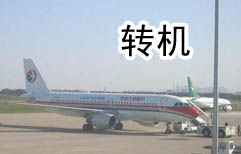
Oh, and why is there a China Eastern airplane the graphic on a lesson that mentioned United Airlines? And why is it a China Eastern Airbus A321 instead of a United Boeing 777? :-)
pretzellogicJune 30, 2010
It was interesting to hear John's discussion around asking about the trip, and the actual flights. I was thinking similarly to John that lútú doesn't really have a counterpart in English, but I guess it does. We would just say, "how was the flight?", rather than "how was the trip?" But I guess Chinese wouldn't say, "Nǐ de hángbān zěnmeyáng?" Or would they?
I've had the opportunity to speak with local Chinese, and Yali and Yu Liang sound very wealthy compared with some Chinese i've talked to. Most of the locals are saying that they've never left the country, and that flying out of the country is something they've never experienced, let alone flying from North/South America.
go_manlyJune 30, 2010
pretzellogic
Just letting you know (in case you didn't already) that you can enter ü by typing v.
bababardwanJuly 6, 2010
I think you're right. Now here's a very simple plain English word that in my experience you just don't hear as often any more [at least in these parts]. I guess it's a longer word and people tend to be lazy and use trip to encompass the whole time away or use something more specific like flight. Somehow in my mind journey being a long word tends to conjure up a long drawn out affair [perhaps involving different modes of transport, a bit of an ordeal perhaps] and now that transport is more advanced and quicker it doesn't seem to give the best vibe. But yeah, I think it is the equivalent and is a perfectly valid word [ I guess I'm just commenting on language trends].
pretzellogicAugust 26, 2010
I've heard "how was your flight?" and "how was the trip?" more often than "how was your journey?" but none of these are wrong. Maybe the frequencies of occurence are due to the difference between Americans and the British.
brigraingerJune 30, 2010
Wow ! 18 hour journey time without taking into account any time(zone) difference ,which I would love to know how to say in Chinese.
pretzellogicJune 30, 2010
My guess would be "zhèxié ge hángbān xūyào yìgōng shí bā ge xiáoshī. (These flights altogether take 18 hours).
Or maybe "lútú shíjiān xūyào shí bā ge xiáoshī. (travel time take 18 hours).
go_manlyJune 30, 2010
Some corrections/suggestions:
Firstly, that xié. Do you mean xiē (些). That is a measure word. You wouldn't have two consecutive measure words.
Secondly, yìgōng. I could be wrong, but I think that should be placed after the time.
Thirdly, xiǎoshī should be xiǎoshí.
Fourthly, lútú should be lǚtú.
I'm thinking it should be:
Zhège (or zhèxiē) hángbān xūyào shíbā ge xiǎoshí de shíjiān yìgōng.
dunderklumpenJune 30, 2010
I think it's interesting that the word for picking up (jie1) a person is the same as the one for answering (jie1) the phone.
http://www.nciku.com/search/zh/detail/%E6%8E%A5/1307674
masterkrangJune 30, 2010
if you think about it, it's not much different from the way we use "get". example "can you get me at the airport at 8pm?" and "get the phone". it pays to think generic sometimes.
dunderklumpenJune 30, 2010
That's true. I forgot one can say "pick up the phone". It's not possible to use the same words for those two actions in Swedish. We'd say answer the phone and fetch a person at the airport (literally translated).

jgwilsonJune 29, 2010
信息=The tones should be xìnxí. Why did you teach xìnxī? Is that the way people in Shanghai speak it?
xiaophilJune 29, 2010
Well, I can't speak for CPod, but I think xìnxī is correct. That's what my textbooks taught me, and that's what nciku.com says. Where are you getting your info from?
http://www.nciku.com/search/zh/detail/%E4%BF%A1%E6%81%AF/1316985

JohnJune 30, 2010
信息 (xìnxī) is correct. 息 can be neutral tone, but as far as I know it's never second tone. Where did you hear that?

danchaoJune 30, 2010
Yeah, I say xìnxí,, and my parents are from Taiwan. Didn't realize there was that discrepancy.
masterkrangJune 30, 2010
this reminds me of being in chinese class, where anybody with a Taiwanese background will swear that we are all saying it wrong. some pretty good examples are 建筑 which is two fourth tones in Chinese and fourth and second in Taiwan.
masterkrangJune 30, 2010
this is also the case for 星期, which in china is two first tones and in taiwan is first and third. i remember seeing a table of all the differences in tones between Taiwan and China, don't remember where. some dictionaries are good at making a note of that. i must have come across at least 20 - 30 differences. must be hundreds.
danchaoJune 30, 2010
Holy cow, you're right! I've lived in China for 13 years and I still talk with a Taiwanese accent. Haha. Somehow I don't notice these things.
jgwilsonJuly 1, 2010
你們猜對了,我現在在台灣。
在台灣,人會說:
星期xīngqí
信息xìnxí
Google Dictionary for Traditional Characters also has the second tone.
信息 [xin xi] Pinyin [ㄒㄧㄣˋ ㄒㄧˊ] Zhuyin
information; news; a message
But with the simplified dictionary Google Dictionary uses the same tone as you guys.
信息 xìnxī
音讯,消息
信息灵通人士。
用电讯、数码传递的数据、内容
信息战 | 网络信息。
bababardwanJune 29, 2010
So many things I liked about this lesson I don't know where to start 【but I'm now not sure if I should thank our CPod team 朋友们 for such a useful and well taught lesson ;)]. I've heard this advice before about using xiexie,but I still can't get my head around not saying thanks to Chinese friends where I think it would be appropriate in my culture. I find it a little confusing because it feels right to me [and rude not to thank where appropriate] and yet I don't want to give out the message that I don't think we're good friends.怎么办?[is it different for foreigners anyway?...I gather not really]
masterkrangJune 30, 2010
i wondered about this too... i think we are so used to immediately showing thanks, but like John said the thanks for chinese is a kind of heartfelt gratitude. maybe it's a good lesson for us to practice letting the thanks go to our heart and not just blurt it out of our mouths. if we internalize our thanks, perhaps we might be able to later externalize it better in a more meaningful way. also, we might be able to stop thanking people so much for useless things, like every time the waitress fills our water, or puts the fork on the table... are we really thankful for that or is it just her job duty?

suxiaoyaJuly 1, 2010
I am guilty of feeling irritated when people in China don't say thank you or sorry, but I should remind myself that it's not that they are being rude!
Whilst I'm not about to stop voicing my gratitude when people help me out, it's really helpful to bear in mind this important cultural difference.
bababardwanJuly 1, 2010
it's not that they are being rude
...this I completely understand and have no problem with. I'm merely talking about my own behaviour and the difficulty of teaching an old dog new tricks. For me it raises the old question...should I change anyway? I find it an interesting question. I'm sure I don't expect Chinese to change who they are when they come here. If there is something cultural that other Aussies would find strange in their behaviour for me it is a cause for celebration. I enjoy the cultural differences. I accept them for who they are.But it also makes me wonder how much this is the case in China as it is a much more homogenous society as far as I can tell and I think the pressure to conform is greater. How much this pressure/attitude extends to foreigners I do not know and I would be very interested in any insight into this.

chrisSeptember 4, 2010
I think most Chinese would make allowances for foreigners who continuously say thank you over here and would not read too much more into any deeper meanings we may or may not be trying to convey. Most of the time I just get the obligatory "bu keqi" or "bu yong xie" response every time I say thank you, no matter what the situation. I think that sometimes it is very useful to be obviously not Chinese when speaking the language with locals, particularly if we commit one of the many faux pas, e.g. getting a tone wrong and completely changing the meaning of a word, possibly accidentally hitting a swear-word. I certainly sense I get cut quite a bit of slack in this regard. However, the downside of course is that it probably hinders me getting properly authentic if my interloculators are forever having to make allowances!

holothurianSeptember 4, 2010
I have been completely broken of my thank you habit by a dear woman that lives with me, and will loudly say NO THANK YOU if I use xie xie inappropriately. Her opinion is that people that are not used to foreigners take it the wrong way, as in you are insincere. She does allow the occasional use of xie le.
bababardwanSeptember 4, 2010
thanks Chris...that's good to know. The faux pas via wrong tone etc is an interesting one. There is the obvious learner who will I'm sure, be given the benefit of the doubt. There will be some who achieve fluency and thus unlikely to make such a faux pas. But if one were to start to transition between the two...how will the call on a faux pas be made? ...hopefully still with the benefit of the doubt, hehe.
bababardwanSeptember 4, 2010
"as in you are insincere"
..really? Oh man...I struggle with that. Do they not consider the possibility that you are sincere? Do they not also consider and respect cultural differences?
chrisSeptember 4, 2010
Baba, yes, I sincerely hope so. I kind of hope that even if my fluency improves more and more, I'll still get given the benefit of the doubt for any dropped tones, faux pas, etc. I'm always ready to play the laowai-card if I need to....
bababardwanSeptember 4, 2010
hehe, yeah, I'm a big believer in playing the laowai card..hen hao zhuyi. The problem as I see it would be when you make a faus pas that makes sense..is not obviously a mistake, and if your Chinese isn't too bad, is taken as your real intention. Worse still, not realising that you've been taken the wrong way. Ah, but it's all part of the fun,hey? Jiayou mate. :)
holothurianSeptember 6, 2010
I think that just brush it off as I'm really polite, it never seems to me that anyone doubts the sincerity. My significant other just takes the role as my cultural educator a little seriously sometimes.
bababardwanJune 29, 2010
Complete transcript of this lesson here:
https://chinesepod.com/community/conversations/post/9569

billJune 29, 2010
这节课很有用. 多谢 ...
tangxiaojieAugust 26, 2010
Indeed, this is a very useful lesson. I would like to see more of this and less of the obscure stuff (i.e; blowing a fuse).
What did you notice in this lesson?
You are posting as a guest. Your reply is reviewed before it appears. Log in to post without review.