598735503December 26, 2017
Actual one where the video matches the 台词 + has animation http://www.xiaopin5.com/lijindou/4877.html

mythrandirApril 7, 2011
Great lesson! One of my all time favourite 省略语 is for '社会主义精神文明委员会' which based on the standard rules should be '社精委', but that doesn't sound too good and would be very very ironic, so wisely it is abbreviated as '文明委'.

bababardwanApril 5, 2011
13:06 。。腿【一张开】啊马上【?行速】地就跑了
13:12。。【脑/那/呢】撒腿
13:16 多花骗一个人我
bababardwanApril 5, 2011
the above 3 and the following 4 are the final words/ sentences that are unclear in the transcription of this lesson. Any help/ suggestions much appreciated.
14:03: 【精神】
14:15 【首字】的方式
14:33 【一/你想出】省略【一成短话】的话
14:45 。。。在我们【二成生活】当中【文】,再【运??】遇到谐音

lujiaojieApril 6, 2011
13:06 把你的腿一张开,然后马上/迅速地就跑了。
13:12 “撒” 有 张开,放大的意思,然后“撒腿”
13:16 那种兔子撒腿就跑......能够想到动画片里那种人物
14:03 省略语还是要“谨慎”地使用
14:15 “谐音”是汉语里面比较特殊的一种“修辞”的方式
14:33 你想去省略一长段话的话
14:45 我觉得在我们日常生活当中啊,在运用到谐音的时候啊,也经常会闹出许多笑话
bababardwanApril 6, 2011
13:06.。。哇, I can hear that 然后 now, but boy it was fast !
13:12。。trying to match things up, I guess you're saying that what I'm hearing as nao, is actually...然后...wa, that is hard to catch...really quick and clipped. obviously the n I'm hearing is the end or ran, and the ao is actually the ou of hou. I'd love to know if others can hear all the sounds of ranhou there and how much is kinda extrapolation. i can get there, now knowing it, with a little extrapolation. Certainly ranhou makes sense and I guess was predictable, but na could have fit in as well I think..prediction wise, but it didn't really sound like that.
13:16.。。噢: “动画片里” , “人物”。。现在听得清
14:03 “是要谨慎”.。。听得清
14:15 “修辞”。。听得清。。到现在我没听过。。。谢谢这个生词
bababardwanApril 6, 2011
14:33 “你想去省略一长段话的话”。。听得清。。。还有, 有道理
14:45: “日常生活当中啊,在运用到”。。听得清
多谢多谢Jiaojie :)

ouxianshengMarch 20, 2011
1:13 场面一定很chuangguan1:19 群众基础1:56 很长的pudian2:03 给大家的xiangcun4:45 黑标语啊,横幅这类的5:12 很性质注意6:06 非常的jianmiangeyao 然后6:24 爬完步之后7:23 ci了很多脑细胞7:26 你要想很久7:38 像那个xiangxiang中提到的8:51 来蒸食物的器具9:45 一句共同zhimiao10:08 产生很多奇异10:52 住客chujin住进?那个宿舍楼11:20 对这个shoushen受审人使用刑具谢谢!

connieMarch 20, 2011
1:13 场面一定很壮观(壮观zhuàngguān, magnificent )
1:19 群众基础
1:56 很长的铺垫
2:03 给大家的相声
4:45 哎,标语啊,横幅之类的
5:12 很形式主义
6:06 非常的简明扼要,然后(简明扼要jiǎnmíng'èyào,brief and to the point)
6:24 跑完步之后
7:23 死了很多脑细胞
7:26 你要想很久
7:38 像那个相声中提到的
8:51 用来蒸食物的器具
9:45 有异曲同工之妙 (异曲同工yìqǔtónggōng, different approaches, same result)
10:08 产生很多歧义(歧义qíyì, different meanings)
10:52 住客住进那个宿舍楼
11:20 对这个受审人使用刑具


guolanMarch 17, 2011
我想起来另外一个问题,是关于”费脑筋“的意思。 这个单词是不是含义这个意思: 你去明白以后,还是没有用? 意思是这个: ”你去明白的时候是浪费你的力气“,还是这个:”你需要用很多力气才可以明白“(但是可能是值得)?
iaingMarch 17, 2011
Not quite what I was hoping for, but good to see xiangsheng getting some exposure on Cpod.
A lesson based solely on a real xiangsheng dialogue would be cool, too ?
https://chinesepod.com/community/conversations/post/5240#comment-204774
bababardwanMarch 16, 2011
Ok, I wanna see if I can follow this introduction by trying to translate it:
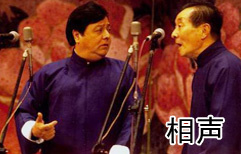
喜欢听相声的,说相声的,注意啦!
If you like listening to cross talk, and/or talking cross talk, pay attention!
两位相声界的大师马上要开始表演了。
two masters of cross talk are starting their performance immediately [this 界 seems to be implying these 2 masters are part of an elite group of masters of cross talking]
在表演之前,建议大家先了解了解省略语是什么
before the performance we recommend everyone first gets a good understanding of what this abbreviating is all about
,再想想开刀、上刑、上吊.......
again [also], we ask you to imagine/think about having surgery, ?punishment, hanging onself?
哎呀,越说越可怕了!大家还是竖起耳朵,仔细听吧!对了,千万别喝可乐,小心呛到哦!
aiyou, the more you talk about it the more scary it becomes. Everyone should nevertheless prick up their ears, and listen carefully ok ! Right, whatever you do don't drink cola, [careful not to choke ]
bababardwanMarch 16, 2011
ok, well the bits that were most unclear there were:
省略语 [but I guess I'll just have to listen to the rest of the podcast to get more of an idea there]
再想想开刀、上刑、上吊....... [is it something to do with omitting/chopping out words being like surgery on the words?]
别喝可乐,小心呛到哦![is this because you might suddenly laugh and choke on your cola, suddenly gasp at this surgery business and choke, or burp from the gas of the cola?]
guolanMarch 17, 2011
Thanks, bababardwan, it's helpful reading your translation. (I've also only listened to part of the podcast so far...here's hoping to get to it in seriousness tomorrow!)
bababardwanMarch 16, 2011
28 seconds into the podcast, bit's in brackets I can't catch properly
徐洲: 啊,简单来说这是两个人在舞台上说话,然后呢,会【产生一】非常,啊,【好得生效果】shda 笑的?
bababardwanMarch 17, 2011
谢谢Connie。现在听得清
I'm intrigued by what David says at 0:34 secs in this last bit:
大笑的笑
when he says that 大 it sounds like he gets an slightly prolonged and exaggerated "sh" sound in front of it. I heard him do exactly the same thing in the Advanced lesson 中国通。 Could you please explain what this "sh" sound in front of 大 is about. I'm dying of curiosity.
bodaweiMarch 17, 2011
Hey Baba,
ha ha (sorry your question was to Connie and I'm certainly going to be a disappointment) but I think he's giving you a preview of 大笑的笑, starting to say 笑 when he wants to say 大笑的笑. I like it that these discussions are not perfect sentences - that's how people speak in real life. A s-s-stuttering start to the sentence (no disrespect at all meant to David.)
bababardwanMarch 17, 2011
bodawei,
you know that's exactly what toianw came up with by way of explanation when we were working on the Advanced transcript for 中国通。 At the time I thought it was an excellent explanation. However, while it still could be correct, when I struck it in this lesson, it sounded so identical to the one in the other lesson that I was really left with the impression that this "sh" sound was deliberate and not a switching between words or a stuttering...that something else was going on. By the way, it's always nice to get your opinion so thanks for that, but I do also hope Connie or David will come and solve the mystery for me [ or at least that is confirm that you guys are right]. I'd love you to listen to the other one and then this and then hear what your opinion is.
bababardwanMarch 17, 2011
see discussion here:
https://chinesepod.com/community/conversations/post/11369#comment-207660
and listen to zhongguotong from around 15m45s [if you're interested, hehe]

bweedinMarch 17, 2011
誒,澳大利亞朋友,I listened to both examples several times, and I think it's just a coincidence. Besides, I think the extra syllable in this podcast sounded like "x", and the extra syllable in 中國通 sounded like "sh"
對不起不支持你
bababardwanMarch 17, 2011
bweedin,
I don't expect folk to agree...I value your opinion, so thanks for that. Interesting.
connieMarch 17, 2011
Baba, 你在"大笑的笑"前面听到的"sh",是一个杂音。我们在说话的时候,经常会发生没有想好,或者突然想换一个词,或者舌头打结的情况。所以会有一些杂音出现。
bababardwanMarch 18, 2011
oh, ganxie ganxie ni Connie. toianw, bodawei, he bweedin dou shuo dui le. ganxie ni queren, hen hao de jieshi. wo mingbai.
What did you notice in this lesson?
You are posting as a guest. Your reply is reviewed before it appears. Log in to post without review.