8890909September 24, 2019
Can I also 家乡的成长和成长的家乡?

anonymous1068458February 5, 2020
I don't think they are interchangeable if that is what you are asking.

taylorarmstrong168August 20, 2013
家乡的变化 can you switch up the order and say 变化的家乡

Right-WingnutAugust 20, 2013
No, that wouldn't make sense. The changes are an attribute of the hometown, the hometown is not an attribute of the changes.

veronique21August 27, 2013
Hi Taylor !
家乡的变化真大
The litteral translation is something like: the changes of the hometown are really big. But, of course, it's not the best solution if you write a dialog in English, hence the sentence: Our hometown has really changed a lot !
adam_p_laxApril 22, 2012
what is the function of "再“in the sentence 你再看远处,那里有好多工厂
it doesn't seem clear in the translation- is it "again" or "then"

GregEApril 22, 2012
The sentence 你再看远处,那里有好多工厂 is a follow-up comment to the speaker's previous sentence 你打开窗闻闻; the 再 serves to emphasize this transition.

podsterApril 23, 2012
re.: "the meaning of 再 seems to be a little tricky" , you can say that again.
https://chinesepod.com/lessons/using-%E5%8F%88-you-and-%E5%86%8D-zai

PurrfecdizzoMay 25, 2011
I have lots of questions about this lesson! What about 家乡? How is it different than 老家?
Thanks.

JohnMay 25, 2011
家乡 means "hometown" and can refer to anywhere.
老家, literally "old home," means something more like "ancestral home" and implies that you no longer live there.
PurrfecdizzoMay 26, 2011
I was talking to a chinese person, and she told me that 家乡 is more formal, and often found in books or other written stuff, whereas 老家 is more common in spoken language. What are your thoughts on this? Does this sound right? I want to check because she gave me the explanation in Chinese, and maybe I misunderstood it.
thanks.
PurrfecdizzoMay 25, 2011
Another question... the term 变化, how does it vary from other words that mean change? for example, 改变,
thanks
PurrfecdizzoMay 25, 2011
Oh wait, I missed the answer when I listened to the lesson before. 变化 is a noun. I think that is the difference. Am I right?

JohnMay 26, 2011
What do you mean by "your rollover"? In the dialogue, vocabulary, and expansion tabs of this lesson, all instances of 变化 say "change." This is somewhat ambiguous, granted, but if it had been a verb, we would have used "to change."
变化 can, on occasion, be a verb, but in this lesson it's used as a noun.
bababardwanMay 26, 2011
"What do you mean by "your rollover"? "
..sorry for being unclear John. I meant my popup translator. MDBG also has it as potentially being used as a verb, as "to change"
Sorry, I thought you were saying that generally it can only be used as a noun...I didn't realise you were specifically referring to its usage in this lesson. I also thought amesburygeorge's original question was general..in the general difference between these simile's
PurrfecdizzoMay 26, 2011
oh, okay. so then it is possible to use this as a verb. So would you say that it is more commonly used as a noun or as a verb?
PurrfecdizzoMay 24, 2011
Hi there, me again.. (so sorry... so sorry for being such a pain... ) but I have another question about the content in this lesson. Jenny makes a comment that 高楼 is for tall building, and 大厦 is also for a building, but used when describing a headquarters for a company or something. What I would like when I would use 高楼, when I would use 大厦, and when I would use 高楼大厦. Perhaps, a few example sentences for each case? Thanks again in advance.
PurrfecdizzoMay 22, 2011
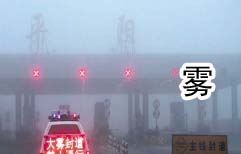
Excuse me, I have a question.. What is the Chinese word for 'smog'? I am not too clear, but perhaps 污染 is the chinese translation?
thanks.


azzoteJune 29, 2010
Hello,
I just suscribed the "premium" stuff and I'm a little disappointed by 2 things :
1) i'd like to be able to save not only words but groups of words of sentences. I don't know if it's possible to create some kind of personnal folder with favourite sentences.
2) why the expansion and exercices are the same ? it's good for memory but quite boring.
bababardwanJune 29, 2010
azzote,
Nice to see you back.
1..good question. To my knowledge this is not possible on the site here [at this stage at least...there is an SRS function coming to the vocab manager here and being able to save phrases has been raised but I think the jury is out on that one]. I think currently the best option I know of is to copy some of those phrases into a flashcard programme like anki. You can also make your own cards in the vocab manager on the site.
2. I guess the exercises are trying to test your retention from the expansion. To me it makes sense. I think if you're finding the exercises boring you may find it better to go to the testing centre which was improved a few months ago. I think it gives a different test each time.
I hope you get some answers...I'm particularly interested in CPod's response to your first question.
Good luck :)
azzoteJune 30, 2010
Thank you bababardwan !
Yeah I've been out for many months... I find myself needing to make "chinese pod breaks" after every 6 months sessions to catch up on the field ! ;o)
I hope I'll get answers from CP, in the meantime, I'll juste copy-paste in a word document.
I lost many hours trying to make anki work... even with a friends'help...!
For the 2, I see what you mean. I get the point too, learning by heart a few sentences if the best way. I think they should add a section "random training" or something, more large. I'll explore the testing section.
many thanks !

catherinemJune 30, 2010
Bababardwan's answers were dead on (thanks barbs!). For #1 you can only save words or set phrases. This is because the system was built on individual, annotated units (this relates back to our pedagogical style: the lexical approach).
As for #2 we use the expansions and dialog words/sentences in the exercises to test comprehension from an individual lesson (we can't assume a student has studied X lessons before this lesson, so we don't want to throw a bunch of new content at him/her in the exercises). Like Bababardwan, I'd suggest checking out our Placement Test and Level Tests. Let us know if you have any further questions.
kaixin_in_tampaJune 4, 2010
你好,我们怎么说《decade》?One decade, two decades...谢谢
上海人肯定认识《century》:世纪。世纪公元,世纪大道。。。

kaixin_in_tampaJune 4, 2010
changye, thanks! "It happened more than 3 decades ago", how would I say that?


ladevorahJune 1, 2010
你好, 我想问一下Another reference book that I have defines 聞 as "to hear" or to listen, but you define it in this lesson as "to smell, to take a sniff." Please explain!
谢谢!

go_manlyMay 24, 2010
Regarding the expansion sentence:
以前北京的空气污染很严重,现在好多了。 (Yĭqián Bĕijīng de kōngqì wŭrăn hĕn yánzhòng, xiànzài hăo duō le.) In the past, Beijing's air pollution was very serious. It's much better now.
Doesn't 好多 mean 'very many' or 'a lot of'? How does this lead to the translation 'much better now' ? It sounds like they are saying there is still a lot of pollution.

JasonSchMay 24, 2010
好多了 is an expression that means that something is, 'much better now'.
For example,
A: 你的肚子还疼吗?Does your stomach still hurt?
B: (现在)好多了 It's a lot better (now).
好多 as in, 'very many', isn't followed by a 了. (太, however, is: 太...了)
go_manlyMay 24, 2010
Thanks Jason. So 了is the key. That's a relief. I was dreading I was going to be told that the key is context.

zhenlijiangMay 24, 2010
Nothing further to add to Jason's answer, but I remembered this discussion we had a few weeks ago.
changyeMay 24, 2010
“好多” (very many) and “好多” (much better) have different grammatical structures.
“好多” (very many) = 好 (very, adverb) + 多 (many, adjective)
“好多” (much better) = 好 (good, adjective) + 多 (much more, adjective)
JasonSchMay 24, 2010
No prob. Yeah, it's all about the 了 here. You can think of it as marking a change of state: from bad to better, or 'the 好 has 多了ed' if that makes any sense. :)
And thanks Changye for a more a more succinct grammatical explanation!

epdchinaMay 10, 2010
顺便,如果可以的话。。。By the way, If possible...
顺便 shun4bian4 by the way
我想你们回答我的问题 (用中文还有英文)。 I want you all to answer my questions (using Chinese and English).
回答 hui2da2 answer
让我们讨论一下这三个问题吧!Let's discuss these questions!
讨论 tao3lun4
你们也可以做一个词汇表 you can even add a vocab list
词汇 ci2hui4 vocabulary
表 biao3 list
这样也是一个方法让你复习你的中文.This is also a way to practice your Chinese.
复习 fu4xi2 review
epdchinaMay 10, 2010
哪些城市有最大的污染?What are the cities with the largest pollution problem?
城市cheng2shi4 city
污染的最大的问题是什么?比如,损害肺还是引起癌症? What is the biggest problem of pollution? For example, harmful to lungs? Causes cancer?
损害sun3hai4 harm
肺fei4 lungs
引起 yin3qi3 cause
癌症 ai2zheng4 cancer
我们怎么停止污染?How can we stop pollution?
停止ting2zhi3 stop

jianxuexiMay 3, 2010
In the following sentences from the expansion tab, I assume the placement rules for verb and time period don't apply. Is that because you're using the time period as an adjective?
来中国以 前,我学过一年的中文。
那是很多年前的事,我不记得了。
Thanks, jan
go_manlyMay 3, 2010
Regarding the first sentence: In time duration phrases, the duration always comes after the verb, whether or not there is a 的 in the sentence.
yangzijiangMay 5, 2010
Those two are right, however we don't always use "," if this is a formal using sentence, which means it is OK in chatting. What's more, the time periods are not adjectives but attributives, they are a kind of preposition attributive in Chinese.
yangzijiangMay 5, 2010
the duration always comes after the verb,
Maybe it's right in some situation, but most time the time phrases are following the subjuect.
go_manlyMay 5, 2010
Sorry, but time DURATION phrases come at some point AFTER the verb. By time duration, I mean a description of how long (for what length of time) that verb has been performed for. This also applies to time FREQUENCY phrases (how many times the verb has been performed). It is time LOCATION phrases (WHEN something happened) that come before the verb.
As you appear to be Chinese, I assume you simply didn't understand what I meant by 'duration'.

david_dDecember 13, 2013
You have me a bit confused as well...
In the last sentence of your first paragraph, why would a 'time location' phrase not have anything to do with location?
Also, in the lesson it sounded like:
1. If a verb is affecting a duration, it goes after the verb.
(如:我学中文七年了)
2. If a verb is negating a duration, it goes before the verb.
(如:好久不见,我十几年没回来)

lily_counselorDecember 16, 2013
Hi David,
You're right, we can just apply this rule.
And I think by saying 'time location phrase', go_manly may refers to the complement phrase of time.

joebornApril 29, 2010
My apologies if this is too far afield, but I have a question about the pronunciation of 厦 in general. Apparently, its pinyin is sha4 when it's used in 高楼大, gao1lou2da4sha4, it's xia4 in 厦门 Xia4men2. So far, so good.
But, for 厦's stand-alone definition, MDBG gives not only "tall building" and "mansion" but also "rear annex" and "lean-to," and it gives not only sha4 for the stand-alone pronunciation but also xia4 as an alternative.
So the question is, does any native speaker know whether the alternative, xia4 pronunciation applies to all of those stand-alone definitions or only to, say, "lean-to"?
changyeApril 29, 2010
Hi joeborn
All my Chinese dictionaries, including ancient words dictionaries and character dictionaries, say that 厦 (xia4) is for 厦门 (xia4men2), and not for “lean-to”. Furthermore, the dictionaries say the meaning "lean-to" (厦, sha4) is a dialect usage, but I don't know where it is..... (in Beijing?) In any case, I guess most native speakers don't know the meaning "lean-to".
joebornApril 29, 2010
ありがとうございます.
Good point about "lean-to"; it's probably something of a stretch for a non-native English speaker--except. apparently, for you.
"All my Chinese dictionaries, including ancient words dictionaries and character dictionaries." changye, you must be quite the scholar. I am unworthy :-)
Thanks again.
changyeApril 29, 2010
どういたしまして。Actually I love using (and buying) dictionaries very much because they enable you to act as if you were "know-it-all", hehe.

hanksMarch 13, 2012
Joe, you mentioned Mansion and I know this is a bit far from the topic but it has always perplexed me when I see buildings in China called "something mansion" on its name plate on the front. Correct me if I am wrong but isn't Mansion a large residence with no commercial use at all?
bababardwanApril 28, 2010
I noticed in the exercises for this lesson the distractors in the multiple choice were better than I remember them being previously.Apart from one or two other lessons it's been a long time since I've done the exercises,so this may have been the case for some time,or maybe this is a one-off.The point being that good distractors improve the quality of the test.When the distractors are obviously wrong it's not a true test.Has this been a conscious implementation of CPod? Anyone else notice this?

dropped_chopstickApril 28, 2010
I also liked the way the lesson had a 'grammatical' theme. In this case how to describe degrees (weather,change,pollution). I would like more of this emphasis on grammar as they make very strong and useful lessons. Thanks!
JohnApril 29, 2010
It's a very conscious implementation! Our team has put many, many hours into exercise editing. The system can generate a randomized list of possible answers in the exercises for any lesson, but it's not yet sophisticated enough to generate really good distractors. So our teachers need to go over the exercises and edit all the distractors to make sure they're up to snuff.
Trust me, good changes don't happen without conscious effort... :)
JohnApril 29, 2010
Glad you liked it (and noticed it)! We're definitely doing this more in Elementary, but we'll keep it up in other lessons as well.

oranginaApril 29, 2010
I also like this very much. I liked how the different ways of expressing degree was worked (quite naturally) into the dialog, not just discussed in the explanation. It really helps learn the framework and thought process of the language, and not just isolated phrases.
bababardwanApril 29, 2010
I suspected so.Good job then. I thought you should know then that it hasn't gone unnoticed and that I think that it's a very worthwhile exercise that's appreciated on the user end.Thankyou :)
JohnApril 29, 2010
You're very welcome.
We're well aware that good distractors are essential for good multiple choice tests, and so far humans are still the best at that.
zhenlijiangApril 29, 2010
I tend to think there are quite a few things only humans are any good at, probably because I'm old school (and a tech dummy) ...
Of course there's been so much else going on these past few weeks, but did you have plans to announce this important improvement (not sure how long it's been this way now)? I think many of us would have liked to know. Thanks Baba for bringing it up.
In any case it's great, that the multiple choice questions are better now (so the placement tests are also improved I guess?). I look forward to doing the exercises more often.
JohnMay 5, 2010
Well, the issue is that not every single exercise is up to standard yet. We're still working on getting to that state.
cnyisoverApril 28, 2010
Regarding the sentence 打开窗闻闻
I've been told that it's rare to say 窗 and not 窗户. Is this a Shanghai thing? Is either OK?

dropped_chopstickApril 27, 2010
哦。。。我真爱听B的声音。。。
敦促你们多用他。。。
谢谢
catherinemApril 28, 2010
A man of many talents, he's on the tech team and is usually busy maintaining our servers... We'll let him know how much you liked his acting! :)
dropped_chopstickApril 29, 2010
thank you Catherine!
Al the CPod voice actors are very good, but this guy is quite special.
If he has time, I have a server he's welcome to come and maintain!
shoondoolApril 27, 2010
If I may, I'd like to offer an alternative translation for the ninth expansion sentence ( just for the heck of it).
我爺爺以前是一名海軍. My translation: "My grandfather used to be a navy man" OR "My grandfather used to be a naval officer".
And FYI, the pop-up for 海軍 shows "navy" , but in this context it should probably be either "navy man" or "naval officer".

changyeApril 27, 2010
I think it's short for “一名海军(军人/士兵)”. The same is true for “一名公安(人员)”. They are idiomatic usages.
JasonSchApril 27, 2010
The problem with adding officer is that an 'officer' is a specific type of person in the navy. (海军军官). That is, not everyone in the navy is an officer.
While 'navy man' works, I felt that 'in the navy' was a more natural way of expressing it in English.
As for the pop-up, I left it 'navy' intentionally so that people wouldn't confuse the word 海军 with 'person in the navy', and could see through the sentence level translation that 一名海军 means 'someone in the navy' or, 'sailor [in the navy]'.
bluevwspottingApril 28, 2010
I am a naval officer, and I've heard another Chinese person speaking to another shorten it to call me a "haiguan" (sorry, my computer doesn't have chinese input at work).
bluevwspottingApril 28, 2010
Also, on another note, at a shakespeare play in Hong Kong recently, sailor was translated in the subtitles as "shuishou" or "water-hand"
go_manlyApril 25, 2010
In the Expansion sentence:
我爷爷以 前是一名海 军。(Wǒ yéye yǐqián shì yì míng hǎijūn.) My grandfather used to be in the navy.
Doesn't this say 'My grandfather used to be the navy" ?
TalApril 27, 2010
No, because 名 here is a measure word for persons, so from the context the meaning is clear that the grandfather was a navy person.
go_manlyApril 27, 2010
I guess I had already kind of reluctantly accepted that. But can we say:
我爷爷以 前是一名学校。(Wǒ yéye yǐqián shì yì míng xuéxiào.)
to mean "My grandfather used to work in a school" ?
If so, does it imply he was a teacher, or any school worker?
If not, under what circumstances can we use this construct?
TalApril 27, 2010
呵呵,I'm almost certain you can't say your suggested example sentence.
The navy is a military service isn't it, (also the army and airforce.) So I'd say that the expansion sentence is good.
学校 is a different kind of thing altogether, right? It's a place.
JasonSchApril 27, 2010
The measure word 名 here indicates a person. So, a direct (albeit a bit unnatural) translation of 我爷爷以 前是一名海 军 would be "My grandfather used to be a sailor/officer [in the navy]."
go_manlyApril 27, 2010
So are you saying that, since an army is a collection of people, we can use 名 to mean just of of those people?
Could you say 一名人群 (yī míng rénqún) to mean 'one person in the crowd' ?
TalApril 27, 2010
I'm not saying the army/navy is a "collection of people", I'm saying it is a service, an organization which serves the state, an entity. I'm not an expert on Chinese grammar of course, but I think it's right to say that in this kind of example (possibly few others) it's OK to use 一名 to indicate that one individual is being spoken of, followed by the noun for navy, to convey the meaning of 'a navy person'.
TalApril 28, 2010
Perhaps it's also worth noting that 名, used as a measure word for people, is used especially for those with a specific occupation or position.
e.g.
一名军人 = a soldier
两名学生 = two students
david_dDecember 13, 2013
I think the reason we can say 他是一名海军 is because of how the word 海军 is constructed.
This is how I understand it: you can decompose the word 海军 to 海洋 and 军人. But there isn't a readily apparent way to deconstruct the word 学校 in a way that it sounds like a person.
I dunno if this is esoteric for the intermediate level, or even if I'm on the right track at all... Any feedback would be awesome... :)
What did you notice in this lesson?
You are posting as a guest. Your reply is reviewed before it appears. Log in to post without review.