
everettJanuary 4, 2012
Realize I'm about a year and a half late but just noticed the vocab list and exercises list 不错 bú cùo as meaning "not".

xijunwAugust 10, 2010
Though I'm a Chinese following EnglishPod, I found that ChinesePod is also interesting, and helpful for English. Thanks!

kaixin_in_tampaMay 7, 2010
现在明白为什么这么多菜单有《丝》汉字。它的意思是:《shredded something》 或者《strips of something》。
Xiànzài míngbái wèishéme zhème duō càidān yǒu “sī” hànzì. Tā de yìsi shì:“Shredded something” huòzhě “strips of something”.
Now I understand why so many menus use the character: 丝, it means "shredded" something or "strips of" something.
Yes, 鱼香茄子 (yúxiāng qiézi - eggplant in garlic sauce) is awesome.

changyeMay 7, 2010
Hi shanghai_rocks
FYI, “丝” (si1) originally means "silken threads", and so "silk cloth" is called “丝绸” (si1chou2) in Chinese. "Silk Road" is “丝绸之路” (si1chou2zhi1lu4).
kaixin_in_tampaMay 8, 2010
Thanks changye! One of my all-time favs involves 丝绸。
https://chinesepod.com/lessons/what-do-foreigners-like

cassielinMay 4, 2010
oh, 鱼香肉丝is one of my favorite dishes. But i have never try to cook it by myself before. I only tried to cook 青椒肉丝 by myself. It was delicious. I decided to order 鱼香肉丝 for tonight's supper.^_^
changyeMay 4, 2010
Hi cassie 老师
I'm going to eat out this evening. Having read you comment, I would also like to eat 鱼香肉丝 now. Yeah, 鱼香肉丝 is really tasty.


stevecMay 2, 2010
I don't understand why the following dictation items were marked incorrect. Am I missing something, or is it a bug?

xiao_liangMay 5, 2010
It's a bug - your punctuation is in the wrong font! I've mentioned it a number of times, but I don't know if it's on the list to be fixed yet.

kenwilsonApril 30, 2010
I am a vegitarian is it possible to get a vegitarian dish in a diologue?
beishentuMay 30, 2010
Possible? Everything's possible. Probable? Who knows? This probably isn't the place to do requests...
xiao_liangApril 28, 2010
The expansion has 味道 (wèidao) as "smell" and as "flavour". Can it be both, or is it a mistake?

bababardwanApril 28, 2010
I think it can be both mate.Smell and taste are closely linked and I don't think Chinese make much of a distinction between the two.


dunderklumpenApril 28, 2010
This doesn't have much to do (except for 鱼 yu2 fish) with the present lesson but since it's so good I'll post it anyway :-) McDull (麦兜 mai4dou1) tries to order food in a restaurant.
https://www.youtube.com/watch?v=IkgGcRxsVfg
Here's a transcription. I hope I got it right. I'm sorry for not providing pinyin and translation but I fear I'll get it wrong. Better to use perapera on this one.
麻烦你,鱼丸粗面。
没有粗面。
是吗?
来碗鱼丸河粉吧。
没有鱼丸。
是吗?那牛肚粗面吧。
没有粗面。
那要鱼丸油面吧。
没有鱼丸。
怎么什么都没有啊?那要墨鱼丸粗面。
没有粗面。
又卖完了?麻烦你来碗鱼丸米线。
没有鱼丸。
麦兜呀,他们的鱼丸跟粗面卖光了,
就是所有跟鱼丸和粗面的配搭都没了。
哦,没有那些搭配啊。麻烦你,只要鱼丸。
没有鱼丸。
那粗面呢?
没有粗面。
http://v.youku.com/v_show/id_XMTA1NDE5NDM2.html
xiao_liangApril 28, 2010
Pinyin of the above (thanks to google translate :-) )
Máfan nǐ, yú wán cū miàn.
Méiyǒu cū miàn.
Shì ma?
Lái wǎn yú wán hé fěn ba.
Méiyǒu yú wán.
Shì ma? Nà niú dǔ cū miàn ba.
Méiyǒu cū miàn.
Nà yào yú wán yóu miàn ba.
Méiyǒu yú wán.
Zěnme shénme dōu méiyǒu a? Nà yào mòyú wán cū miàn.
Méiyǒu cū miàn.
Yòu mài wánliǎo? Máfan nǐ lái wǎn yú wán mǐxiàn.
Méiyǒu yú wán.
Màidōu ya, tāmen de yú wán gēn cū miàn mài guāng le,
Jiùshì suǒyǒu gēn yú wánhé cū miàn de pèidā dōu méi liǎo.
Ó, méiyǒu nàxiē dāpèi a. Máfan nǐ, zhǐyào yú wán.
Méiyǒu yú wán.
Nà cū miàn ne?
Méiyǒu cū miàn.
damonApril 28, 2010
Hey xiao_liang, graceful apology accepted! Really, though, if there is no guide to posting to be seen, and no consistent lead from the top - aka Cpod staff - then users can't be expected to follow good protocol.
I do remember the debate raging a while back, however, was partly over whether Cpod should insist on pinyin being used alongside Hanzi in Intermediate discussions. While Intermediate as a forum for pinyin might be debatable, surely Elementary is not.
damonApril 28, 2010
It appears that the battle to make people use pinyin along with characters in the elementary level discussions has been lost. Shame. I use pera-kun to read comments in hanzi, but that's a blunt tool. Employing pera-kun, hanzi and pinyin together would be helpful for learning.
I'd like to see the counselors leading the way with the use of pinyin alongside characters. I'm curious why this is not happening. This is an elementary learning forum, after all. Why hanzi only at this level?
xiao_liangApril 28, 2010
Argh. I'm guilty of this. It just means we need to pay more attention to where we are posting messages. Apologies from me, in any case (although I'm not anyone important!)


hamshankApril 27, 2010
During the dialogue the male eating says 好吃 hao3 chi1, really fast and almost agressively and to me makes it sound like the 吃 chi1 sound like a 4th tone.
I didn't have a problem understanding but was just wondering if anyone has any advice on how to differentiate these for other words that might crop up in the future or do we just go with the context?

jen_not_jennyApril 28, 2010
When I first came to China I had a terrible time distinguishing between 1st and 4th tones. I knew there was a distinct difference, my ears just had a hard time picking up on it, especially when listening to native speakers converse at a natural speed, or when the speaker is excited. It still gives me grief occasionally. Paying more attention to context definitely helped me!
hamshankApril 28, 2010
Thanks for the advice I will bear that in mind! I'm almost sure that even native speaker don't pronounce every tone perfectly when adding emphasis on certain words or perhaps they do and i'm still struggling.
I think context will always be my key as I was always pretty tone deaf when it came to recognizing music tones too.


alwingateApril 26, 2010
Having to come to the site to bookmark a lesson is required to then get the iTune download. This is less user friendly and I don't see the benefit to the end user.
alwingateApril 26, 2010
Having to come to the site to bookmark a lesson is required to then get the iTune download. This is less user friendly and I don't see the benefit to the end user.

iwatachiefApril 26, 2010
I have an Irish friend here and there are 2 things every waiter/waitress in town (no kidding here!) knows he's gonna order: 土豆泥 (mashed potato)and 糖醋里脊 (sweet and sour pork). As we come in the restaurant, the waiter starts writing down those 2 dishes, way before we even said a word! Hilarious!
changyeApril 26, 2010
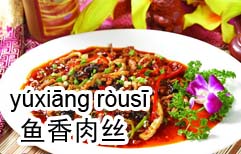
Now I finally know why the dish, which actually doesn't contain fish meat, is called“鱼香肉丝”. Thanks, Chinesepod! I always thought it was one of those“挂羊头卖狗肉” (false advertisement) in China.


bluesky3064April 26, 2010
这本书你看完了吗?Can you also say 你看完了这本书吗?Would it have the same meaning, just a different emphasis?
Does the 完了 always go immediately after the verb? i.e. would 你看这本书完了吗?be wrong?


JasonSchApril 25, 2010
When I first came to China, 鱼香肉丝 / yǔxiāngròusī , along with 宫保鸡丁 / gōngbǎojīdīng, was an absolute favorite of mine. It was also the first Chinese dish I tried to cook myself! (It turned out all right...but it just wasn't the same)

catherinemApril 25, 2010
鱼香肉丝 (yǔxiāngròusī) is still one of my favorite dishes, despite how it's often translated ("fish-flavored pork strips")... I also love 鱼香茄子(yǔxiāngqiézi)... mmmm.

JohnApril 25, 2010
Ah, 干煸豆角 (gānbiān dòujiǎo), right?
In Shanghai we often call it 干煸四季豆 (gānbiān sìjìdòu).
Whatever you call it, it's still delicious!
waiguorenApril 25, 2010
*Yes, thats what I meant, I couldn't find the ‘火’ in front of the ‘扁’ on my pinyin input system...still can't.
豆角 (dòujiǎo) also known as 云豆 (yúndòu) in some areas...agreed, doesn't matter what you call it, it's 好吃! (hǎochī)

helenshen_counselorApril 26, 2010
Finally I can cook 鱼香肉丝 myself! But not as good as we have in restaurants. Do they have any magic ingredients?

svikApril 26, 2010
Hi Helen,
I have made 鱼香肉丝 for many years, I think it is OK since my wife (北京人 ) likes to eat it. Other than fresh ingredients, I think the secret is in the final sauce. The recipe I use in the US calls for 酒 (wine), 酱油 (soy sauce) and 黑醋 (dark vinegar), for which I substitute worcestershire sauce (a dark and flavored vinegar)! That's not to rule out magic. In China, I found that 鱼香肉丝 was generally very good in 北京, but not so much in 杭州 (Hangzhou).

ellen_counselorApril 27, 2010
I still don't understand why it's called “鱼香”肉丝. There's no fish taste in this dish.
jen_not_jennyApril 28, 2010
Helen...did you add a little MSG? ;) I think that's the magic ingredient many restaurants use, although I certainly don't recommend it!
What did you notice in this lesson?
You are posting as a guest. Your reply is reviewed before it appears. Log in to post without review.