

timothygstoutMay 27, 2013
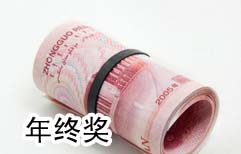
我的工资都花光了,就等着年终奖呢!
I think John explained that the 呢 had something to do with the way we might say, "and" at the beginning of a sentence. A Chinese friend also told me that the pattern Verb着呢 is also a common pattern for the present continuing form "ing" and that seems to be going on in this sentence, although there are other words in between. Any comments?
timothygstoutMay 22, 2013
给他买礼物,我花了很多心思。
This sentence order seems a bit strange to me. Could I also say,
我花了很多心思,给他买礼物。
Thanks,

kingbeeMay 10, 2011
Although as a foreign teacher in China I don't get the end of year bonus, I'll often get bonuses for teachers day, National day, and other random days. I'm not complaining!

chrisJanuary 8, 2011
This point was touched on in the lesson banter, but it comes up again in Expansion sentence 1b:
jin1tian1 fa1 gong1zi1 le, wo3 qing3ke4.
I got my salary today. I'm paying.
The use of "fa1" feels really strange to me. Could we substitute "fa1" with "shou1dao4 (to receive)" or possible "de2dao4 (to get/obtain)"? Or would this then be poor grammar?
Thanks, Chris.

JasonSchJanuary 9, 2011
Hi Chris,
The fā in, 'jīntiān fā gōngzī le, wǒ qǐngkè', actually refers to the company sending out the salary. So, a more literal translation would be 'The company gave us our salaries today. I'm paying'.
As for a way of actually saying, 'I got my...', although dédào and shōudào are both grammatically correct, the natural word here to use is nádào (拿到), or simply, ná. (wǒ jīntiān nádào gōngzī le)

zhenlijiangFebruary 9, 2010
在日本有‘奖金商战'这个说法(冬季的也叫做‘岁末·年末大商战')。在中国有可能是‘春节商战',是吗?每年两次(夏季和冬季),临近发奖金前的几个星期间,各大厂商与零售商这样的大公司一齐加强促销宣传活动。不过这两三年经济这么萧条,大家拿奖金也首先要付款(奖金大概已经被列入偿还计划之中,就是说,奖金时期要偿还一笔比较多的钱)什么的,结果能花的钱很少。
另外,有‘圣诞节商战'、‘奥运商战(有人把奥运会【特别是夏奥会我觉得】看做一个换个视听电器的机会)'、还有正在展开的‘情人节商战(各种各样的顶级巧克力!)'、‘疼爱的孩子上小学商战(爸爸妈妈爷爷奶奶老爷姥姥=六个口袋都是对象)'、‘新职员(开始工作,搬家开始单身生活的人都需要买很多东西)商战'等等。终年有某种商战!
(说到我自己,是个体经营者,原来没有奖金能靠。)
I hope I've managed to say something close to:In Japan there's what we call the "bonus sales battle" ボーナス商戦 bonus sho-sen (the winter one also known as the year-end sales battle 年末商戦 nen-matsu sho-sen). In China I guess that would be "Lunar New Year's sales battle"?So twice a year (summer and winter), in the weeks leading up to bonus time, major manufacturers and retailers all take their sales promotions up a notch. These few years however, with the economy as depressed as it is, people may get their bonuses, but after paying off their loans (bonuses are often already accounted for in payment plans, in other words at bonus time you have to pay a more significant amount than the usual monthly sum) and such, they end up with little money to actually spend.
Other sales battles are the "Christmas", the "Olympics (particularly for the summer games I think, some people see the Olympics as an opportunity to get the latest audio visual equipment)", the currently ongoing "Valentine's Day (high-end chocolates galore!)", the "dear little son/daughter entering elementary school (all six pockets--two pairs of grandparents + parents--are targeted)", the "entering the work force (new recruits starting at their first job, moving into their own place to start their new life have many things to buy) etc etc. There's some sales battle on, all throughout the year!
(As for me, I'm self-employed. No bonus to rely on.)

changyeFebruary 10, 2010
Hi zhenlijiang
看你的帖子,我觉得还是女人对“商战”有很深的造诣,呵呵。 我的老婆很喜欢“参加商战”,可是我这个“和平主义者”总是反对女人去打仗。其实在商战中获取胜利并不容易,不仅如此,往往会被彻底打败,结果白花冤枉钱。我每次对“商战”采取一个战术,就是“三十六计,走为上计”,老婆当然不高兴!

mandarinkoalaFebruary 9, 2010
@john. In the lesson you ask if any of us get Bonuses.
No! I've been here for over 9 years, and I've learned that schools & companies we work for (Chinese) generally consider us to be overpaid anyway, and under worked. Sadly negative, but true.


amandali_counselorFebruary 8, 2010
朝三暮四除了大家说的意思以外,还有一个比较贬义的意思是说一个女人她用情不专一,不是一心一意的爱着一个人而是一会想着这个人一会想着那个人.所以朝三暮四的女人要不得啊!(Except the above meaning as you guys said, zhao1 san1 mu4 si4 also can describe a girl who are not loyal to her love, sometimes she think about this guy, sometimes she think about another, so this kind of girls is not good to be a partner.)

martyzcpFebruary 7, 2010
My international company pays a 13th month bonus at the end of the year but only at Chinese facilities. They also have a big pre-Spring Festival event (this year a dinner, last year a big performance consisting mainly of employee-done skits, dances, singing, etc). Globally employees are eligable for a bonus based on company performance, but that's really a different matter. This year the global bonus was cancelled, but there has never been a suggestion of cancelling the 13th month payout in China - it seems to be considered to be a guaranteed part of salary.
weibwoFebruary 7, 2010
Another question. I understand the 薪水 is used more often for salary. Is that true?


modernnomadMarch 29, 2010
Hi Connie.. in what circumstances can we use 工资gōngzī instead of 薪水xīnshui?
connieMarch 29, 2010
Hi janegochua,
工资gōngzī and 薪水xīnshuǐ are totally interchangeable. But the old generation is used to saying 工资gōngzī.
weibwoFebruary 7, 2010
jennyzhu
I frequently get a bonus at the end of the year as well as each quarter depending on the performance of our company. Bonuses in the US are usually based on the profits of a company except in the financial industry. It seems the more money lost the higher the bonuses. These very high bonuses in the financial industry are meant to retain and recruit talent. If by talent they mean greedy, self serving thieves, I question the practice.
istaraFebruary 5, 2010
I work in China but in an International company. Most of our employees are locals and seem to expect to get the same benefits as working for a Chinese company, such as the "13th" salary. But we have our own company culture and benefits, like performance pay, recognition programs, additional annual leave, flexible working hours etc as well as paying quite a generous salary for the market. Do you think we should still pay a Spring Festival bonus too, even if it means reducing the monthly salary for the rest of the year? How much should a foreign company in China comply with local customs (not just local labour law)?
istaraFebruary 6, 2010
good one! I found the story behind this chengyu on nciku:
Someone who easily changes their mind
朝三暮四
zhāosānmùsì
It literally means three in the morning and four in the evening
The Story:
There was once a man in the State of Song who raised monkeys. The monkeys could understand the words the man spoke to them, and as the man became poorer, he decided to reduce the amount of food he gave to the monkeys. At first, he proposed to them that he give them three acorns in the morning, and four in the evening. When the monkeys heard this, they were upset and protested angrily, so the owner proposed a new idea. "How about I give you four acorns in the morning and three in the evening?" The monkeys were then satisfied.
Moral of the Story : A fool changes his mind easily.
I agree, they could work for a Chinese company and not have the same culture, atmosphere and experiences that we can offer if they chose to!
changyeFebruary 6, 2010
Hi istara
The chengyu "朝三暮四" originally means "to fool people with a cheap trick", as you can see from the episode of "monkeys and three/four acorns", but interestingly it's often used in the sense of "a fool changes his mind easily" in modern China. In Japanese, "朝三暮四" still keeps its original meaning. For the record, "朝令夕改" means "often change mind/rules".
piyanFebruary 5, 2010
I learned a while back that for the Chinese word for "camera" , there can be two different ways of writing the "xiang"
one is 相機 just like in the dialogue, and I think the other one was either 象or 像。 Can someone tell me if I'm right or wrong?
sydcartenFebruary 5, 2010
there's no such things as bonuses in my job
but we get generous penalties for working on christmas day and other public holidays

oranginaFebruary 5, 2010
ok, to me that sounds like you get fined for working on holidays... but I venture to guess you mean the company is penalized by paying a fine to you.
sydcartenFebruary 5, 2010
maybe it's just an aussie term.
a penalty rate means extra money you get paid for working under certain conditions.

jennyzhuFebruary 5, 2010
Do you get end of year bonus outside China?
changyeFebruary 5, 2010
In Japan, "salarymen" and civil servants get bonus in June and December. Civil servants also get fiscal year-end bonus in March. In general, "servants" get higher pay than their "masters" in Japan, hehe.

pretzellogicFebruary 5, 2010
American government employees (military and civilian) do not get end of year bonuses.
changyeFebruary 5, 2010
Hi pretzellogic
Don't worry. Instead, the people on Wall Street get a big bonus in the US.
jjinfranceFebruary 6, 2010
In France, there's a similar bonus called "prime". If the employee's performance is satisfactory to his/her superviser, he/she could get the yearly prime. Most employees could get one unless s/he really commits big mistakes.
mandarinkoalaFebruary 9, 2010
@jenny. Not as such, but teachers do get the Summer 8 weeks, and a "Leave Loading" of 17.5% (Australia). I believe some Australian Companies pay bonuses, but not neccesarily End of Year. Maybe End of Financial Year, and these are usuallyFat cats.
polminoFebruary 9, 2010
In Italy all employees receive a 13th salary at the end of the year. Directors typically also get a 14th salary in the summer, and some other classes receive even a 15th one. It's he way the gross income is divided.

martinkuMarch 3, 2010
In the UK a lot of private sector employers operate bonus schemes - but mostly they are linked to company and even individual performance, so are definitely not guaranteed. I think very few companies hit their bonus targets in 2009, except of course for certain banks (sore point!)
modernnomadMarch 29, 2010
Martinku.. you're right...I was working for a couple of UK firms in london back in 2006-2008 and we had a discretionary clause in our contract.. will be interesting to see how many ppl will still get their bonus this year in london tho!


What did you notice in this lesson?
You are posting as a guest. Your reply is reviewed before it appears. Log in to post without review.