

neilmcritchieDecember 3, 2014
very good starting point, everything is very to understand and it is all communicated in the right lingo. ie: street talk or by the book
putonghualoverFebruary 2, 2013
Is it any different if I add 了 after 好久不见? Also is it true that if somebody says 怎么样怎么样 (twice) it means he's mad or upset? Thanks.

verazhang100February 3, 2013
It's fine if you add 了. Just more people prefer 好久不见。
怎么样怎么样 depends on. Sometimes, it means 'something something'. Sometimes, it means mad or upset. You can tell from the tones.
randomerOctober 21, 2012
Why do they put so much emphasis on the tones and not mention that you don't get two third tones in a row. They pronounce "nǐ,hǎo" and then say "níhǎo". The confusion of the different sounds when you combine them is surely not worth hiding this fact, especially since you'd have to undo learning once you learn the tone rules.

Right-WingnutOctober 21, 2012
Is this a generic 'they', or are you speaking about someone in particular?
If you mean ChinesePod, 'they' have lessons on tone changes, so this fact has certainly been mentioned.
randomerOctober 22, 2012
"They", "ChinesePod", have separate lessons on tone, which is where I learnt this fact. But in this particular (beginner) lesson, they shouldn't say "tones are very important", then break "nǐhǎo" into "nǐ,hǎo", when you pronounce it "níhǎo".
For example, at 4.30 in this lesson they remark that there are two third-tones in "nǐhǎo". But the first one isn't pronounced as such! So why bring it up!?

bodaweiOctober 22, 2012
hi randomer
'they remark that there are two third-tones in "nǐhǎo". But the first one isn't pronounced as such! So why bring it up!?'
This is indeed the best way to learn about the tones, because you do not always have two third tones together. Nǐ can be follwed by a first tone, or a fourth tone, or whatever, so you need to learn how to pronounce nǐ in these circumstances. Hope that helps.
richardchesbro147August 15, 2012
Thank you very much Podster ! Now that makes total sense. I appreciate your input. Zai jian !
richardchesbro147August 15, 2012
My friend just said "na jiu hao".... I am a newbie and have an idea what this means, but the "na" confuses me. tamen keyi bangzhu wo ma ?

podsterAugust 15, 2012
那就好 na3 jiu4 hao3 means "that's fine", or "all right then" or "that will be good" 那 means "that", in this case that thing we are talking about or suggesting, or it could be that the result of something will be good. Maybe some other meanings depending on the context. Hope this is helpful.
jsterlingNovember 9, 2011
Does anyone know a really good way to memorize the words in a lesson without listening over and over?
And just a note at arround 2:12 in the Audio Review the lesson glitches and does not give the correct translation.
jsterlingNovember 9, 2011
Does anyone know a really good way to memorize the words in a lesson without listening over and over?
And just a note at arround 2:12 in the Audio Review the lesson glitches and does not give the correct translation.
bodaweiNovember 9, 2011
'Does anyone know a really good way to memorize the words'
1. Don't try to remember too many words in a day - five to seven at a time is a reasonable target.
2. Learn words in a sentence, not words in isolation.
3. Go out and use the words you have learnt in the real world, with a native speaker. (If you don't have native speakers around, then listening over and over on ChinesePod is not a bad substitute.)
4. Expect to learn/forget/re-learn several times before you really learn a word.
bvanesJanuary 29, 2011
Just wondering if someone could double check the first matching exercise as I keep getting two answers incorrect and I am sure they are right. Is it just me?

JohnJanuary 31, 2011
The problem is that there are multiple Chinese phrases that can translate as "not bad" in English, so if you get multiple "not bad" on the right side, you have to get lucky to get them all right. We'll see if we can fix this!

nickybr38October 8, 2010
In this lesson says Chinese don't say Nihao ma? But I've heard this term several times... although I got the impression it wasn't being used as a question and it wasn't answered. :)
JohnJanuary 31, 2011
It's a stock phrase for all beginners, and everyone understands it, but the Chinese rarely use it themselves with each other.
You can use it, but chances are, the better your Mandarin gets, and the more you start to emulate native speakers, the less you will use it.
nickybr38July 25, 2011
Actually, I meant I've heard Chinese people using it amongst each other. :) It was one of the first phrases I learned hanging out with my employer and her friends (they all only speak Mandarin amongst each other). They routinely greeted each other with ni hao ma. (Sorry my reply is so slow, I didn't realize you'd been kind enough to respond to my comment)

superacidjaxApril 19, 2010
As long as CP never uses the ridiculous terms "zebra crossings" or "full-stop" then I'm happy. What's the alternative to "full-stop" a "half-stop?" Isn't an exclamation point technically a "full-stop" (along with question marks..) Crosswalks and periods, not African bi-colored animals full stopping in the intersections. As far as the rest of British-speak -- I'm tolerant, even if "flat" and "loo" are also silly terms with little etymological semblance to what those things actually are.

go_manlyApril 19, 2010
Mate, your logic is impeccable. Why do American's talk of filling a car with 'gas' ? The answer - because they do. Regardless of how 'ridiculous' that term is. (At least until the day filling up the car involves getting a cow to fart in your tank.)

go_manlyApril 19, 2010
Actually, I think that is one we will need to concede to the Yanks.
From the Online Etymological Dictionary:
"aluminum
1812, coined by English chemist Sir Humphry Davy (1778-1829), from L. alumen "alum". Davy originally called it alumium (1808), then amended this to aluminum, which remains the U.S. word, but British editors in 1812 further amended it to aluminium, the modern preferred British form, to better harmonize with other element names (sodium, potassium, etc.)."
So, I'm afraid aluminum came first. Much as I hate to make this concession.
But, at least the choice of word here is arbitrary - there is no obvious reason for choosing one version over the other. And again, much as I hate to admit it, the same goes for maths/math.
But 'gas' for 'petrol' or 'fuel' ?
And, while I have a bee in my bonnet, why can't they pronounce the 'h' in 'herb' ? This is English, not French. And the capital of Queensland is not Brisbayne. And its centre, metre (the unit of measurement), flavour, colour.
xiao_liangApril 19, 2010
Hey! Don't go bringing facts into this entirely opinion-based argument! You'll ruin it all! ;-) Hehe.
go_manlyApril 19, 2010
I added a paragraph to the end of my comment which should be more to your liking.

xiaophilApril 19, 2010
The British spelling for centre, metre makes less sense to me. After all, this isn't French ;-).
xiaophilApril 19, 2010
Seriously, why are all of you Brit English spellers so into preserving the Norman influence on English? You even use Autumn over the beautiful and pure Germanic word known as Fall.
...I guess I'm not being too serious, actually.
go_manlyApril 19, 2010
Fall is only Germanic in the main sense of the word (to drop). I'm not sure what the original Old English / Germanic word for this season was.
'Fall' the season only comes from the 1600s. 'Autumn' comes from the 1400s. Actually, before that, the name of the season was 'Harvest', which I'm guessing is related to the German 'Herbst'.
To come full circle, I wonder if 'herb' is related to 'Herbst'?
xiao_liangApril 19, 2010
I much prefer the flowing melodic nature of the French language to the harsh guttural tones of the germanic tongue, doncha know ;)
Actually, my genetics is from north Germany, I should be on your side. Damnit!
xiao_liangApril 20, 2010
Hehe! I am a blue eyed boy in the sorry real world :-) But I've been banned from changing my profile pic, so I shall remain pictorially anonymous for now! Hehe.
xiao_liangApril 20, 2010
I can't disappoint my fans!
https://chinesepod.com/lessons/new-dashboard-scarlett-and-teachers#comment-158477
;-)

xiao_liangApril 20, 2010
You're right! After all, we don't pronounce the h in halibut, herring, horticulture, has-been, heffalump, hump, huge, *continues to fade* ;-)
xiaophilApril 20, 2010
Half the time Brits don't pronounce their r's. Seems a bit hypocritical to me, so I don't buy this h should be heard when we say herb theory :-).
jen_not_jennyApril 20, 2010
I'm pretty sure halibut, herring, and heffalump don't come from French, as most of our "silent-h" words do! English is such a conglomeration of words poached from other languages that our pronunciation rules are pretty 随便!
FWIW, dictionary.com says the h- in herb was mute until the 19th century...so we 'merkins are just getting back to the root!
HHaHHaHHa, or as the French would say, ahahah! ;)
hamshankApril 20, 2010
Thing is, we can all argue till we are blue in the face but you won't find any more authentic English than that spoken by an Englishman/women...Fact.
:+)
go_manlyApril 20, 2010
"Shall we pronounce the /h/ in honor"
Sorry, do you mean 'honour' ?
And another one - Its doughnut not donut - they are not made of do.
xiaophilApril 20, 2010
You don't really think there is something superior about spelling honor with a u do you? Come on. It makes no real difference. It's just a pointless way to pick on Americans. But if we insist on getting picky, the or/our in honour doesn't sound like 'our'. It sounds more like 'or'. Not too mention we can save paper by reducing the size of the words.
xiao_liangApril 20, 2010
I think you might need one of these. (Note spelling!) ;-)
http://www.donloper.com/images/sense_of_humor.jpg
go_manlyApril 20, 2010
In my original comment, I said that people spell things the way they do because they do, so I agree with you. After that, everything was meant to be in good humour - ho, ho, ho (if you are American, that's not 3 promiscuous women).
xiaophilApril 20, 2010
I know. I snuck in that comment in the middle of class, so I wasn't able to add humor (or humour if you like) on the fly. Just having fun fighting back!
Xiao Liang, that must be some subversive material in that jpg of yours. Appears to be blocked in the Middle Kingdom.
xiao_liangApril 20, 2010
It contains an evil capitalist life-belt with WRITING on it! Highly subversive.
xiaophilApril 20, 2010
I hope it is a Captain America belt, the new kind with like words on it and stuff.


RJApril 21, 2010
Bob
gas is short for gasoline. It has nothing to do with cow farts. And Maths is just a sin, period.
go_manlyApril 21, 2010
RJ
Gasoline is another word which we hear on American TV, but is rarely heard amongst locals in Australia (and I'm guessing in England too).
The Online Etymological Dictionary (a US site) says:
Gasoline, coined 1865 as gasolene, from gas + chemical suffix -ine/-ene. Current spelling is 1871; shortened form gas first recorded Amer.Eng. 1905. Gas station first recorded 1932.
In summary: gas -> gasolene -> gasoline -> gas
So, there is still the issue: What does gasoline have to do with gas?
And I think you got that formula wrong, RJ. It should be:
Displacement is just: a x sin (2 x pi x time / period).
xiaophilApril 21, 2010
I really do enjoy your sense of humour, Xiao Liang. I even added a u to humor just for you. (Just this once, though.)

xiao_liangApril 21, 2010
I think we prefer "happy accident" :)
edit: xiaophil - excellent! Come to the dark side! We have cake.
xiaophilApril 21, 2010
Anyway, a boot is something one wears on his or her feet. So I can't see why the trunk of a car should be called that. So there! (I bet you Brit English speakers are trembling from that blow.)

changyeApril 21, 2010
Hi go_manly
Gasoline has high volatility and combustibility, so I think the name makes sense.
xiao_liangApril 21, 2010
Americans wash up their hands, and do their dishes, which is grotesque and wrong. English people wash up their dishes, and just wash their hands, which is perfect and right in every way :-p
xiaophilApril 21, 2010
I guess I have heard people say wash up their hands in America, but I normally hear wash their hands. Anyway... I better go to THE hospital because I have one that I always go to, and it is very specific. Haha, I don't know why I find this amusing.
go_manlyApril 21, 2010
When I was 'taken to hospital' last year. the ambulance drivers used their onboard computer to determine which was the best hospital to take me to based on waiting lists, etc. This is because we have a public hospital 'system' and not a group of competing hospitals. So it makes sense not to be specific. There have been many complaints about the system here in NSW in recent years, but if I have to get sick, I would want it to be here, and not in the states. According to Wikipedia: the United States is the "only wealthy, industrialized nation that does not ensure that all citizens have coverage". I find that scary, and is one reason why I would never travel to the States.
go_manlyApril 21, 2010
I have only just realised that this is a lesson-thread, so I will pull out now. But to finish with just about the most annoying Americanism, "Have a nice day". (Aagh, I get a cold shiver every time I hear that.)
bababardwanApril 21, 2010
Online Etymological Dictionary
...thanks for the reference mate.I wish there was an equivalent one as good for Chinese.
bababardwanApril 21, 2010
You don't really think there is something superior about spelling honor with a u do you?
...yeah,because if I were to honor u I would really need to show u r important by putting u in there
bababardwanApril 21, 2010
oh right,I geddit,that's the part of the car an elephant picks up with it's trunk:
http://i.telegraph.co.uk/telegraph/multimedia/archive/00670/elephant-car-404a_670724c.jpg
xiaophilApril 22, 2010
Baba
Haha, that reminds me of something I was taught when I was a little kid. My teacher told us how to distinguish principal and principle. The leader of the school is our pal, thus princi'pal'. You probably said headmaster as a kid, but anyway...
By the way, there is an etymological source for Chinese on the net. It's called 'Changye'.
Hey everybody, I don't feel like we have to feel guilty for going on a tangent here. This is what the collapsing thread system is for, at least that's what I thought.
bababardwanApril 22, 2010
good one. hehe yeah,it did sound a bit childish..I've got kids and it's lovely to have that as an excuse...one I like to rely on ;) ..it also reminds me of "assume".
Actually I think I'd have been about equally likely to use headmaster or principal.I throw this in both in response to your "probably" and also because I know you like to keep your finger on the pulse in these things.At a pinch I'd guess that perhaps as a youn'un headmaster was more common and now maybe principal,but I really don't know.There is also "head of college".

dazza01March 24, 2010
Australians don't speak in the way that Ken suggests in this lesson. His description is a charactarisation similar to all Irish people wear green and smoke a pipe. Australian linguistics are closer to Canadian than anywhere else.
bababardwanMarch 24, 2010
Actually I'm sure many will agree with you dfooks, but I thought Ken's Aussie accent was really good and also I've heard " you're not wrong mate" said that way heaps of times. Perhaps it's regional or depends on which circles you move in. I think I've tended to hear it either more in social situations or when talking to tradies. There is definitely still a significant percentage of the Aussie population that has that classic broad Australian accent.I think it's less common in large centres like Sydney and Melbourne which has a more neutral accent.
I'm also surprised that you think our linguistics are closer to Canadian than anywhere else. Though to me our accent is quite different to a Kiwi accent, I think most foreigners would think our accent is closer to Kiwi than Canadian and I'd have to agree with them.
xiaophilApril 22, 2010
I sometimes find it difficult to tell the difference between a Canadian and an American, and I am an American! Accents do vary, especially in America, but I doubt Canadians sound much like Aussies.
bababardwanApril 22, 2010
Well that's a relief to hear mate.Though the US population is much larger than Canada's ,we seem to bump into just as many Canadian's here I reckon and so its an each way bet as to where the accent is from [unless it's an obvious southern US accent].Both sides seem to get a little ticked off if you guess wrong ,so I usually just ask which part of North America they're from.They don't seem to mind this,hehe.
It's a similar story I find with S Africans and Zimbabwean's .Sometimes I think I can tell the difference,but certainly not with any confidence or consistency.
go_manlyApril 22, 2010
I don't recall meeting a Zimbabwean in Australia. Are there many living in Brisbane?

hkboyApril 22, 2010
yes, I'm from the South of the US so all those northern accents just hurt my ears. add smiles..:)
bababardwanApril 22, 2010
yeah,I've come across heaps of them. The first I can clearly recall was 20 years ago,but mainly it's been in the last 5 years,for obvious reasons.[but still not as many as the South Africans]
..maybe the warmer climate here is more similar to home,and of course immigrants have a tendency to flock together
bababardwanApril 22, 2010
Just found this brief article which doesn't mention Brisbane but does mention Sydney:
https://en.wikipedia.org/wiki/Zimbabwean_Australian
...but of course it mentions Sydney and Melbourne...our 2 biggest cities that thus often have our largest immigrant populations also,and Perth is no surprise as that's where heaps of S African's also immigrated ...perhaps they feel geographically closer to home there. I also note the figures in that article are from 2006 and I've mainly noticed in the last 5 years so I think it's gone up since then.

chiwindNovember 22, 2009
After reading the discussion introduction, I thought this will be a novel lesson. "How do you greet your peeps? Listen in to this podcast and get the lingo down, bro, in Mandarin." Hmmmm. Away from the urbane exchanges and to the countryside we go. Perhaps a field trip to a chicken farm and some practical barnyard greetings.
I expected a dialogue like this: A: Are the hens okay?B: Yes, they're pecking at barnyard scraps but the rooster refuses to eat lately.A: Bad rooster! Where's the chicken feed?B: We ran out. Long time no seed.But no, bro. Just practical pleasantries from the hood.

ousijiaNovember 6, 2009
@prawinmpharm,
Welcome to ChinesePod! If you have any questions feel free to post them here!

miantiaoNovember 3, 2009
hey peter,
yes it would sound natural, but perhaps more so if 你呢? was followed by a more specific reference.
for example, if you are both friends and your friend has greeted you with (最近)怎么样?and you reply 不错、还可以、还好、还不错。you may return the gesture by replying 你呢?、你啊?and add 怎么样. a reference to your friend's previous activity(family,work,projects, activities goals etc) when you last met may be placed before 怎么样。
嘿,小熊,最近怎么样?hei1,xiao3xiong2, zui4jin4 zen3meyang4? hey, little panda, how have you been recently?
还可以啊!你呢?和女友和好了吗?hai2ke3yi3a,ni3ne? he2nv3you3he2hao3lema? not bad at all, what about you? have you made up with your girlfriend?
this would imply that the last time both spoke to each other little panda and his girlfriend were having a disagreement.
i don't know about textbooks getting it wrong. perhaps they are guilty of being focused more on formal speech than colloquiall usage.

jckeithNovember 3, 2009
Using 你呢 (nǐ ne) instead would be perfectly fine in that case. Don't burn those textbooks just yet ;)
peter2031November 3, 2009
Would it sound natural for the second question (你怎么样) to be replaced by 你呢 ni3 ne, or is this only found in textbooks?
Perhaps Ken's comment at the start of the lesson (about textbooks getting it wrong) is relevant to this question.
ousijiaOctober 27, 2009
@Hebertinchina,
Thank you for pointing this issue out. I have now passed it onto the technical team who are sorting it out.

hebertinchinaOctober 27, 2009
The files "Radio Quality" and "Audio Review" have incorrect tagged information for this lesson. "Newbie - Getting Nationalities Straight" is the stated information instead of "Newbie - What's Up?" or something comparable. It looks like someone forgot to change it from the default.
The actually files audio content is correct. Just thought I'd let someone know.
ousijiaOctober 18, 2009
@adlight,
Great to hear that you are enjoying ChinesePod and finding the system beneficial. It's always good to get positive feedback.
Good luck with the rest of your learning!
changyeOctober 17, 2009
Hi gullak
You guessed it right. The same goes for the pinyin of "一" (yi1), which is always shown (also in dictionaries) as first tone regardless of its actual tone (yi1,yi2,yi4) in conversation. Personally I don't like this.
> That is bu4 turns from fourth tone to second tone because jian4 is in fourth tone?

gullakOctober 17, 2009
i have a quick question:
in the lesson transcript long time no see is written as hao3jiu3bu4jian4, but isnt it supposed to be hao3jiu3bu2jian4.
That is bu4 turns from fourth tone to second tone because jian4 is in fourth tone?
adlightOctober 8, 2009
Very good approach to learning a language! It's a perfect learning atmosphere. I'm having a good time.
The cultural insight provided is another strong point. It makes me to want to know more about China and its people.
Jenny & Ken: You are great!
Thanks!
Best regards,
Adrian,
Romania
holdsteadyOctober 3, 2009
The vocabulary and expansion dialogue are repeated. I'm seeing two copies of each.

oranginaAugust 21, 2009
我有一个朋友常常说,“什么上,狗.” 当然, 他开玩笑!
wo3 you 3yi1ge4 peng2you chang2chang2 shuo1, "shen2meshang4, gou3." dang1ran2, ta1 kai1wan2xiao4!
I have a friend who often says, "what's up, dawg." Of course, he is just kidding.
He also doesn't say it to people who don't speak english fluently, only ABCs and chinese language learners of an appropriate age for such talk. And I don't believe he would seriously say it in english.


redbeard07May 9, 2009
Ahh, shenyajin you are right! Thanks....such a simple fix. I should have tried that.
Thanks again!

helenshen_counselorMay 8, 2009
Hi redbeard07
You're right!
I try that, type " hai2hao3" there, it shows not correct, then I click on dialogue and find 还好,it shows "hai2 hao3", so, I'm afraid there is a space in the middle. Maybe, you can try again to see if it works!!
redbeard07May 8, 2009
Howdy yall, has anyone else had trouble with the Listen and Type exercise? On number 3, I believe the answer is 还好 but when I type it in pinyin "hai2hao3" it says it is not correct. Anyone had the same problem and/or can help? Is that right or wrong?

chenhuihuiApril 3, 2008
hi~
I'm a chinese girl...
and I want to make a friend for English study!
I live in Qingdao city. China...
Haven't anyone live in Qingdao ?
ramblnrosensteinMarch 24, 2008
Wow. Genuine, entertaining, informative. Love and respect from Rochester, NY.

bennyboykMarch 14, 2008
Thanks guys, I really want to move away from the rigid text book and speak Mandarin more casually. This really helps.
AuntySueMarch 6, 2008
Aw shucks guys ::blush::
Sigh... it's nice to know I got one thing right this week. It's been one of those rubber brain weeks for Mandarin study. We all have them. Next week can only be better.

shiwuqingrenMarch 6, 2008
I also like your reasoning against a "100 word newbie podcast". I was thinking the same things but I probably wouldnt have said it as well as you!

AuntySueMarch 5, 2008
The word "bloody" is an essential part of the Australian culture, and when that word is criticised, we feel that criticism itself as an insulting act beyond redemption. I had to check what some of the USA-local terms mean, but eventually worked out their equivalents in normal Aussie speech.
We have accepted people from all parts of Earth to come and live here, and we try hard not to flinch when they say our most foul and disgusting dirty words which they think sound as mild as they do in their home country. Among the worst are some common American words which cause us to cover children's ears and explain later. We have a special Aussie Strine word for this. We call it "tolerance".
I will admit, though, we do have a funny way of typing. We make sure that sentences begin with a capital letter and end with a full stop, and in between we'll only use capitals for names and acronyms. If an Aussie varies from that we usually regard it as an indicator of substandard literacy, but if a foreigner does it, well, who knows if that's what's correct in their country, so we'll apply the "T" word and move on. I have no idea whether any other countries have similar expectations.
Let me add the disclaimer that I am not learning Chinese in order to feign social or educational superiority, I'm learning it in order to sound like myself when I speak to Chinese people who I hope will speak as relaxed and naturally to me. Of course that objective, if in the minority, may invalidate my opinions.
rennyMarch 4, 2008
to Eyux, im American & annoyed by unintelligent slang terms, "Bloody" is also Dumb & over used & id be bugged to if chinese
pod used it. Stop say "Americanized"
& talk of our music there, i can mention
over 200 Music Bands that made it BIG in USA.
so stop Bickering
rennyMarch 4, 2008
Your Lesson introduction is So WronG as i wrote to Chinesepod.
The slang terms are Over used & more than Annoying, people like me are learning Chinese
to sound smart , NOT Dumb by useing
Over used slang!
vavictusMarch 1, 2008
I understand this is for Newbies, but Chinesepod should really do one for more advanced users as well that actually teaches a broader range of introductory phrases apart from nihao etc. I am assuming there are some... I mean, just think of English: Yo, what's up? How goes it? How's life? etc. It's be nice to get a more exhaustive list of such expressions...assuming they exist...Chinese can't be that boring can it?
AuntySueFebruary 29, 2008
By the way, that particular list of 100 words is brilliant for any European language, but pretty useless for Chinese. For example, there _is_no_proper_word_ in Chinese for "a" or "an" or "the" or "yes" or "of". The word "and" is hardly ever used, and when it must be used there are several to choose from depending on the context, and each one of those words has other, more important primary meanings.
In all European languages that I know about, you can translate these words and apply the language's grammar to make a sentence. Chinese is best translated by phrases rather than words because its construction is so radically different. So for Chinese, a completely different approach is required, and we have to keep remembering that most of what we read about "languages" really means "European languages".
Why not just relax and follow the proven approach here for a while. It's quite unlike language lessons that you'll find elsewhere, and that's why we like it.
This is a great lesson, thanks, and ideal for someone starting their studies, perhaps as their first lesson ever. It would make them feel more welcome and enlightened if we could avoid using characters in our comments without including pinyin and English as well.
I have a funny story about ni hao ma (你好吗). I've been warned on many occasions:
"In Cantonese, don't say 你好吗, only Mandarin speakers say that!"
and
"In Mandarin, don't say 你好吗, only Cantonese speakers say that!"
Each time I nod appreciatively and chuckle to myself.
barrybFebruary 29, 2008
By the way, Clay, I've just been asking an English friend about Texas. He bought a Harley and biked round the Lone Star State. He loved it. He says he found the most generous friendly people he's ever met (n.b. he's never been to China). Bet you're homesick? 你想家吗? Ni3 xiang3 jia1 ma? (Is the Chinese correct?)
barrybFebruary 29, 2008
Hi, Clay.
I've been thinking about your intro. Sorry if I've been out of order criticising your English: sometimes I'm one of those grumpy British people who gets annoyed by American English. It must be irritating when all you're trying to do is be friendly and help people.
It's no excuse, but I'll try to explain. Today, on UK terrestrial TV , all the films are American. At my local cinema, 7 out of 9 films are American. Most of the voiceovers on TV ads are in an American accent. Most pop music is American or sung in an American accent... etc. etc. Even our politics is Americanised - think of Tony Blair's smile (but not his teeth)! Sometimes, it feels like a cultural siege.
So, it's nice to learn Chinese. Then I come to ChinesePod and feel it's Americanised. Of course, I'm being silly: the mild American flavour has never hindered my learning in any way and most of Chinespod's users are from North America, so it would be stupid of you not to look after them.
So, thanks and keep on producing the best language resource I've ever found! You're doing a great job!
pipapodFebruary 29, 2008
Hi Lunetta, I do this too! You know, would be cool if chinesepod could come up with a function that allows premium subscribers to select specific vocabulary words and then generate a podcast with those words on the fly for download. How cool would that be? Say that I wanted to brush up on specific words related to food: I go to the vocab section, choose the words I want, click a "generate podcast" button, and viola! I can download this customized podcast with the specific chosen words. Don't know if it's possible, but it would solve the problem of members wanting different types of podcasts.
Best regards, ian

lunettaFebruary 29, 2008
Hi Ian, if you have a premium subscription I recommend using the vocabulary to reinforce your learning of the basic vocabulary.
When I started out about 8 months ago I quickly discovered that the newbie lessons use a very restricted vocabulary. Once you've saved a word you can go to the vocabulary and click on the little plus next to it. Then you'll get a list of other lessons where you can find the word. I used this to plan which lessons I would be listening to next and quickly built up a basic vocabulary.
Just a suggestion I hope you may find useful. :-)
yaseFebruary 29, 2008
Can guarantee Ken is back in the saddle.Saw him in the flesh this week in the factory - awesome experience.
pipapodFebruary 29, 2008
Hi Lunetta, as mentioned the100 words would work as reference material, like a Big Fix, in conjunction with the lessons on chinesepod, not as a replacement - together, I'm thinking I will learn the contextual meanings while strengthening my basic foundation/structure. I could be wrong, I'm no expert; just a feeling that this reference podcast could help Newbies (like me!).
Best regards, ian
lunettaFebruary 28, 2008
Pipapod, I know that a list of words like that seems like an attractive idea but I'm not convinced it would work very well and it could end up doing more harm than good.
Let me just mention one example. In English you use the word 'please' all the time and it may be translated with 请 (qing3) but not always. If you simply learn that 请 (qing3) means please, you may end up transferring the way it's used in English to Mandarin and this would seem very strange to a native speaker.
This is why Ken is always talking about learning patterns and chunks. It's a way to 'forget' about the way your own language is structured and accept that the foreign language does things differently.

chubbeecheeks23February 28, 2008
i love the new exercise listen and type..i'm so bad at it! but it forces me to take time with my pinyin. thanks cpod!!
RJFebruary 28, 2008
Clay,
yes, I rather enjoy the Chinglish I encounter throughout the city in SH. Quite inventive, sometimes logical, but always quaintly wrong.
dnanihowFebruary 28, 2008
wow! what great lessons, also I can get great tips from the disussion section! kudos to Jennie,Ken and John you are all great.

clayFebruary 28, 2008
aaronposehn,
there isn't really much of a difference in meaning, but 好久没见 (hǎojiǔméijiàn) is much less frequent. Connie even goes as far to say it just sounds weird to her.
clayFebruary 28, 2008
richnirish,
to the inquiry:最近怎么样?
would the replies:
不错
还好
还可以
海星
马马虎虎
all mean the same thing and all be acceptable?
The most common replies would be:
还好 (hái hǎo)
还可以 (hái kěyǐ)
还行 (háixíng) not 海星 starfish, btw!
brotherrickFebruary 28, 2008
A question:
Is jin4 lai2 ru2 he2 an acceptable greeting...or just weird?
clayFebruary 28, 2008
peirrem,
你吃饭了吗?
I learned this when I lived down south, in Haikou. I have not heard one person say it here in Shanghai though, although the girls tell me it can be heard, but its more for the old timers. Also, I generally hear this used as 吃饭了没有 (chī fàn le méiyǒu)? Again, this was more specific to Hainan.
下班了吗?
You can indeed use this for a greeting, but this is more specific to the time frame which is normally after work. (as opposed to the previous)

martyangFebruary 28, 2008
Jenny and the newly rested Ken, you guys rock. I've been saying "ni3 hao3, ni3 hao3 ma5" as a greeting since I arrived in Shanghai two years ago and it always has sounded weird and redundant to me.
Now a podcast with casual, everyday "good-byes", please?
auntie68February 28, 2008
uncle changye, I actually agree with you. Guess I was trying to be conciliatory...
pipapodFebruary 27, 2008
Changye, Thanks for the interesting info, hadn't heard of it before. I agree that preparing universal teaching materials is difficult, if not impossible. In this case, I'm wondering if a specific list of 100 words could be made into a podcast like The Fix. Rather than a starter podcast, I really mean a reference podcast.
Best regards, pipa
weibwoFebruary 27, 2008
Great choice. I was always taught to say Haojiubujian le. It always gets an interesting reaction. Very useful indeed.
changyeFebruary 27, 2008
Hi pipapod and auntie68,
I enjoyed reading your discussion about “ideal starter lessons”, which I think are very attractive to learners but not so easy to make out for teachers. That might be an everlasting objective/problem in foreign language education.
This topic reminds me of “千文字” (qian1 wen2 zi4), the thousand characters classic. This ancient Chinese poem was used as a textbook for teaching hanzi to children and consists of exactly thousand unique Chinese characters!
https://en.wikipedia.org/wiki/Thousand_Character_Classic
http://www.yingbishufa.com/ldbt/4040.HTM
barrybFebruary 27, 2008
Interesting. In the podcast Ken warns us about inapproriate language. Isn't it all about a) making others feel comfortable b) making sure others can understand you (especially when you're running an international website), and c) showing respect?
I wouldn't talk to my grandmother the way I talk to my friends in the pub. My grandmother and I
use Northern English dialect words that I would never use with a foreigner. We would all of us alter our language at a job interview.
Anyway, I'm breaking a) by being a pompous middle-aged Englishman, so I'll shut up.
pipapodFebruary 27, 2008
Auntie68, "Newbie starter podcast" which gives a lot of listening practice for the four tones is a good idea too. I would really appreciate the 100 foundational words first though.
Best regards, pipa
pipapodFebruary 27, 2008
Hi Tsunst, pls don't misunderstand. I love the chinesepod way. The starter podcast idea is meant to help newbies as reference material. We can get all the 100 words by browsing the various lessons; I'm just wondering if chinesepod could make one single podcast like The Fix, where the words are drilled over and over again -- but this time specifically for these 100 foundational words.
Pls chinesepod? I've been a good boy ;)
Thanks and best regards, pipa

Michael KrzykowskiFebruary 27, 2008
Welcome Back Ken. I wouldn't call what you add "ramblings."
I thought this was a very good lesson and the chemistry between Ken and Jenny continues to make the lessons enjoyable. By the way, thanks for the interesting audio addition on the exercise. I think it might be more helpful if we could match the Chinese character to the sound we hear. This could be a multiple choice question; Hear the sentence with the missing word and choose the correct character out of four. It is hard to get instant feedback when you write the pinyin. If it is not right it doesn't tell you what is wrong and sometimes it is just because I miss spelled the pinyin. Thanks again. I think this added an interesting twist to the lesson.


azerdocmomFebruary 27, 2008
I'm very happy to hear Ken back at the helm. Welcome back, Ken. I and, dare I say, thousands and thousands, have missed your "ramblings" !
auntie68February 27, 2008
Btw, user5712, I agree with you. In my country (Singapore), at least, a 怎么样 said in a certain tone, or "staring", does have the potential to lead to the kind of brawl which can lead even more quickly to multiple arrests based on public order laws, assault, battery, or worse (eg. gbh, attempted murder etc). I wonder how Jenny Zhu would translate, "He stared at me so I broke the beer bottle over his head", into Mandarin. This phrase appears on many, many "charge sheets", believe me...

singapore-grahamOctober 8, 2012
Having been raised in Singapore is what gave me the desire to come back and learn Mandarin Chinese, so this is really important information to know. I don't suppose you know of any online resources I could reference for the cultural differences between 'Singaporean' Chinese phrases, and phrases commonly used in China?
auntie68February 27, 2008
Hi pipa and electric9s. One thing to consider is that Chinese is, technically speaking, an "analytical" language. In the sense that "meaning" is conveyed by HOW the words (especially particles) are combined, rather than the individual words themselves. In my humble opinion -- I'm not fluent in Mandarin --, you won't be able to make yourself understood in Chinese unless you focus on learning these rules/ patterns for combining words in such a way that they make sense.
I've been flamed painfully for saying this before, but I read so many comments on CPOD which are in Chinese characters, but which do not make any sense at all even if I can understand every character, because the vocabulary was advanced but the sentence was put together "wrong". I take my hat off to Ken & Co. for doing such a great job teaching some very difficult concepts so well without ever using words like "predicate" or "adjectival phrase", even though these concepts are so important in Chinese.
Even the familiar distinction between the different "parts of speech" -- "verbs", "nouns" etc -- is rarely helpful (if at all) if you are talking about an analytical language like Chinese. In Chinese, a verb isn't always a verb, etc. So much of the time, new learners make horrible mistakes because they try to apply grammar rules which don't apply at all in that language.
But I'd like to run with your basic idea. It would be great, don't you think, if CPOD could release a "Newbie starter podcast" which gave a lot of listening practice for the four tones, giving the listener a rich chance to practise listening for different tones in compound verbs, phrases, and perhaps even in full sentences. Another area which newbies might like a good workout in is the "difficult sounds", ie. how to listen carefully enough to distinguish between "-n" and "-ng", "z-" and "zh-" etc.
If this could be put together in a single podcast designed to be listened to every day, I'd be willing to bet that users like pipapod and electric9s would see a quantum leap in their Mandarin skills. For one, they would get so much more out of anything they heard in Mandarin, including the podcasts...
chiaoFebruary 27, 2008
Ha, in Taiwan 怎麽樣 doesn't mean "What's up?" It's used to say "What the hell's the matter with you?!" and starting fights.
My two cents,
Chiao
tsunstFebruary 27, 2008
Pipapod,
This listing idea goes against the philosophy of Chinesepod. Everything is presented in the context of a real life interaction so that the acquisition of vocab happens naturally.
To take the getting fit analogy Chinesepod is like playing a team sport where you are busy in the game and fitness is acquired in the process. In contrast, your list is like jumping on the threadmill, yes you are moving and getting fitter but you are not in the game! So many people complain about jogging as being boring for this reason.
Be patient, learning these words will come in time and will have more meaning and interest for you if they are learned in the Chinesepod way!
pipapodFebruary 27, 2008
Hi Joachim, the purpose of having the starter podcast is so that we can refer to it over and over again in our mp3 players; not meant to be digested in a single lesson which I agree is too much. The logic is that by having these 100 words as a strong foundation, you can then add on more words (nouns, verbs, adjectives) that we learn on chinesepod. It's kind of like the lego analogy Ken and Jenny talk about all the time. I would like to have this starter podcast to refer to, while I'm traveling to college, etc. to strengthen my foundation.
Best regards, pipa

JoachimFebruary 27, 2008
100 words for ONE single starter podcast?? I couldn't get those in my head at one time. Another thing is that you might need some other words to compose some interesting and/or meaningful sentences.
Please, sometimes I find things not good.
pipapodFebruary 27, 2008
Dear Chinesepod, TQ for your fun and useful podcasts. I'm finding the Newbie and Elementary content very helpful. I recently read in a BBC article that if you learn a core 100 words of any language, you will find it much easier to learn the language overall. Would it be possible to create a "starter" podcast for beginners that includes these 100 words? I think Newbies like me would find it really helpful. The 100 words are:
1. A,an
2. After
3. Again
4. All
5. Almost
6. Also
7. Always
8. And
9. Because
10. Before
11. Big
12. But
13. (I) can
14. (I) come
15. Either/or
16. (I) find
17. First
18. For
19. Friend
20. From
21. (I) go
22. Good
23. Good-bye
24. Happy
25. (I) have
26. He
27. Hello
28. Here
29. How
30. I
31. (I) am
32. If
33. In
34. (I) know
35. Last
36. (I) like
37. Little
38. (I) love
39. (I) make
40. Many
41. One
42. More
43. Most
44. Much
45. My
46. New
47. No
48. Not
49. Now
50. Of
51. Often
52. On
53. One
54. Only
55. Or
56. Other
57. Our
58. Out
59. Over
60. People
61. Place
62. Please
63. Same
64. (I) see
65. She
66. So
67. Some
68. Sometimes
69. Still
70. Such
71. (I) tell
72. Thank you
73. That
74. The
75. Their
76. Them
77. Then
78. There is
79. They
80. Thing
81. (I) think
82. This
83. Time
84. To
85. Under
86. Up
87. Us
88. (I) use
89. Very
90. We
91. What
92. When
93. Where
94. Which
95. Who
96. Why
97. With
98. Yes
99. You
100. Your
Thanks and keep up the good work!
Best regards, pipa
andrewmFebruary 27, 2008
Can the reply to "最近怎么样?zui4jin4 zen3me yang4?" also be spoken as "还好。你怎么样呢?hai2 hao3. ni3 zen3me yang4 ne?"
No matter how many times Jenny uses Australian words she still sounds like an American.
I also enjoy listening to Ken's accent. It sounds very Irish to my ears.
meipzFebruary 27, 2008
Just a quick note, when I first started to study in China...many years ago.....zenme yang was not a common term..in fact, when asking my Chinese friends zenme yang, the most common reply would be, a blank look and a question.....shenma zenme yang??? then of course shenti zenme yang...or something else to bail out ...
henryleeFebruary 27, 2008
richnirish,
I think you meant to say 还行 instead of 海星,right?
But I understand as you type pinyin the first default chinese popping up is 海星 driven by Windows.
Hope this is correct.
henry
rusotexanoFebruary 27, 2008
Quote: “Australian-Jenny is bùcuò (不错). G'day”.
Note: …and G'day is pronounced in one syllable.
rusotexanoFebruary 27, 2008
Good Lesson, keep up the good work.
Language and culture definately intertwine...and not just in Chinese. You really can't get a good grasp of one if you don't have at least a basic understanding of the other.

aaronposehnFebruary 27, 2008
Is there a difference between 好久沒見 and 好久不見了﹖
What is the best way to address non-friends (ie: old teachers, friend's parents, officials, bosses, etc.) that you have seen before and are now seeing again?
I imagine it might be something more polite than 你怎麼樣﹖
Thx.

richnirishFebruary 27, 2008
to the inquiry:最近怎么样?
would the replies:
不错
还好
还可以
海星
马马虎虎
all mean the same thing and all be acceptable? Which are the most common
Thank you
tsunstFebruary 27, 2008
I suppose in English we have "See you later alligator" to which the response is "In a while crocodile".
Or "What's the plan, Stan"?
Anything like this in Chinese?
tsunstFebruary 27, 2008
My Chinese teacher told me that when you respond with yi bian to someone they can run with that and make a rhyme which translates to the 'better than the third peron in the country'
Anyone know this?
agentchuckFebruary 27, 2008
I liked this lesson and I was happy to have Ken back. I like John in the intermediate section, but Ken brings a certain je ne sais quoi to the table. He is certainly more verbose about linguistics, but it gives me enthusiasm for learning. And, of course, it makes me want to go to Chinesepod dot com to explore the multifaceted aspects of Chinese, because language is all about patterns, and modular chunks of lexus, and don't get me started on language and culture, and...
Dammit. Ok, maybe I've been listening to Ken too much.
tsunstFebruary 27, 2008
Yes Ken can be forgiven for rambling on a bit - I guess he was happy to be back in the saddle again!

adriananiloFebruary 27, 2008
Hi, i'm just like a new student with you.. Thanks for all this development, it really help me to learn in a short time. Congratulations!!
newfatherFebruary 27, 2008
I like John better I think. No one else found this lesson a little long-winded? It's over 15 minutes, compared to the average 10-11 Pasden-Zhu.

tiaopidepiFebruary 27, 2008
Yes, CPod, congratulations for successfully resisting the evil American plot to ruin the language they stole. "Big Brother" can try his best but shall not be allowed to spoil the perfection that spews from the lips of uptight Anglophiles around the world!
pierremFebruary 27, 2008
hey my message was stripped !
the last line should be
你[whatever you were supposed to do at that moment]了吗?
krzysztofFebruary 27, 2008
I have been happy using the ChinesePod dicctionary. However, sample sentences and the list of related lessons are no more displayed on my screen. What happened?
ingmarFebruary 27, 2008
Glad to see .that the critics of improper English were effective to some extend. I must agree that the expession 'the Queen's English' sounds much better than that provocative and loaded term
'standard' English, however nobody ever complained about 'standard chinese' for putonghua. I suppose most of the non-chinese only know mandarin, hoho
JohnFebruary 27, 2008
RJ,
I'll be back! (maybe, if Ken ever gets really busy again)
OK, I'll go prowl around in the Intermediate levels now...
RJFebruary 27, 2008
So hard - Chinese are not big on greetings. I can never find one Im comfortable with.
RJ
changyeFebruary 27, 2008
Hi rich,
As far as I can think of, “有什么新鲜事吗?” is the shortest translation for “what’s new?” And I still think that “最近怎么样?” might be the most natural one (as a greeting) for “what’s new?”, although it does not have exactly the same meaning.

richFebruary 27, 2008
什么是新的?
ha ha... I often use that with a Chinese friend to ask "What's new?" And they get all confused. Don't try it if you want an answer.
They tell me to say
你有什么新鲜的事情?
nǐ yǒu shénme xīnxiān de shìqing?
You have what fresh matters?
but I find that too long and defeats the point of a quick question.

mikeinewshotFebruary 27, 2008
I have separately met two Chinese people in England who have fairly recently come from Beijing (2 years and 4 years ago) who both have greated me with 你好吗?
Perhaps they have picked up the English or maybe it is said in Beijing
changyeFebruary 27, 2008
Long time no see.
好久不见了 (hao3 jiu3 bu jian4 le)
好久没见了 (hao3 jiu3 mei2 jian4 le)
I have not drunk good alcohol for a long time.
我好久不喝好酒了 (bu4 he1 hao3 jiu3 le)
我好久没喝好酒了 (mei2 he1 hao3 jiu3 le)
artkhoFebruary 27, 2008
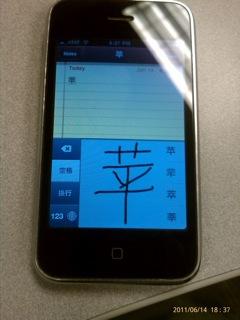
I saw a Chinese commercial in which three different people walked up to a guy and excitlingly said "好久不见!". Well, they actually said: "好酒不见!" :)


amberFebruary 27, 2008
hi evaseige,
干吗你 (gànmá nǐ) is used between friends, yes! I haven't heard it as much, but it is used too.
paulrushton179208580November 26, 2014
I think 干嘛你 is a little bit closer to Hey! What have you been up to? 你 在干嘛? literally being what are you doing? I hear this a lot in the south west of china.

cjhawk7February 26, 2008
Good stuff. I've also been told "ga ma ni" is an acceptable equivalent to "whats up", but I never really hear it said too often. Is this more of a phrase you would say to a friend?

texastochinaFebruary 26, 2008
Great lesson and well done. Once again you guys give us something practical and current we can use immediately. I never get tired of you two!!!

sparechangeFebruary 26, 2008
I've been waiting for this lesson my whole life... well, 7 or 8 months at least.
I found out (the hard way) that they don't really say "nǐ hǎo ma," thus I've been wondering what the standard follow-up question would be.
What did you notice in this lesson?
You are posting as a guest. Your reply is reviewed before it appears. Log in to post without review.