We'll always make sure you know exactly what the lesson is about. You will easily understand whether it is relevant for you.
失言风波
Great Hosts
Here at ChinesePod, all our lessons are presented in an entertaining manner by our great hosts. You'll find language learners, teachers, and even professors sharing their insights, ideas, and teaching methods in our video and audio lessons.
Brief Lesson Summaries
A brief introduction of the lesson will always tell you what this lesson is about and what language level is the intended target. If you're interested in the subject, but might not be able to understand it in full, fear not; we have transcripts of lesson dialogues vocabulary so you can follow along.
Our lessons contain natural communication in Chinese in video and audio format. We have have lessons focused on video or a podcast format and our lessons have transcripts of Lesson Dialogues, Important Vocabulary, Expanded Materials for a deep dive into the lesson topic and Exercises focused on testing your retention.
Detailed Vocabulary
Each lesson has it's unique vocabulary and will provide you with definitions and recordings so you can practice the pronunciation. You will also be able to grasp the core material of a lesson at a glance. Here we're showing you the Simplified Chinese version.
Another official has been shooting his mouth off recently, with the line "What did you expect me to be able to do when you asked me to come here?" whilst visiting an area affected by floods creating a storm of comments online, with netizens saying that he should be voted the most honest official of the year. Let's have a look at the press conference called by the county government.
It pains me that my comments were taken out of context by the media, but I would like to extend a heartfelt apology to any flood victims who felt hurt as a result. At the time, I was asking flood victims and rescue workers on the front line to come up with actual demands. I wasn't trying to use the flood victims and as a member of the local leadership. Of course I should stand shoulder to shoulder with the public and do something substantive for them.
所以县长您是否认失言一事吗?
suǒyǐ xiànzhǎng nín shì fǒurèn shīyán yīshì ma?
So you're denying that you made a slip of the tongue?
我没有否认我说过的话,但是请不要曲解我的意思。
wǒ méiyǒu fǒurèn wǒ shuō guò de huà,dànshì qǐng búyào qūjiě wǒ de yìsi。
I didn't deny what I said, but please don't twist my words.
Natural Dialogues
Each lesson is centered around a natural dialogue with key vocabulary directly prepared and translated for your use. You can also listen to each sentence as an individual recording to improve your listening and comprehension skills.
Try It For Free
ChinesePod is 100% Free to Try. Create an account today and get started!
This is another lesson where the specialized language is very helpful to know, but the context of the dialog is a little misterious. I always have trouble understanding Chinese news casts, and the pointers about news cast catch phrases are all very welcome. Conversely, I have no idea what the mayor in this dialog said to cause an uproar. If I had a more specific context, it would be easier for me to follow the dialog, and guess the meaning of the new vocabulary from context.
As it is, the mayor made a statement about something. What the something was, and what he said are unexplained. However, the statement itself caused some controversy. It is again not clear what was controversial in what he said. However, at the point we are plunged into the seen he has called a news conference to explain himself, and the talking heads back at the TV studio aren't satisfied with what he said. Then the dialog ends and Fiona and Constance discuss the language used in this scene.
I think more character and plot development would make this lesson both more accessible and more interesting. Again, I think broading our language horizons in this dimension is laudable, but the execution could use some refinement.
加油!
D
dong_hua_sen
I think the point is that 叫我来能做什么 could be interpreted as 'What do you think I can do about it?'. The politician's claim is that what he meant was 'What specifically would be helpful to you? (and I'll do my best to make it happen).'
it his a hard lesson to understand first time round but I think that's partly because of the very formal style of television news in China. I found it really worth persisting with and figuring out. Please do keep the Advanced lessons coming. I think the recent content's been great.
M
mark
Yes, there were some explanitory details I missed the first couple of times I listened to the lesson. However, I still think more context would be helpful.
I have no objection to the difficulty level of the lesson, in fact, appreciate that part.
Z
zaphekiah
Hey Mark, I have exactly the same trouble with news reports. There is something about the different register, whether it is the vocabulary or the style of delivery, which really leaves me in a state of incomprehension. I know it is Chinese but at the first hearing I really struggle to make out anything, I almost feel like I have accidentally wandered into the wrong classroom. I am sure it is because nearly all my Chinese has been picked up from these podcasts and 90% of them are in a normal day-to-day register, as of course they should be. Even after reading the transcript I have to listen to the audio again and again to be able to be able to hear it in a natural way. For me this was definitely one of the most challenging lessons yet.
B
boxerduke33
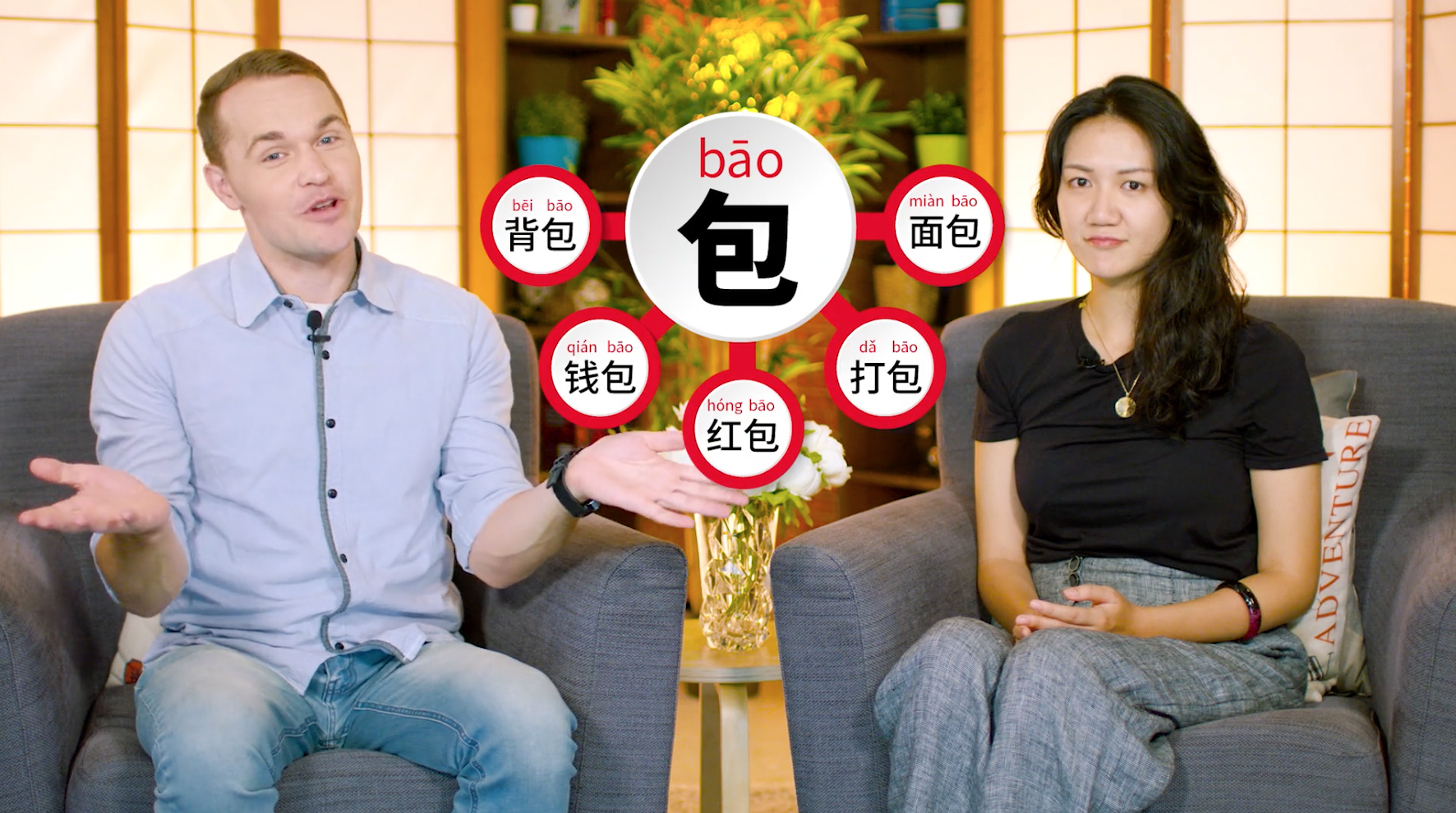
why is it da4po1. not da4bo1?
D
dong_hua_sen
It is bo1. At least it is in the vocab. I thought Constance was saying po1 too. Is that a Taiwan thing?
C
Constance Fang
Thank you for bringing that up. I didn’t realise that I switched between the two pronunciations. In my mind it is “bo1”. There are several words in Chinese where the pronunciation vary from the pinyin, depending on the combination of characters. As the sometime the combinations make plosive “p” sounds role off more naturally, and in other times the “b".
For example, when I say 大波 I naturally pronounce it “da4 po1” yet when I say 波濤 I say “bo1 tao1”.
I also doubled checked on several official dictionaries and the official pronunciation is definitely “bo1”. However, I did find some dictionaries which included both “po1” and “bo1” as many people still use both in and out of China.
D
dong_hua_sen
Thanks for taking the time to explain Constance. I'd noticed that the p and b sound are sometimes different to the way I expected. I wasn't sure if it was an accent thing like Southern China people saying what sounds fo me like si for shi, or one of those 'dictionary says this but actually it ain't so' deals.
Z
zaphekiah
纸牌 zhǐ pái = playing card语体 yǔ tǐ = style of speech or writing; register实地 shí dì = on-site破浪 pò làng = to set sail; to brave the waves回应 huí yìng = to respond, response名望 míng wàng = renown; prestige救灾 jiù zāi = to relieve disaster; to help disaster victims加强 jiā qiáng = to intensify; to reinforce; to strengthen; to increase联结 lián jié = to bind; to tie; to link存亡 cún wáng = to live or die; to exist or perish替换 tì huàn = to exchange; to replace; to substitute for; to switch脱离话题 tuō lí huà tǐ = to change the subject回馈 huí kuì = to give back; feedback也不例外 yě bù lì wài = is no exception考量 kǎo liáng = to consider; to give serious consideration to sth忍不住 rěn bu zhù = cannot help; unable to bear语病 yǔ bìng = faulty wording; mispronunciation due to a speech defect路线 lù xiàn = itinerary; route; political line (亲民路线 - populist line)做作 zuò zuo = affected; artificial; pretentious sounding推崇 tuī chóng = to esteem; to think highly of; to accord importance to; to revere
Z
zaphekiah
BTW in the PDF 弱势 is translated as "venerable" instead of "vulnerable".
G
Gwilym-ChinesePod
fixed :)
J
james137
My attempt at the homework.Any comments/grammar fixes are appreciated :)
在你的国家,社会大众及新闻媒体对于政府官员的发言有什么标准或期待?如果官员发言不当,会引起怎么样的后果呢?
因为英国是一个资本主义的国家所以我们大家英国人可以投票。虽然我们可以选择自己国家的政府管但是英国的媒体常常批评他们。在英国因为我们保护媒体的言论自由,所以记者什么多可以说。
我们的政府管平时从有钱的家庭来的,而且他们的英文口音是高产阶级的。英国的政府人很习惯跟别人议论,而且他们常常在电视上跟别人议论。我们英国人大家知道电视节目上的政府管在电视节目出来以前,有别人帮他们写演说。虽然情况是这样,但是通过现场演出我们常常看政府管失言。他们失言以后,英国年轻人喜欢用特色的软件创造一个搞笑的视频开他玩笑,然后上传。最近关于英国有一个移民的问题,很多人搬到我们国家,然后除了工作以外,他们偷走街上的东西比如说自行车,然后从我们政府申请拿到国家的福利。我们的福利特别好,而且他们常常发获福利钱到他们自己的国家。最近我们的政府要创造新的规则禁止他们骗我们的国家。问题就是因为这年的选举马上就来,所以政府要小心得操作,他们还没有处理问题。如果政府改变律法的话,他们在这个关键时间就可以失投票。英国有很多移民者有权利投票。而且因为他们太慢反应这个问题所以他们最近得到很多批评。这个情况就是两难。现在的领导群就不要失他们的权利控制国家的经济。最近我国家的舆论不稳定。
B
bergmaaj
This was a nice lesson that I think well fits the advanced level. A lot of the recent advanced lessons have been too easy in my opinion--such as the 水母咬我 story or the lesson about the 猫奴. This one is appropriate because of the more formal register (I think you should keep most of the easier 口语 stuff for upper-intermeidate at the highest) and because there are enough upper-level expressions like 轩然大波、断章取义、置....于不顾、民间疾苦... I realize that easier lessons can appeal to more people, but after all this is advanced... Overall, I really dig Chinesepod and wish there were more new, truly advanced lessons like this one.
D
dmdewald
Ha, I agree. But I also feel so awesome when I can listen to advanced lessons and understand all of it! This lesson was a bit more humbling.
U
user20593
You quiet
Replying to
Posting as a guest. Comments are reviewed before they appear. Log in to post right away.
 W

 M
 D
 Z
 C
 G
 J
 B