
zaphekiahFebruary 14, 2015
保障 bǎo zhàng = to ensure; to guarantee; to safeguard自从 zì cóng = since (a time); ever since手电筒 shǒu diàn tǒng = flashlight; electric hand torch金银财宝 jīn yín cái bǎo = money and valuables修整 xiū zhěng = to spruce up; to renovate淹水 yān shuǐ = flooding喘息 chuǎn xī = to gasp for breath; to take a breather医护人员 yī hù rén yuán = doctors and nurses期末 qī mò = end of term, end of season贴切 tiē qiè = close-fitting; closest (translation)讯息 xùn xī = information; news; message; text message or SMS预备 yù bèi = to prepare; to make ready; preparation; preparatory预先 yù xiān = beforehand; with forethought

earlsFebruary 11, 2015
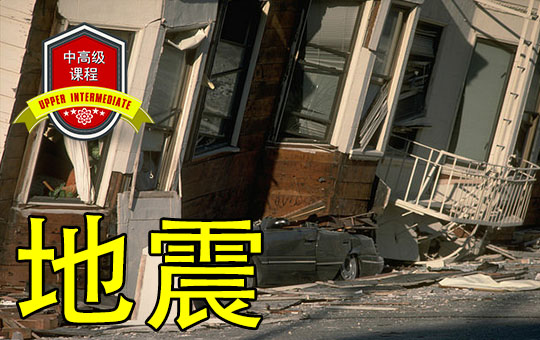
In this dialog, this sentence fragment《建筑物倒塌、人员受伤》is translated as 《roof collapses and injuries》.
I would have thought it would be 《building collapses and injuries》.
Am I missing something?

Kerstin80February 4, 2015
Constanze, Fiona 你们好。我很享受听你们讨论对话!我也觉得高中级是对我的汉语水平最合适的。但是还有一些听不懂你们的解释的地方。我想推荐你们可能会写上讨论的部分。 这样的话给我们更方便查新词。

si1teng2January 31, 2015
I think "lock in on" for 锁定 gives a good sense of its meaning in this context. 'Lock in on this station' = 'Stay tuned'.
Incorporating the news report into a conversational dialogue was a great idea! Newscasts tend to be a bit daunting. Maybe if the speakers in the dialogue commented on the report more directly we could hear both formal and informal versions of the same information?

trekkerJanuary 30, 2015
The fourth expansion sentence says "这辆车的剎车有问题。。。
It should be ”刹车“。

podsterJanuary 30, 2015
Looks like a traditional version of the character slipped in. You've got better eyesight than I to distinguish 刹 from 剎 though. (Or maybe an electronic dictionary will not return the right result if traditional and simplified scripts are mixed like this and that's how you caught on to the mistake?) The traditional version of the compound would be 剎車.
trekkerJanuary 30, 2015
When I put 剎 in my dictionary it said; " a Buddhist temple", "a brief moment".
I didn't realize that it was the traditional character for 刹。I thought it was a simple mistake. I have only studied simplified characters and just know a few traditional ones. Thanks podster for letting me know!

Constance FangFebruary 5, 2015
剎 is a variant form (异体字) of 刹. Which means two characters share the same meaning and have the same pronunciation. These characters are both in traditional and simplified. Also, there are two meanings of 刹/剎. 刹车 means the car break while 刹那/剎那 means "a brief moment". When we use 刹 to refer a Buddihist temple, it can pronunced as cha4 or sha4, for example 古刹 "a historical temple". Check out this link, here's more examples of 异体字: https://en.wikipedia.org/wiki/Variant_Chinese_character
kelisiJanuary 29, 2015
Can anyone tell me where to find the Search function?
newtonvsleibnitzJanuary 29, 2015
Go to "Library", and on the left side of the page select "List".
At the top of the page you will get a filter option where you can type in a keyword.

veronique21January 29, 2015
And you can also use "Tools" and "Dictionary", which is very useful too.
greenduckieJanuary 29, 2015
At least in the browser version, there's a magnifying glass icon in the top right corner next to "My Account." Click it for the search bar.
podsterJanuary 29, 2015
Yes, the magnifying glass previously functioned like the search box on the lessons page but due to some technical problems it has been replaced, at least temporarily, by a custom Google search. The technical problem, as I understand it, is that the CPod search function currently fails to return some of the more recent lessons. So if you are searching for lessons on a specific topic you may want to try several different search methods as mentioned above.
What did you notice in this lesson?
You are posting as a guest. Your reply is reviewed before it appears. Log in to post without review.