
Right-WingnutDecember 13, 2013
CPod - an error in the Grammar section.
Under "掉", after the first 7 sentences the focus shifts to "只" without any introduction - the 掉 and 只 sentences all appear under 掉.
cowenparkseattleDecember 19, 2013
I noticed that, too. Maybe a copy-paste error?
Is any staff person from Chinese Pod listening?
cowenparkseattleNovember 25, 2013
Small translation error in this Expansion sentence. "I" should be "you":
你要好好学习,不然肯定考不上好的大学。
nǐ yào hǎohāo xuéxí, bùrán kěndìng kǎo bu shàng hǎo de dàxué。
I need to study hard, otherwise I definitely won't be able to test into a good university.
tomdrury103November 13, 2013
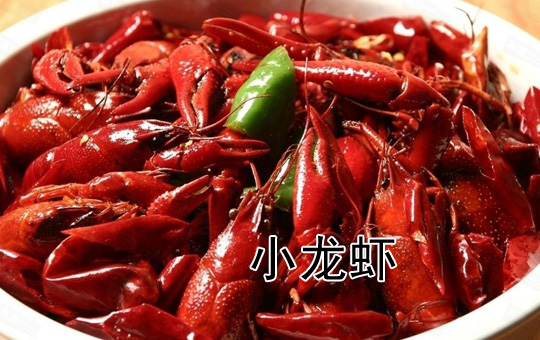
I have not eaten 小龙虾myself. But I know a couple of my friends, who ate them from Shanghai street stalls and really suffered the consequences the following day. However they both said that it was so delicious, they would probably eat them again.

xiaomai6October 21, 2013
王总,你们为什么要除掉我?求求你们放过我吧。 Manager Wang, why do you want to get rid of me? I'm begging you, let me go!
This makes sense?! Seeing as CP tech dept won't reply to me to get the task feature working for me... I think I have a new weekly task, spot the errors in the expansion section, there are usually 3 or 4 each week.
kohei180October 17, 2013
Hello i have a question, it's about this sentence "不然会弄得手很脏". i once read a grammer textbook saying that in this kind of pattern, object 手should be placed before the verb(in this case 弄), so shouldn't it be like "你手会弄得很脏” or such? That textbook also explained the same way,<"他汉语说得很好”是可以 但是 ”他说得汉语很好”这是不可以>.will someone plz help me understand "不然会弄得手很脏"?

luobinzhenmeiOctober 20, 2013
Good question and I have absolutely no right to even try to answer, but I'm going to try anyhow. 弄 essentially means "make something worse than it was before". It doesn't just mean "make something" So we can't say 我弄手 subject-verb-object, the way we can say 我说汉语。
The way I understand it is that Chinese verbs can't take too many complements the way English verbs can, so we have to say stuff like 我说汉语,说得不太好。and repeat the verb 说 once for the object 汉语 and then again for the complement 不太好 . In your sentence 他汉语说得很好 , you moved the object in front of the verb. I guess you could also do that with 弄, and say 你手会弄得很脏。 I guess I might try 你的手会弄得很脏。 I guess I'm already in over my head. Chinesepod teachers, HELP.
luobinzhenmeiOctober 20, 2013
What I meant to say is that 弄 isn't like 说 or 做 . What it takes as an object is a bigger chunk: a thing and how it has been made worse. 弄your hands dirty, 弄a plate broken, etc. We should use that 把 particle and our problems would be solved. Then the physical thing comes first and how it has been 弄ed after. 我把手弄脏的。 I'm afraid I barely know what I'm talking about I hope I didn't 弄 you even more confused.

mafanniOctober 16, 2013
seems like the women are ordering the beer(at least in the CPod episodes). do women in China like drinking beer? my impression is most don't drink or barely.
adam_p_laxOctober 16, 2013
i would say the same thing from my experiences in China. Unless you go to a club.

mikeinewshotOctober 16, 2013
Shouldn't that be Crayfish not Crawfish?

RJOctober 16, 2013
Crawfish is preferred in the U.S., while crayfish is preferred in most other English-speaking areas. Crawdad is prevalent in parts of the U.S., and cray is frequently used in Australia and New Zealand.
I live in the US but as kids we always called them crayfish, so Im with you on this one.


wotingyuOctober 16, 2013
I don't think that's accurate. I've attended "crawfish" boils with very affluent people.

hanzeNovember 4, 2013
i come from Louisiana, the crawfish capital of the world and no mattet if you come from a trailer, bayou, inner city, uptown, downtown, or countryside - it's pronounced CRAWFISH
Right-WingnutDecember 11, 2013
Given that many pronounce their own state "Lose-ee-anna", ... well ...

markDecember 12, 2013
I don't live in a trailer park, but if I had to decide what to call them in a hurry, I'd call them crawdads.


taylorarmstrong168October 15, 2013
我特别羡慕那些怎么吃都不会长胖的人。 在句子中为什么用了”怎么“我是有一点糊涂了!

rosamagliolaOctober 16, 2013
怎么吃都不會長胖meaning no matter how (much) consumed won't gain weight.
Same idea when you hear more grequently used example: 你怎么決定,我們都不反対。
Hope this may help a bit...
From sunshine state


What did you notice in this lesson?
You are posting as a guest. Your reply is reviewed before it appears. Log in to post without review.