cmkchinaNovember 22, 2012
I'm intrigued by this term "scalper". What does it mean? Is this the same as conman? or more like a tout? or can it be both?


mafanniNovember 12, 2012
Counterfeit Money Scam:
WHERE: Could be anywhere in China.
THE SCAM: There are a lot of counterfeit bills in circulation…and who better to fool than clueless laowai tourist?
RULES OF THUMB:
Carefully inspect any change, especially Y50 and Y100 bills. Does the note feel thin or slippery? Does the watermark look kosher? If it feels or looks wrong, don’t be shy about rejecting it (a common practice in China). If necessary, cancel the transaction and demand your money back.
If you’re getting cash from an ATM or changing money at a bank (i.e. not a money-changer), you won’t have to worry about getting counterfeit bills (usually Y100 notes). But instead, you should watch out for the old Bait-and-Switch. For example, you pay with your (real) Y100 and they secretly replace it with a fake note, claiming that you gave them the bogus note. Then, they’ll give you the fake one and ask for another one. They just made a tidy Y200 profit! Always keep an eye on your bill when paying and watch for the swap. A popular scam with taxis and when getting back a deposit (such as renting bike). If someone tries to pull this on you, make a big, loud scene (to attract a curious crowd, and hopefully police).
Also alarms should be going off if someone claims they don’t have correct change and is “willing” to round up your change by giving you a larger bill. Or they might be trying to squeeze some extra money from you by asking you to give them an extra Y50 note so they can round off your change to an even (fake) Y100.
http://www.china-mike.com/china-travel-tips/avoiding-scams/
mafanniSeptember 7, 2012
On NHK they had a story about Kunming. being the hub to the Mekong delta, 黄牛 is florishing due to the local merchant don't want Myanmar's kyat and the banks won't exchange it either. time to open up shop there(illegally I might add :)- 开玩笑 )
DaveCraginAugust 16, 2012
I think this lesson is CP at it's best. They took a potentially boring topic and made it fun.
As soon as I heard: shuō Cáo Cāo Cáo Cāo dào! I couldn't wait to try it with friends.
The interplay between Dilu & John adds to the entertaining aspects of the lesson.
Hence - no questions - just commentary.
cowenparkseattleAugust 15, 2012
Tiny typo in the English of this dialog sentence: "got" instead of "go":
小马,你不是昨天刚去过银行吗?怎么又去了? Xiao Ma, didn't you just got to the bank yesterday? Why did you go again?
cowenparkseattleAugust 15, 2012
Sorry, didn't paste in the English:
小马,你不是昨天刚去过银行吗?怎么又去了?
Xiao Ma, didn't you just got to the bank yesterday? Why did you go again?

GrambersAugust 7, 2012
What's going on in this sentence (from the expansion):
这个人看起来感觉不可靠,我不想跟他合作
Why the need to use 看起来 AND 感觉? From an English point of view, it seems like overkill. Both have a similar function within the sentence (ie. to offer an opinion on something that SEEMS to be the case).

floalvarezAugust 7, 2012
Somebody asked me once in college why I need 2 English synonyms to express an idea. I don't know, that's how Chinese think.
From my experience, Chinese people are more subjective and intuitive, hence the 感觉. As for 看起来, I interpret it as "the way I see it" to be diplomatic (this is how I think or feel, but you don't have to agree with me). If you live in an extended family, this is your key to a peaceful life.
Break over.

podsterAugust 8, 2012
I guess 看起来 refers to the impression I get, and 感觉 refers to the conclusion I draw. "From the looks of him, I feel he's unreliable . . ."

brendaninausAugust 6, 2012
I never used private money changers in China for fear of been handed fakes, but when I was in Vietnam, on advice of some Australian Vietnamese who were also visiting, I used the local money changing jewellers. The Vietnamese dong is similiar to the Australian money (in fact made by the same company) and is plastic and very hard to fake.
The exchange rates were much better than the banks, and I never had issues with fakes or short changing, but I am still not sure about trying the Chinese private money changers.

chrisAugust 6, 2012
Now that's a currency that seriously tests my mental arithmetic whenever I visit!

xiaopaulAugust 6, 2012
Ten years ago I made good experiences with changing money at a 黄牛. I met him north People's Square in Shanghai. But he's no longer there.
After a lot of recent bad experiences with ATM (limit 2500 RMB, did not accept the password, did not accept any of my credit cards at all from one day to another) I'd like to know where to find a (good and reliable) 黄牛 in Shanghai or Beijing these days...

luobinzhenmeiAugust 5, 2012
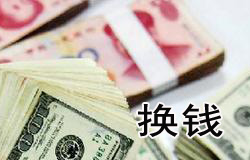
Does anyone remember the days of 外汇券 (foreign exchange certificates) which were worth more than 人民币 (RMB, "people's money") so every city had 黄牛 looking out for foreigners who would get 外汇 in exchange for their foreign money. The 黄牛would offer them a lot more RMB for the foreign exchange money and then the tourists who accepted it found out that stores wouldn't accept "people's money" from the tourists so they were stuck with a lot of unusable RMB. Foreign teachers and people who had genuine work cards could insist on paying RMB. Most foreign teachers we know dealt with the 黄牛。 We never did because we wanted to respect China and its laws, we told ourselves, but really it was probably because we were cowards.
mafanniAugust 5, 2012
why would the average Chinese citizens be exchanging their kuais'? and exchanging for what currency? and isn't 20K yuan about 4 times the average monthly salary? just wondering???? :-)
chrisAugust 5, 2012
I've not listened to the lesson yet, but my reading of the PDF is that it is a foreigner that is changing the money, i.e. from their home currency to RMB. It certainly can be a hassle and queues, at least in the local big 4 banks, can be horrendous and slow. If you're working in China but paid in your home currency, it can be a real hassle.
mafanniAugust 6, 2012
hmm.... I'm ignorant on this subject but as a foreigner I would not even think of doing this.... and why would they have so much money laying around? seems unwise to me (I could think of a thousand things that could go wrong-besides getting counterfeit money and being robbed). 到处 自动取款机。
chrisAugust 6, 2012
Banks will always give you very unfavourable exchange rate - look at the spread on their buy and sell rates. ATMs are even worse since the maximum you can take out is RMB2000 each time and you are again hit with a very unfavourable exchange rate, and to rub salt in the wound, ATMs will also often hit you with additional fees. Consequently, if you need RMB and you can find someone with RMB but who needs your home currency (e.g. a compatriot in China, paid in RMB, but who needs home currency back home, maybe for mortgage payments) then it will be favourable for both of you if you take the average buy and sell rates of the banks and split it in half. RMB20,000 sounds like a lot but people often carry around much more than that in cash in China - I anecdotally know of someone that bought a flat in BJ with cash, two suitcase of it (my client was in the property developer's office at the time). If you have your monthly rent to pay, it can take a very long time to take it out one withdrawal at a time from an ATM and the savings you can make on the buy/sell exchange rate can be quite substantial if you're talking about a largish amount.
GrambersAugust 6, 2012
In my somewhat limited experience, when changing from, say, Sterling to RMB, the Bank of China has always offered rates that are far, far, far better than any UK (for example) bank would offer, particularly if you are dealing with electronic funds (as opposed to walking into the branch with a big fat wad of cash). As far as my economic knowledge goes (which, again, isn't all that far) Beijing's monetary policies of the last decade or more have been designed to encourage and facilitate foreign currency transfers INTO China - and conversely make it as difficult and unattractive as possible to transfer currency OUT of China. The upshot is that transferring overseas cash into RMB is easily done at the bank and is really good value, relatively speaking. All that said, I have plenty of experience of using 黄牛s - mainly blokes on stools who loiter around street corners - and always found them really good.
mafanniAugust 6, 2012
thanks ... I guess this is more for expats living in China(being paid in foreign currency) than visitors. as for locals, don't know why they would exchange their money for foreign currency unless they are traveling abroad.(Just doesn't sound legal, wise or safe-IMHO.)

bodaweiAugust 6, 2012
'don't know why they would exchange their money for foreign currency unless they are traveling abroad.(Just doesn't sound legal, wise or safe-IMHO.)'
hi mafanni
I'm another who hasn't listened to the lesson, but this comment of yours sounds a little strange to me - what is the problem with this currency exchange? Last I checked, mainland Chinese are now Australia's most important in-bound tourists, and we are not that attractive; too expensive. Outbound Chinese tourism is big business for lots of countries.
I sat next to a Chinese lady from country Yunnan on her way to Europe for a ten-day trip with a thick envelope of Euros. Maybe that is what you mean by 'not safe'? People who are a little uncomfortable with bank cards often like to take foreign currency with them. I can remember when people used to take US dollars! Not sure too of your 'doesn't sound legal' comment - you mean using the scalpers?
mafanniAugust 8, 2012
Hi Bodawei,
sorry for my ignorance and why a laowai would do this or maybe I wasn't clear.
What is my course of action for the following scenarios. (I can think of a thousand problems that could crop up).
1. Person I exchange USD for RMB gives me counterfeit money. How do I prove it that I was given 'bad' cash. Can I report the offender and not get in trouble (is this a black market activity?).
2. What if the person comes to my place, with extra 'help', then tells me the exchange rate is 4 to 1 (4 USD to 1 RMB), flashes a knife, and suggests I'm getting a great deal. Being stabbed might cost me more than a 'few' RMBs.
3. After making the exchange, he comes back and claims I gave him counterfeit money and wants his RMB back or his 'friends' will help him get it back or he will call the police and report that I sold him counterfeit money.
just wondering....?????
bodaweiAugust 9, 2012
Well, mafanni, your name is mafanni, right? :) I don't know how serious your scenarios are but if you are concerned or bothered I guess you must live in China, right?
My take would be if you are not up for the adventure then steer clear of these kinds of exchanges. (For what it's worth the 'knife' scenario doesn't sound much like China to me.)
It's interesting - the longer I live here the less worried I am by scams, threats, violence, and over-pricing. It's like I've lost interest - I wish I still had the passion. I used to studiously avoid those scamps who accost you at the railway station and want to find you accommodation, and then one day I said to myself - you know let's see where this leads. It was all quite pedestrian and functional - I got good accommodation at a reasonable price.
mafanniAugust 9, 2012
Hey bodawei,
I can see a local doing this but don't think there are that many that have 40K rmbs lying around. and if they did, they are 'connected'(IMHO).
no I don't live in China nor know enough Chinese to understand what's going on but with my limited experiences I keep my guard up.
on one trip, my camera was pick pocketed. My Chinese girlfriend alerted me to the kid walking right next to me to be careful. I checked for my camera and it was already gone. I grabbed the kid by his wrist and started to search him. the camera wasn't on him. She told me he already handed it off and if I didn't let go of him and leave right away, his 'gang' would be on me shortly to 'beat the sh*t ' out of me and the police won't lift a finger.
Another time went to a restaurant in Sanya, they quoted the prices and after ordering a meal for 100 yuan, we get a bill for 1000 yuan. My friend refused to pay but they would not let us go and would call the police if we didn't.
Maybe I'm the only one being taken advantage of?
Just trying to 'avoid' problems for a few % RMBs. To me, that's the cost of doing traveling and being safe (insurance). :-)
and is it legal?

byronmeinerthOctober 24, 2012
This thread still seem very foreigner-specific or otherwise focused on Chinese travelling abroad. For a Chinese individual looking for a secure place to park his cash, he doesn't have the same options a, for example, North American would. Banks do not offer high interest rates, so that they can keep markets and infrastructure projects liquid and flush with cash. Because of the low interest rates, Chinese have moved to purchasing relatively illiquid assets, like housing. As a Chinese individual, if you can't or don't want to buy another property and also don't want to keep all your savings in RMB, why not purchase some U.S. or Canadian cash. It's largely for the same reason the Chinese government purchases US T-bonds - they're stable, and the return is guaranteed. The same with the dollar. The US has serious problems it must address (and hopefully will, regardless of who's president next), but our currency is not going to tank any time soon.
What did you notice in this lesson?
You are posting as a guest. Your reply is reviewed before it appears. Log in to post without review.