gracechen7874October 6, 2019
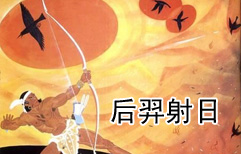
中国的一个有名的神话故事。 顺便问一下,缠着她, 跟粘着她是一样的意思吗? 比如说,他总是缠着我, 他总是粘着 我。

anonymous1068458October 6, 2019
要看这句话用在哪。“缠着我”有负面的意思,“粘着我“是一个中性的词。
你可以对男/女朋友说:我喜欢这样粘着你啊!(听起来很肉麻)
但是:我喜欢这样缠着你啊!(这句话听起来就不对了。)
MingmaoJanuary 17, 2014
At about 4:30, Dilu says:
主要是 duìyìn 天上和人间
What is the "duìyìn" in this phrase?
MingmaoJanuary 17, 2014
做一休九: Can this pattern be used to express a work schedule measured in weeks? For example, on many industrial sites, employees work 4 weeks on, 2 weeks off, to allow for travel time home. How would this be expressed?

bohan2007March 29, 2013
can 百发百中 have any usages other than shooting? For example, can we use it for playing basketball, in which a player makes every shot he/she takes? Or a soccer player who scores every goal he/she goes for?

bohan2007March 29, 2013
in the lesson, there is a line I'm curious about. The line is 他拉开大弓, 打上神箭. My question is , why is the character 大in front of 弓? Is it a big arrow?
bohan2007March 29, 2013
in this lesson, we have the word 神箭手 to mean "legendary archer". Can we put 神 in front of anything else to make it "legendary" ? For example, can we say 神国王, 神武士, 神运动员 ?
bohan2007March 29, 2013
this lesson can't be listened to on the app. I tried loading it a couple of times
cowenparkseattleJune 1, 2011
羡慕 is used in the dialogue -- shouldn't this be included in the Key Vocabulary?
cowenparkseattleMay 14, 2011
The audio for this sentence of the Dialogue is missing from the Android app:
哎,你怎么泄露秘密了...
Also this one:
后羿就这样嗖嗖嗖地...
cowenparkseattleJune 1, 2011
Actually, I figured how to solve this. I found that the file as downloaded onto the phone had a size of 0 bytes. I delete the file and then redownloaded, and it was fine. This happens with one or two files every other lesson or so. Maybe an Android problem?
cowenparkseattleMay 6, 2011
I'm really an Intermediate, but decided to work on this lesson because I love Chinese legends and history. Wish you would do more of it!
lazypupilApril 2, 2011
講到后羿的一個成語故事 (看來﹐ 他事實上不能算是個百發百中的高手﹗):
患得患失從前有一位神射手,名叫后羿。他練就了一身百步穿楊的好本領,立射、跪射、騎射樣樣精通,而且箭箭都射中靶心,幾乎從來沒有失過手。人們爭相傳頌他高超的射技,對他非常敬佩。夏王也從左右的嘴裡聽說了這位神射手的本領,也目睹過后羿的表演,十分欣賞他的功夫。有一天,夏王想把后羿召入宮中來,單獨給他一個人演習一番,好盡情領略他那爐火純青的射技。於是,夏王命人把后羿找來,帶他到御花園裡找了個開闊地帶,叫人拿來了一塊一尺見方,靶心直徑大約一寸的獸皮箭靶,用手指著說:“今天請先生來,是想請你展示一下您精湛的本領,這個箭靶就是你的目標。為了使這次表演不至於因為沒有競爭而沉悶乏味,我來給你定個賞罰規則:如果射中了的話,我就賞賜給你黃金萬兩;如果射不中,那就要削減你一千戶的封地。現在請先生開始吧。”后羿聽了夏王的話,一言不發,面色變得凝重起來。他慢慢走到離箭靶一百步的地方,腳步顯得相當沉重。然後,后羿取出一支箭搭上弓弦,擺好姿勢拉開弓開始瞄準。想到自己這一箭出去可能發生的結果,一向鎮定的后羿呼吸變得急促起來,拉弓的手也微微發抖,瞄了幾次都沒有把箭射出去。后羿終於下定決心鬆開了弦,箭應聲而出,“啪”地一下釘在離靶心足有幾寸遠的地方。后羿臉色一下子白了,他再次彎弓搭箭,精神卻更加不集中了,射出的箭也偏得更加離譜。后羿收拾弓箭,勉強陪笑向夏王告辭,悻悻地離開了王宮。夏王在失望的同時掩飾不住心頭的疑惑,就問手下道:“這個神箭手后羿平時射起箭來百發百中,為什麼今天跟他定下了賞罰規則,他就大失水準了呢?”手下解釋說:“后羿平日射箭,不過是一般練習,在一顆平常心之下,水平自然可以正常發揮。可是今天他射出的成績直接關係到他的切身利益,叫他怎能靜下心來充分施展技術呢?看來一個人只有真正把賞罰置之度外,才能成為當之無愧的神箭手啊!”

KentuckifiedChineseMarch 31, 2011
我特别喜欢听这些神话,不知道为什么,。。。可能是因为神的英雄,精彩的情节让我想起我自己平安时期。 oh to be a child again! (顺便问一下,这句话中文怎么说)

bababardwanMarch 29, 2011
man I love the acting in this lesson. So good [all round, but especially the baba's telling of the story]. And I love the way Dilu [who's doing a sterling job..such a pleasure to listen to] said that 嗖 sōu...sounds so much better than any English equivalent for the sound of the flight of an arrow.
I think you guys'll hafta start putting out a few dud/boring lessons just so we can catch up on all these good ones without feeling like we're missing out on anything and give us a breather.
giannisMarch 30, 2011
I agree! The acting was really good. It seemed like you were in someone's house and you could picture the whole scene going down.
Sometimes the mainland pronunciation really catches my attention and that was the case here. Using the "qīngshēng" on "tàiyáng" (i.e., "tàiyang") sounded strange to me. I don't know why.

cinnamonfernMarch 30, 2011
I also agree! Good acting, fun new story. I think this may be my new favorite lesson. I'm glad I moved up to UI. :D


butterfly173173173March 29, 2011
I immediately went to this lesson because I have a Chinese/English children's book that tells this tale. It's published by Dolphin Books 海豚出版社 although for a children's book it's rather long with 45 pages and Chinese and English on the same pages with beautiful graphics inbetween. I have 3 others from the same series called, "Jingwei Filling up the Sea/精卫填海“, “Yu the Great Conquered the Flood/大禹治水", and "Chang'e Flying to the Moon/嫦娥奔月”。 Pretty good stuff.
jennyzhuMarch 29, 2011
Chinese ancient mythologies have this incredibly profound relationship between men and nature. Reverent, poignant and romantic all at the same time. There is another famous story "夸父追日" about a man named Kuafu who committed his entire life to chasing after the sun which eventually killed him. I always cried when I listened to the story as a kid.

MingmaoJanuary 17, 2014
That sounds like an interesting story. Perhaps it could have its own podcast, as well.

pretzellogicMarch 28, 2011
I didn't know Chinese used the term "kicked the bucket". Cool story. This is a myth i've never heard of (not that I have a large catalog of Chinese myths under my belt).

bodaweiMarch 29, 2011
I'm probably going to get shot down, like 后羿射日..
From the first hit on Baidu it says 清代男人也梳辫子,刽子手杀人时要把辫子提起,翘辫子也就成为杀头的同义词 .. (this explains the origin of the word 翘辫子 - when about to be executed men had to 'lift their pigtails'.)
So I looked up a Chinese-English slang dictionary and the Chinese for 'kick the bucket' is not 翘辫子.. so,
I think the term 翘辫子 is attached to this story from the Qing Dynasty - lifting your pigtail became synonymous with death.
The term 'kick the bucket' has no particular connection; it is used because Chinese people (or at least dictionary writers) assume that English speakers often use the euphemism 'kick the bucket' for death.
In other words (a bit round about) I don't think the Chinese do use the term 'kick the bucket', unless they are speaking English.
bodaweiMarch 29, 2011
Further to the above, I think 'kick the bucket' is a bad translation because in English this is used in case of dying of natural causes - I don't think I have ever heard the term used in connection with an execution, it does not ring true.

RJMarch 29, 2011
well on the surface I want to agree with you but on the other hand, "kick the bucket", although its origins are not really known, is thought to come from something like this according to wikipedia:
"comes from a method of execution such as hanging, or perhaps suicide, in the Middle Ages. A noose is tied around the neck while standing on an overturned bucket. When the pail is kicked away, the victim is hanged."
So maybe it is appropriate?
Interesting that the movie "the bucket list" is translated 一路玩到掛 yi1 lu4 wan2 dao4 gua4 ("play all the way until you hang" or something like that)
bodaweiMarch 29, 2011
RJ
一路玩到掛.. I have a vision of Jack Nicholson hanging out of a plane at 12,000 feet when the planned skydive went wrong (that 'feet' was for you RJ so you'd understand) .. :)
Hmm .. no, I don't think 'kick the bucket' is an appropriate translation. Yes, 'kick the bucket' may have had its origins in hanging, but it is now used in English to refer to dying of natural causes, at least that is my experience. It is not an appropriate English translation of 刽子手杀人的 or 杀头的 or whatever the expression might be in reference to an execution (I forget what the dialogue said). You agree with that?
The other part of what I was saying is that the term 'kick the bucket' (or its literal translation into Chinese) is probably not part of Chinese culture. I was responding to pretzllogic's surprise that the Chinese use the term 'kick the bucket'. I still don't think they do, based on what I have read. Jason does, and Chinese people speaking English. :)
cinnamonfernMarch 29, 2011
Well, I'm not sure English has an idiom that would be a better replacement. Although I was looking and I personally like "bit the dust". It's a little earthier than "kick the bucket". 哈哈。
pretzellogicMarch 29, 2011
bought the farm, bit the dust, kicked the bucket, taking a dirt nap, sleeping with the fishes, walk the plank, expired.....
I forget who's language it is, but I think I heard this on a radio program. I think it's spanish, but the spanish equivalent to "you're not going to leave me holding the bag", is "i'm not going to pay for the duck". I would agree Chinese metaphors in their original form would be much cooler, especially if there's a duck that's not going to be paid for. :-)

JasonSchMarch 29, 2011
翘辫子 is a fun one.
The '' around the 'kick the bucket' are meant to imply that it's an equivalent idiom rather than a direct translation. 翘辫子 has its origins in the cutting of hair before execution (as explained in the podcast), but now is simply an idiom meaning 'to die', not necessarily to be killed. I'm guessing it's for that reason that, 'kick the bucket', which aslo has its origins in execution, is the translation you'll most commonly find for 翘辫子.
bodaweiMarch 29, 2011
'it's an equivalent idiom'
Thanks for that Jason. I see your point, up to a point; both idioms have origins in executions, and now both mean dying of natural causes. The logical problem with this is that the story you are translating relates an act of execution, not dying of natural causes.
It's one of those cases I think where translating goes too far, trips over itself. It's UI - I would be in favour of no English translation at all. Or a footnote reference to the Qing Dynasty origins. Or leave it to be raised in the comments section, if learners are interested.
I think maybe (having had my say) I better keep my nose out of translation for a while - leave it to the experts. :)
RJMarch 29, 2011
Hehe, calm down. I dont disagree with you. I was just providing information. Your point is well taken.
What did you notice in this lesson?
You are posting as a guest. Your reply is reviewed before it appears. Log in to post without review.