hamshankNovember 21, 2010
I've spent the past few days hammering the vocab from the from this lesson and I think it rubbed off on me.
Today I went to the local 鍋貼 place and ended up asking for a 菜刀 instead of a 菜單...I think the poor lady thought I wanted to kill someone!


alwingateNovember 9, 2010
自己做饭太麻烦了,要不我们出去吃吧。(Cooking ourselves is too much of a pain. How about we eat out?)
Funny little translation: Indeed cooking yourself would be painful. Especially if you find yourself in the same pot!
Pristine pronunciation throughout the entire set of lessons. Great!
duolunduoNovember 6, 2010
I didn't realize there were regionalisms with things as simple as the wok!
As someone who grew up in a Cantonese-speaking household, we would call the wok a 鑊 , which I presume is where the transliteration of 'wok' came from.
Mandarin / Standard Chinese / northerners call the same thing a 锅 , which I would usually associate as a pot for a broth or stew (perhaps a 煮锅?).
My guess is that there are at least a few regionalisms in terms of kitchen utensils!
weibwoNovember 5, 2010
I know that I am way down the list to get a response from John or Jenny but I would find it very useful if there was a lesson that took us through a recipe. With terms like tablespoon, teaspoon, 1 cup, 1/2 cup, 1/3 cup, Mixer, etc. Preferrably for a recipe that includes 餃子.

paulinurusNovember 5, 2010
Patience is the key word. John does say at the end of each podcast that if there are any questions concerning the lesson, to come here. I'm also waiting for a response to find out what is the difference using 赶紧 in the sentence instead of 块,
weibwoNovember 5, 2010
The one thing I hate is the comments section. When you are a few days late no one reponds. I don't care who responds but it seems that someone should pay a little attention to the questions being asked. It's not like we are getting this for nothing. Maybe success is going their heads.

bababardwanNovember 6, 2010
weibwo,
here's a link to a recipe for 饺子 in Chinese :
http://www.sishuwujing.net/space-1-do-blog-id-2086.html
paulinurusNovember 3, 2010
Interesting that in the sentence 不会吧,赶紧去看看, the dialogue uses the word 赶紧, instead of the more commonly used word 赶快,or just 块 by itself.I wonder why 赶紧 is used in this sentence instead of 赶快.
Anyway, good to have different types of words of almost similar meaning to use in sentences.I was wondering too how to associate the character 紧 so that I can easily remember it. Looked up this character on mdbg, and found it in the very commonly used phrase不要紧.
p.s. .. 赶紧 gan3jin3 (hurriedly) versus 干净 gan1jing4 (clean)
gaojianDecember 6, 2010
here is a note from Nciku.com
赶紧 and 赶快
Both words mean “to speed up an action” and both can be used in both declarative and imperative sentences.
(1) 伤者情况危急,赶紧(赶快)打急救电话!
(2) 天气炎热,他只想赶快(赶紧)把事儿办完然后回家吹空调。
(3) 都什么时候了?你还不赶紧(赶快)回去?
(4) 手机坏了,我得赶紧(赶快)拿去修一下。
I think that it is one of those times where either way works. However, 赶紧 has a few fixed collocations that I wouldn't switch like 赶紧吃或者赶紧完成。
I hope that helps. I am sure someone else will chime in as well on the subject. As for 紧 the first word that comes to mind for me is 紧张 jǐnzhāng so thinking of hurriedly doing something comes naturally after thinking about someone who is nervous all the time.
Cheers.

SF_RachelNovember 3, 2010
It was great to learn 餐具 and 厨具 and see that they are both "tools" together. Now I look back on 玩具 (wánjù) and am absolutely charmed by the idea that toys are "leisure tools" or "fun tools." Of course they are, how logical!
Seeing these kinds of connections is one of my favorite things about learning languages, and I think Mandarin is special for me in this regard.


bodaweiNovember 2, 2010
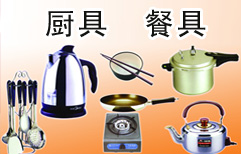
Kitchen item names are flexible, but there are two main classifying schemes: 1. By size and 2. By use. So for instance a cleaver can be called a 大刀 or a 菜刀. Saucepans can be referred to by a variety of names – but anything you cook in can be called a 锅 guō (pot, wok or pan); more specifically: 炒锅 chǎoguō (wok); 蒸锅 zhēngguō (a big saucepan with a steamer); 煮锅 zhǔguō (big saucepan for boiling); 奶锅 nǎiguō (a small saucepan with a handle); 汤锅 tāngguō (a large saucepan with a handle). A frying pan is a 平底锅 píngdǐguō or 平底煎锅 píngdǐjiānguō – it's still a 锅 (even if it looks like a 盘 pán).
Some extra vocab (high frequency if you cook at home)
菜篮子 càilánzi (colander)
切菜板 qiēcàibǎn (cutting board)
锅铲 guōchǎn (the implement you use with a wok like a large egg slice)
架子 jiàzi (tongs)
削皮刀 xuēpídāo; 剥皮刀 bāopídāo pronounced bōpídāo here (vegetable peeler)
切丝刀 qiēsīdāo (cheese grater); 切片刀 qiēpiàndāo (grater producing slices); 切细丝刀 qiēxīsīdāo (fine grater);
垃圾桶 lājītǒng (rubbish bin)
洗涤剂 xǐdíjì; 洗洁精 xǐjiéjīng (detergent)
PS. Plastic bags: the one that goes in your rubbish bin is 拉圾袋 lājī dài, then the one you ask for at the shop to carry your purchases can be either 袋子 dàizi or 塑料袋 sùliào dài.


jinkeliNovember 5, 2010
I maintain that a cleaver is a distintly different tool than the 'chinese knife' 菜刀' and though we westerners might use a caidao like a cleaver, that is not its primary purpose. (Yes, it does snap those chicken bones nicely)...
According to my dictionary, 切肉刀 (qieroudao) is a meat cleaver but though my wife knows the word she says it is not a common word in China. But I think it describes the 'American Cleaver' nicely.
-c
bodaweiNovember 5, 2010
Hi jinkeli
I think you might be saying that the 大刀 is not as substantial as a meat cleaver in the US - doesn't surprise me, a lot of tools in China are light-weight compared to what we use in the West. (I personally think we often over-design stuff in the West - but that is not a general rule.) Thanks for your comment.
Standard dictionaries are pretty useless for this kind of vocab - even 'culture' dictionaries. It is best to find a knowledgeable native speaker for this.

cinnamonfernNovember 2, 2010
I had a question about one of the expansion vocabulary words. You have 胡椒粉 as black pepper - which is how I originally learned it in the Newbie lesson on salt and pepper (胡椒). But when I visited China my Chinese friends said that black pepper is actually 黑椒. Are these two different spices or two different ways of saying the same thing? Is one secretly pretending to be black pepper? Or is 黑椒 the evil twin?

jennyzhuNovember 4, 2010
胡椒/hújiāo is usually a mix of white and black pepper (白胡椒/báihújiāo and黑胡椒/hēihújiāo).

geiwotangbaNovember 2, 2010
Is there any way we can download the audio to the expansion exercises or record them for our private library?


shiwuqingrenNovember 2, 2010
John did u really say its tough to make a great sandwich?? Bu hui ba, wo zhen tong yi!
As long as u have mustard and pickles and good bread NOT sweet bread, u can make a great sandwich just add you choice of cheese and meat and veggies!
JohnNovember 2, 2010
Yeah, making a sandwich is easy, but a GREAT sandwich... that's a different story! :)


wangpingliquanNovember 4, 2010
I'm sure the sandwich they are going to make in this dialog is not a great one, since they don't have even salt. Maybe, they can use sweet bread for seasoning...

johnbNovember 1, 2010
Neat. All these years, I never knew how to say spatula. 铲子... I'm going to have to remember that.

JasonSchNovember 1, 2010
I actually knew this one, but I remember when I learned it, I thought my ex-gf was just being cute (and, being unfamiliar with kitchen utensils) calling it a 'little shovel'. When I laughed, she made me look it up. :)

pretzellogicNovember 1, 2010
This is good useful vocab. I think that in the next lesson, somebody could say, "you forgot to get a rolling pin and a cutting board to make jaozi with." And that's how it goes too, you're always forgetting stuff when you move.

alexlexiluNovember 1, 2010
I am sooooo excited!!! I've been wanting this lesson for so long and never told you but now it's here!!! I am always so confised with all the cooking words...
I haven't even listened to it yet but I wanted to be the first one to write a comment cuz I'm so happy!! :-)

gesangNovember 9, 2010
alexlexilu, - I know... sometimes this is a little creepy about cpod...they seem to read your mind..happened to me some times before... ha ha ;-)
What did you notice in this lesson?
You are posting as a guest. Your reply is reviewed before it appears. Log in to post without review.