
kelakeApril 25, 2013
在對白裡面你用“於是”,於是跟所以的意思聽起來好像一樣,是嗎?有什麼不同?用法不一用嗎?

verazhang100April 25, 2013
不太一樣。“於是” is 'so then'. Here 'so' is not 'because-so'. 沒有很多“因為,所以”的意思。
但是“所以”,肯定是“因為”, there is 'reason'-'so'.
claudieloOctober 13, 2010
sorry guys
it s my first upper intermediate lesson and probably i am a bit slow in thinking
i didn t catch at all the moral, summarized at the beginning with the short and the broad minded thing... to me the only one broad minded seems to be the king forcing the princess to behave properly. the princess itself is everything but broadminded and at the end get rewarded by getting married to a handsome prince.
So, who has to take as an example the little child? the silly shortminded princess or the wise broadminded king??

yarajeevOctober 16, 2010
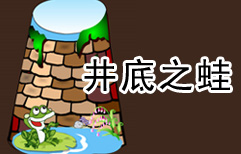
The title is confusing - 井底之蛙 is a different story where a narrow-minded frog is finally shown how big the world is by a turtle. Nothing to do with the princess and the frog story here.
claudieloOctober 18, 2010
ah it s all clear. thanks yarajeev
following your comment i checked on the dictionary and i just learnt that frog in the bottom of a well is a fig phrase in chinese meaning "ignorant person" (meaning not related with the content of the princess story as you confirm)
xiexie

tauchhammerOctober 4, 2010
this lesson is one of the reasons for why I love Chinesepod and the Chinese language!

billSeptember 30, 2010
我很喜欢“女巫的魔法有哈利波特的厉害吗?" This gives the story telling a contemporary context ... 我的外孙女肯定喜欢又这个故事又道理 ...
user9476September 29, 2010
The version with the frog being thrown against the
wall is indeed the original (and more interesting) one, cf.
http://www.textlog.de/40039.html

JohnSeptember 29, 2010
Google translation of that one line:
Then she was beside herself with rage, picking him up and threw him out of all strength against the wall, "now you'll be quiet, you horrid frog."
Harsh!

alexlexiluSeptember 29, 2010
This is my first time listening to an Upper Intermediate lesson and I quite enjoyed it... I was really curious about the subject. I am still doing a few Elies and moving slowly into Intermediate.
I have a few questions though... about some expressions that were not explained in the dialogue, nor that have proper English translation in the box that appear when you move you mouse over them. Although I know the characters in these phrases, I don't get the whole use of a few expressions:
1. 你这只丑陋的青蛙吹什么牛啊! : I know that 吹牛 means to brag, to boast. But I don't really understand its use here. Was the frog bragging that she could find the golden ball? I didn't feel so. (The English just says: "You're only boasting"... so is it all or is there a special feel to this expression: 吹什么牛)
2. 她一把抓住青蛙 : what does the 一把 do/add here? Could it not just be 她抓住青蛙 ? Could you change the meaning that appear in the dialogue to have 一把 together and not "one" + "take" because I don't think that's the right meaning here.
3. 谁知一落地 :落地 was explained but not the 谁知一. I really don't get that one.
Thank you!
alexlexiluSeptember 29, 2010
PS... John your Chinese is AMAZING!
I'd never really heard it before since I listened only to lower levels...
I LOVE it!
JohnSeptember 29, 2010
Thanks! 10 years in China and a personal interest in Chinese do have their positive effects...
JohnSeptember 29, 2010
The "boasting" here means "talking big," i.e. claiming to be able to do something that you really can't.
一把 here describes the action, which is done quickly (rather like 一下子). Don't think of it as the 把字句 word; that won't be helpful in understanding the sentence.
谁知 is one phrase, and 一 goes with 落地 ("as soon as he hit the ground").
alexlexiluSeptember 29, 2010
Merci!!!
I wish 一把 & 谁知 would be put together with the appropriate meaning so that I could save into my vocabulary them by clicking on it...
So...
一把 - yi1ba3 = All of the sudden, at once
谁知 - shui2zhi1 = Who would have thought, unexpectedly, who knows
Right?


euphoniesSeptember 28, 2010
I really enjoyed this lesson too. Perfect choice of background music - made me want to listen to it again and again!
Just some questions: Could you say 睡在你的小床里 as well as 睡你的小床?
And regarding the king's wise words, what is the purpose of the 到 in 就一定要做到?

忠JaronSeptember 28, 2010
Also if you want to tell someone "you are (this chengyu)"
used in the right context it can be like telling someone they are blind and stubborn stuck in a bad condition, lifestyle, circumstance, etc. and that if they want to change they can get out of the well into blessing and freedom and a fruitful life.
sadly this is the condition of most people,
but on the bright side this is a great chengyu to use!
忠JaronSeptember 28, 2010
i learned this chengyu ages ago in cantonese.
love it!
wish upper intermediate lessons fit me for mandarin!
one step at a time.
very good and important tip:
if you want to reach the heart of the chinese people, learn to speak chengyu and alot of it.
chengyu is very effective to touch the heart of the chinese people, especially effective indeed.

laobiSeptember 28, 2010
Help! I haven't received a download since last week. iTunes won't refresh Chinese Pod, while other podcasts are as regular as ever. Nothing since the Ayi lesson last week.
Quick, I need my Cpod fix! What could be wrong?
Cheers,
Lao Bi

peterning11September 29, 2010
Hi laobi, our technicians have fixed your problem with the new lessons. Please log into your account to confirm that new lessons has been added to your dashboard and podcast.
MTGGSeptember 28, 2010
Is it a coincidence that frogs turn into princes in both English and Chinese. Has one borrowed from the other I wonder?


WillBuckinghamOctober 1, 2010
It's the triumph of hope over experience. And that's almost universal...
eupnea63355September 28, 2010
I enjoyed this one. Although I'm still at the beginning level, I had previously studied two versions of 井底之蛙 so the amount of new vocabulary was not discouraging to me. There is a typo in the third last line of English translation - "every" should be "ever." (?)


TalSeptember 28, 2010
《井底之蛙》我非常喜欢,发现是我新最喜欢的成语。我相信也可以说《井蛙之见》,比如:这种自私的观点是井蛙之见,我们受不了了。希望人家都像我能欣赏这个被庄子写的表述词语:井蛙不可语于海者,拘于虚也。庄子挺有智慧咯!
TalSeptember 28, 2010
I'm so looking forward to getting my teeth into this one. I do so adore fairy tales! Thank you CPod!

timlbSeptember 28, 2010
I think the earliest versions (Grimm's) also had the transformation the result of being thrown against the ground, or against a wall. Apparently, a 19th century English translator decided that this method of transformation would be too violent for his readers, and replaced it with a kiss, and that then became the standard version in the West.
I thought it interesting that in the Chinese story of the Frog and the Well, it wasn't enough to just live a life of small vision -- just as bad would be that people would laugh at you! (there's 中国特色)!
More frogs in fairy tales: http://allaboutfrogs.org/stories/fables.html

mikeinewshotSeptember 28, 2010
timlb
Absolutely right about being frightened at being laughed at. This seems to be a preoccupation of some Chinese women (in my small experience!). Is there a culture of laughing at people to put them down?

anonymous19008September 28, 2010
Its just a matter of time before she tries to kill him again. I know how these Chinese princesses operate. I guess thats in the sequel.

pretzellogicSeptember 27, 2010
cool story! I never heard this version of the Frog Prince before.

JasonSchSeptember 27, 2010
Neither had we! We had a fun discussion about the differences between the versions. (Particularly a kiss as opposed to a smashing of the frog as a way for him to transform back into the prince)
pretzellogicSeptember 28, 2010
It would be interesting to hear the logic behind why this version made the cut. Was it because the Chinese tell this version, or it would startle more westerners (forcing better retention of the language learned), both, or neither?
JasonSchSeptember 28, 2010
This is actually the way it's told in China. We thought it was a bit strange as well, but then after looking into it we realized that the story has changed quite a bit over time and from place to place. As Tim pointed out below, the kissing was actually added quite a bit later. I'd like to know what the moral of the story is though. I always figured it was about loving things regardless of their appearance, but I guess I was wrong!
What did you notice in this lesson?
You are posting as a guest. Your reply is reviewed before it appears. Log in to post without review.