tsugihara80September 16, 2011
1) Shěnglǜe = 'to omit' & jiégòu = 'structure' huòzhě 'construction', bùguò shēngdiào duì ma?
2) Can you say 'chi1 de wan4' for to be able to eat it all and/or for to be able to finish eating?

lujiaojieSeptember 19, 2011
1)Shěnglǜe = 'to omit' & jiégòu = 'structure' huòzhě 'construction', shēngdiào yě duì.
2) You can say 'chi1 de wan4' for "to be able to eat it all".
satinaNovember 18, 2010
Regarding altitude sickness, a doctor turned me on to INOSINE. Comes in little vials, drink three or four a day. Greatly alleviates the symptoms, like headache and nausea, and you get to enjoy your time even during the first few days. I looked it up on the internet. Athletes use it to increase their blood's ability to absorb oxygen. It is available at pharmacies, especially those at high altitudes, but I don't have the Chinese name handy, sorry.
chris3September 17, 2010
on the exansion section, the english says "he finnaly got his visa" while it is written in chinese and the audio says " I finnaly got my visa".

osckeezeeSeptember 9, 2010
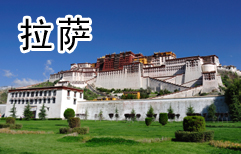
I went to Lasha on 2008. I was a little disappointed because foreigners cannot enter into Buda Palace. But even from the outside is amazing to see. I have never seen the sky so blue like in this place.
If you're planning to go Lasha, try to do some regular aerobic exersice at least for one month before you're trip, this will exercise your heart and get use to pump more blood in a high altitude environment.


ellen_counselorAugust 23, 2010
去拉萨一定要去布达拉宫。
If you go to Lhasa, you have to go to the Potala Palace.


dropped_chopstickAugust 21, 2010
Perhaps you should include the Tibetan words for these places and also a few phrases in Tibetan so that if you go there you can talk with local people.
Dazhao is more commonly known as Jokhang Temple, for example!

dropped_chopstickAugust 21, 2010
Perhaps you should include the Tibetan words for these places and also a few phrases in Tibetan so that if you go there you can talk with local people.
Dazhao is more commonly known as Jokhang Temple, for example!
zhuimiAugust 20, 2010
the traditional version of 念经 should be 唸經. Click on the link for proof http://tw.dictionary.yahoo.com/dictionary?p=%E5%94%B8%E7%B6%93
gaojianAugust 20, 2010
I believe that both characters actually work in traditional. The second niàn with the mouth radical is just a variant of the more basic form.
alexlexiluAugust 20, 2010
the first nian is widely used... even in traditionnal they use a few of the simplified characters... take for example 台湾... they rarely ever use the real 台... 臺... even over there... i read traditionnal all the time and have hardly ever seen any book use the nian with a kou radical... but it makes sense since it means to read out loud...
zhuimiAugust 20, 2010
@ gaojian & alexlexilu : it's true that people who are from Taiwan and Hong Kong at times write it a lazy short-hand sort of way, and it's also true that sometimes that character is even printed out without the 口, but it's still the most proper for it to be 唸。 This is just like in English , where a lot of times people mix up "your" and "you're" , or just refuse to write/type it the proper way. The same goes when people write something like, "Thats my moms car" , instead of "That's my mom's car" .
By the way ( not to be disagreeable ), but I used to see both 台and 臺 quite frequently when I lived in Taiwan.
gaojianAugust 20, 2010
I agree. I just wanted to comment for other users. I lived there as well and frequently ran into both usages.
gaojianAugust 20, 2010
I have a question about the use of 了二 in the 终于 sentences. 你可不可以把”了“放在动词和名词的中间?
比如: 我终于到了拉萨.
or does it have to be at the end?
谢谢。
gaopengAugust 21, 2010
对我来说,你的句子还可以。可是,我就是一个外行。
我觉得对话里的句子强调他们“终于到”拉萨了,还有他们的情况 (i.e. 他们还不坐着火车 - they're not riding on the train anymore) 完全改变了。也许,你的例子用的一个 “了一”。

connieAugust 24, 2010
"了1"用在动词后,主要表示动作的完成。如果动词有宾语,"了1"放在宾语前面。
"了2"用在句末,主要肯定事态出现了变化或即将出现变化。
如果既想表示动作的完成,又想肯定事态出现了变化,"了"可以放在句末。
我终于到了拉萨。(了1)
我终于到拉萨了。(了2)

socratesinsichuanAugust 20, 2010
Taking the train greatly helps to prevent altitude sickness. When I was there, all the people I met who got altitude sickness flew into Lhasa. That said, one 40 hour train ride (from Chengdu) is enough. I would recommend flying back.
user35883August 20, 2010
35883 -I was in Tibet in September of 2006 and it was probably the most interesting place I have ever been- but trust me you would not want to climb 300 steps of the Potela Palace twice. Once is hard enough. I was not sick but we were taking a medicine before we left on a plane to get there.

nitroxAugust 20, 2010
Last year I took the train from Xi'an to Lhasa. Although it was a 36 hour ride, it wasn't boring at all as the landscape was changing all the time. The train goes up to 5000m, but sitting (or better lying) in my "soft sleeper" (软卧) did not make me feel any altitude sickness. It was only after having spent one night in Lhasa while visiting the 布达拉宫 that I felt really tired. There's a drug called Gaoyuanan (高原安) they sell everywhere which is supposed to help with altitude sickness, but I couldn't notice a big effect. If anything helped, especially against the strong headaches I got when visiting Lake Namtso at 4700m it was good old Aspirin.
I recommend this trip to anyone, it's an unforgettable experience and well worth the gaoyuanfanying.

JasonSchAugust 20, 2010
Sounds awesome. I once took a train from Xi'an t Urumqi and it was very memorable for me as well.
I've heard that some Tibetan people use snuff, or snorting powdered tabacco, to help with altitude sickness while hiking, or going into higher areas. A Tibetan guy I met in Shangri-La gave me some and it was quite the kick. (Similarly, people in the Andes chew on cocoa leaves.)


aslan.sunixAugust 19, 2010
我想10-1放假去拉萨,但是不知道到时候有没有钱。
I want 10-1 holiday to Lhasa, but do not know at that time there was no money.
Tibet TravelSeptember 1, 2010
Well,I am the tibet travel advisor! I am a Chinese! Anyone who want to travel to tibet,i can help you! Include the Tibet Permit and so on! Come on and e-mail me! My e-mail add is michael.pan@mail.tibettravel.com.
JasonSchAugust 19, 2010
有没有人去过拉萨? 我去过云南云贵高原,但还没去过西藏和青藏高原。我一直很想去。
Has anyone ever been to Lhasa? I've been to Yunnan and the Yunnan-Guizhou plateau, but I've never been into Tibet and the Qinghai-Tibetan plateau. I've always wanted to go.
xiaophilAugust 20, 2010
I did go. It was beautiful, but I did discover one thing, and that is I am more of a tree guy than open grassy plains guy. All that openness really made me feel lonely even when I was with a group of people.

biyanurenAugust 20, 2010
I visited Tibet in 1988. When I arrived in Lhasa by plane I almost immediately got sick and had to stay in bed for 32 hours (bad headache mainly) but then I felt ok and visited the region for 7 days (Gyantse, Shigatse...) in a jeep. It was amazingly beautiful. There was lots of static electricity, beercans exploding, difficult breathing and slow stairclimbing. And driving around did make me sick again, but it was worth every single second!
JasonSchAugust 23, 2010
Interestingly, I just had a conversation with a friend about this exact issue. I personally love grasslands and big open areas, but my friend gets the same feeling you described.
biyanurenAugust 29, 2010
We had to wait in the hotel in Chengdu, and did not know until 2 hours before the flight whether we could go or not. We had to take a Chinese guide along with the Tibetan driver who drove us around Tibet in a jeep. The tension between the two was obvious. We hardly met any foreigners in Tibet at that time. My sister who planned the same trip beginning 1989, was not allowed to enter Tibet, and changed her plans to The silk route and Mongolia. Het father in law was ambassador in Beijing at that time, but even he couldn't help them get in.
xiaophilSeptember 1, 2010
Wow, that's amazing. Your sister's trip to Mongolia and the silk route wasn't a bad alternative.
Tibet TravelSeptember 1, 2010
Well,I am the tibet travel advisor! I am a Chinese! Anyone who want to travel to tibet,i can help you! Include the Tibet Permit and so on! Come on and e-mail me! My e-mail add is michael.pan@mail.tibettravel.com.
What did you notice in this lesson?
You are posting as a guest. Your reply is reviewed before it appears. Log in to post without review.