
go_manlyMay 24, 2010
CPod, a small correction - in the 4th expansion sentence, the mouseover pinyin for 骨 should should show gǔ not gú.

cwillforMay 15, 2010
What is the difference between 断 and 坏 (huai)? Can they both be used in this case? (E.g., 我们保险丝坏了。)


DocRaccoonMay 13, 2010
I could be wrong but I'm pretty sure the television dialogue at the start is from Ice Age 3. Maybe its a side effect of having a six year old daughter but I think I recognise that voice! It's Buck the one-eyed possum!

dunderklumpenMay 12, 2010
This is the first time I encounter "好像..." as meaning "I think it is...". Could we please have a few more examples?

bodaweiMay 12, 2010
dunderklumpen
I think that the translator has just taken some liberties here - 'I think' substitutes for 'Seems like...'. This 'seems like' is the usual meaning of "好像...". In colloquial English 'I think' can probably be used with this degree of certainty. That's my take for what it's worth. :)

oranginaMay 12, 2010
My 2分?That translation for 好像 caught me by surprise too. But I would never say, "Seems like the flashlight is on the table." It sounds weird. Seems like the flashlight is on the table, but perhaps that is just an illusion. I might say, "Seems like I remember seeing the flashlight on the table." But that is taking even more liberties with the translation. So I think "I think it is..." is a reasonable, succinct translation of what the speaker meant.
But sorry, no, I have no other examples.
dunderklumpenMay 12, 2010
>>So I think "I think it is..." is a reasonable, succinct translation of what the speaker meant. >>
Me too. I was just a bit surprised by the chinese wording. I expected 我想... or something similar. It seems 好像 is more flexible than the english "seems like" and the swedish "det verkar som att".
好像好像比较flexible :-)

JohnMay 12, 2010
There are lots of examples in the glossary entry for 好像. Enjoy!
You're right, though... 好像 is quite broad.


bluesky3064May 16, 2010
Thanks for the reminder about the glossary, John - I had forgotten that it was there! 谢谢!

maktubhelouMay 12, 2010
This reminds me of the big power outage that affected the Eastern Seaboard and parts of Southern Ontario, Canada, a few years ago.
I was teaching an English class at the time, with two Korean students. We were on the 10th floor and decided to continue class, figuring it was just a small blackout and we could see because the room had a huge window.
An hour later we walked out together and started noticing that other buildings, then other streets, then the whole city had no power. Finally I called back home and my mother, living in another province, informed me that and entire two states and one province was affected.
Who needs old buildings with fuses when you can have an entire electrical system that's out of date?
sydcartenMay 12, 2010
When I was working in Saigon some years ago I used to frequent a dusty, poky, old-fashioned bookshop.
The old man who owned the shop soon got to know me well.
One day while browsing down an isle in the back of the shop we had a sudden blackout (they were common all over the city)
I was standing there contemplating how to feel my way out of the shop - yes, it was THAT dark - when I suddenly saw a flickering light approaching me.
The old shop owner came up carring 2 lit candles, one for him and one for me, then he motioned for me to continue browsing.
JohnMay 12, 2010
Now that's service! :)
Did you continue browsing my candlelight? (That's some romantic shopping!)

oranginaMay 12, 2010
I have a question about 不管了。
It is translated as "I'm not dealing with it." Does it always have this connotation? Can it also mean "it doesn't matter"?
How would I say "Don't bother." 别管了?

crystal_counselorMay 12, 2010
Hi
"不管了“ can not mean "it doesn't matter"
when you want to say" I don't care", you can use "我不管".
"don't bother" in Chinese is ”不用麻烦了“ or just "不用了"
"别管了” is more like "never you mind"," forget about it"

jen_not_jennyMay 12, 2010
Does that mean that, unless I specify a subject, if I say, 不管了, I'm referring to myself, saying that something is not my responsibility?
How about 算了for "don't bother"? Would that work?
oranginaMay 12, 2010
Thank you Crystal老师!
I think in English, if you say it with the right tone, "don't bother" can mean "just forget it." So is looks like 别管了only has this meaning. Which I would say is a quite handy phrase to know! And of course also good to know how to tell someone not to go to any trouble... 不用麻烦了。
I am also looking forward to the answer to jen_not_jenny's follow up question, which is actually my question, just stated more clearly.
jen_not_jennyMay 14, 2010
Thanks, Crystal. About the 不管了, if I use it without a subject, does it always mean, "I don't care," or "That's not MY responsibility"?

jbaldwi1May 11, 2010
How do you say "circuit breaker"?
(I haven't seen a "fuse" since I was a kid.)

JasonSchMay 11, 2010
circuit breaker = 断路器
(Fuses are still pretty common in older Chinese buildings.)
bodaweiMay 12, 2010
Hi Jason
'Fuses are still pretty common in older Chinese buildings'
Maybe we should explain that hardly anyone lives in older buildings, even out here in the country! I'm thinking that only a few fashionable places in the big cities in the east would be old by Western standards? I have lived in places that look very old (but are maybe 20 - 25 years old at most) and they still have circuit breakers.
Actually this is quite different to the West. In Australia a block of apartments 100 years old + we (okay, real estate agents) would probably refer to as Federation, and desirable. Anything more than five years old where I live in China starts to be classified as old, and you wonder when it is going to be knocked down.
JasonSchMay 12, 2010
I've actually lived in two buildings here in China that still used fuses/fuseboxes. (Shanghai, Nanjing) So they are still in use. Not sure about how old they were exactly, but they were certainly older by Chinese standards.
I grew up in a house that was over 100 years old in the U.S. And that was in the 80's. Great house. :)
bodaweiMay 12, 2010
So, we can probably draw some conclusions about your price range? You're not a cheapskate are you Jason? ;-) Actually my experience in older/cheaper houses in China I can blame on our daughter.
JasonSchMay 12, 2010
Yeah, I definitely 'budgeted' the first year or so I was here. (read: worked as little as possible!) The apartments themselves weren't bad, actually, but the buildings? That's another story. I think it was worth it though. Not only were my neighborhoods really interesting, but I had much more time to explore and learn Chinese. A great introduction to life in China.
changyeMay 11, 2010
In our apartment building, circuit breaker boxes are located not in every compartment, but at public corridors, and anybody can freely open the boxes and turn on/off breakers. As you might know, Chinese society is heavily based on mutual trust....in some ways.

pretzellogicMay 11, 2010
this mutual trust was violated every time the 10-year old kid that lived downstairs went through the apartments in our building and started switching off circuits in everybody's apartments as a prank.

catherinemMay 11, 2010
That's how my building is too. No pranks as of yet... just some embarrassing trips down to the stairwell landing in pajamas/towels etc.
changyeMay 12, 2010
Hi catherinem
> in pajamas
That's no problem because you're in Shanghai, but I don't know about towels.
jen_not_jennyMay 12, 2010
Haha...just this morning my (male, middle-aged) neighbor got into the elevator in plaid pyjamas and Hello Kitty slippers!!
maktubhelouMay 12, 2010
The plaid pyjamas and Hello Kitty slippers must be a pan-Asian phenomenon, ha. Don't we love it? ;-)
samimehmasMay 11, 2010
the fuse is molten metal at certain current so if the cerrent comes above the value of said fuse the hairy metal wil melt and disconnect th circuit, the circuit brecker it got tripping mechanism affected by expanding of material which trigger the cct braker internal mechanism then it open the cct. thus power will be off ..... infact the fused been used long time before implementing the cct,breaker and the later it's much better than fuse if made of good quality .
cct.breaker got dual function it's act as switch and fuse two in one
catherinemMay 11, 2010
If I turn on the 热水器, 空调,and 电视机 in my house, the circuit breaker outside the apartment automatically shuts down. The good news is that I never have to worry about replacing 保险丝! The bad news - cold showers in the dark are scary.
pretzellogicMay 11, 2010
If you're an electrician (and I am not), a fuse and a circuit breaker are 2 different things. Are they used synonymously in China? I ask because the name of the lesson is "Blown Fuse" yet the lesson discusses a circuit breaker. I remember an electrician giving me the lecture about a fuse being safer than a circuit breaker as I was replacing my 50 amp fuse box with a 100 amp circuit breaker panel.
JasonSchMay 12, 2010
Hey pretzellogic,
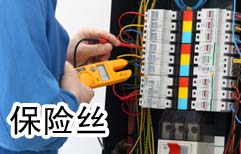
This lesson specifically discusses fuses. A fuse box is a 保险丝盒 and a circuit breaker is a, 断路器.
So, if you want to say 'the circuit breaker tripped', you could say 断路器断开了.
What did you notice in this lesson?
You are posting as a guest. Your reply is reviewed before it appears. Log in to post without review.