
RCKOctober 25, 2010
Hi
Can you please explain the le's in the dialogue?
那他可是跟对主人了,跟了我只能灰头土脸。
Is the meaning changed if we change the positions of the le's to:
跟对了主人,跟我了只能灰头土脸。
Please explain as I don't quite grasp this. Also, have you guys ever thought of having a pdf that explains the grammar patterns etc such as other language podcast sites? It really would be very helpful and the only thing that is missing from your great service. Thank you
RCK

lujiaojieOctober 25, 2010
”了“可以放在动词后或者句尾,所以”跟对了主人“ 和” 跟对主人了“都可以,“了”都表示“完成”。
但是”跟我了只能灰头土脸“,”了“在句中,所以只能放在动词后宾语前,“动词+了+宾语”。
RCKOctober 26, 2010
Very helpful..thank you very much! I apologize for asking such stupid questions, it is just sometimes I get confused by the most basic stuff :(
Best Regards,
RCK



changyeJanuary 21, 2010
像对话里的小黑一样,我家的小胖狗“芭迪”也有个小毛病,就是肠胃不好。芭迪很喜欢啃骨头,可是最近每次吃掉骨头后就呕吐出来。她以前不是那样的,好像是岁数大了的缘故吧。现在我尽量少给芭迪吃大骨头,多给她吃软骨头。养老狗真的不容易呀!

alexyzyeJanuary 20, 2010
除了“解开”,可以说 ”把项圈脱掉”吗?熊猫狗是最可爱地... :)



shanghai_heliosJanuary 20, 2010
Thanks for the lesson. I wish I had this about 50 visits to the vet ago.
And after a couple of injections and a few pills, the usual recommendation from the Shanghai vet is that the dog not go outside and run on the grass. Completely unrealistic.
Amazing thing is that most people in China seem to recognize a 金毛犬, and know the name.

anonymous19008January 19, 2010
I randomly selected Dog Meat and Animal Rights to review after this lesson. What synergy! Hey you can eat well and get rich doing so. I guess.

anonymous19008January 19, 2010
Probably! Sort of reminds of a Japanese children's story called 吞掉公主的巨人 that I once read (in Chinese) where a giant liked the princess so much that he ate her, along with all of her favorite things like her harp and favorite clothes. Nice story for kids huh?

JohnJanuary 19, 2010
Good question! I think it's simply a matter of metadata (topic tags). I will take a look at the issue....
chanelle77January 19, 2010
My 2 (black) cats did not like this lesson a lot "猫来穷" :-)
Me on the other hand, found the lesson very interesting!

lilac_counselorJanuary 19, 2010
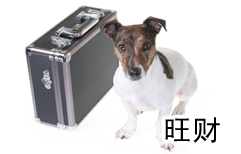
这照片上的狗不是杰克罗素吗?jack russell terrier

bodaweiJanuary 19, 2010
He/she looks much too sedate to be a Jack Russell. :-)
(ex Jack Russell owner.)

henningJanuary 19, 2010
Question on the Expansion:
I am not sure if I parse that one correct:
看你平时和女孩子套近乎挺活泼的,怎么现在这么害羞?
Is 套近乎 a verb that is modified with 挺活泼的 ("he is always nice towards girls in a vivid way")? From the intonation it almost seems this is more an enumeration (套近乎 + 挺活泼的).

matt_cJanuary 19, 2010
I've noticed that most Chinese people that I know who own dogs all call them by a name that is two repeated characters and/or syllables, and usually the same character like Mr Jess's teacher's dog above: 狗狗 gǒugǒu, 豆豆 dòudòu, 花花 huāhuā,冰冰 bīngbīng, etc.
An exception to that rule would be John Pasden and his wife, whose dog is named after a famous Scientist (yes I know John is NOT Chinese but many non Chinese who are married to Chinese still name their dogs after the Chinese fashion.)


TalJanuary 19, 2010
So I have to ask: what famous scientist did John and his wife name their dog after?

xiaophilJanuary 19, 2010
My wife named my goldfish 红红, so I guess this method holds true for fish too.
changyeJanuary 19, 2010
I bet the name of John's dog is "钱学森", who is the father of rocket science in the PRC. He studied in the US, and later came back to China. The name contains two nice characters "钱" (money) and "学" (study). I think it's the ideal name for John's dog.


changyeJanuary 19, 2010
Hi John
I thought it would be the name of a Chinese scientist. 牛顿 is a nice name, although your dog might not like the character 牛 (cow) in the name!
JohnJanuary 19, 2010
He doesn't seem to mind. We often call him 顿顿 as well, and he responds to that too.
Here is a picture of 牛顿.
changyeJanuary 19, 2010
Hi John
Your dog is very lovely. As far as appearances go, the name "爱因斯坦" (Einstein) might be more appropriate for your dog than "牛顿" is. hehe.

Jess_AndersenJanuary 18, 2010
我老师有一只狗,它叫狗狗。
changyeJanuary 19, 2010
Hi misterjess
I guess it's not the dog's real name. Chinese children often use words such as "狗狗", "小狗",and "小狗狗" when referring to a dog. The word "狗狗" sounds just cute!


What did you notice in this lesson?
You are posting as a guest. Your reply is reviewed before it appears. Log in to post without review.