
floalvarezApril 2, 2012
Questions:
@8:44 “qian yi qian”
@12:52 这里是一个”yin shen”一个比喻

floalvarezApril 5, 2012
I was guessing "舔一舔" but 引申 is the first time I have seen the words. Thank you so much.
chinesyJuly 23, 2010
I would question the english in the title of this lesson. I know that this isn't englishpod but I still think it's important to clearly communicate the meaning of what you're saying before starting to translate. Sure the title is "New Year Cash", not "New Year's". You wouldn't say "Birthday's present", so why add the apostrophe s to New Year in this instance?.



akinduyguJune 17, 2009
we have similar custom in Turkey. Elder generation give the youngs money on special festivals If they cannot afford to give money then they can give candies as well. In return of this favour children kiss their hands as a way of respect
mmonestesMarch 16, 2009
大家好!
我从对话记录一下生词。。。翻译成英文和法文!
拜年 bài nián / to pay a New Year visit / souhaiter la bonne année祝福 zhù fú / blessing,to bless / bénir祝贺 zhù hè / congratulations,to congratulate / féliciter大姨 dàyí / sister-in-law / belle-soeur小姨 xiǎoyí / sister-in-law / belle-soeur七大姑八大姨中年人 zhōng nián rén / middle-aged person / personne entre deux âges见识 jiàn shi / experience / connaissances策略 cè lüè / tactic / tactique夸张 kuā zhāng / Magnification,to exaggerate / exagérer疼爱 téng ài / to love / aimer偏心 piān xīn / bias / partial, inégal规矩 guī ju / rule / règle, pratique courante感性 gǎn xìng / sensibility / sensibilité回报 huí bào / in return / en échange, en récompense妖怪 yāo guài / monster / mauvais esprit?? 脖子 bó zi / neck / cou具体 jù tǐ / concrete / concret乞讨 qǐ tǎo / to beg / mendier走运 zǒu yùn / to have good chance / avoir de la chance状态 zhuàng tài / condition, form / forme习俗 xí sú / custom / habitude
nate_chFebruary 3, 2009
Being a forigner with a Taiwanese wife & family here in Taiwan, I found a few Aunts gave me a Hong bao. Its really kind of silly though, because we just end up gifting the money back to neices and nephews. And as Jenny mentioned about Shanghai, Hong Bao entitlement is strong among Taiwanese children as well! I often heard "Gong Xi Fa Cai, Hong Bao Na Lai!?" more than I got a "Xie Xie"
Good luck with the post Guo Nian hangover!
Cheers
Nate

pearltowerpeteFebruary 2, 2009
Hi alexyzye
Sorry for the delayed reply to your question.
Generally, parents will give 红包 to their kids until the children get a job, although some will continue until marriage (and often, for the first year that the kid is married). Some kids will give money to their parents, although that is just a way of showing 孝敬 (respect for one's parents). It is not 压岁钱.
One of my Nanjing friends was always embarrassed because although his grandparents were quite poor, they insisted on giving him a 红包 every year. In this kind of situation, the kid will often take the money, and then the parents will give money to the grandparents! It's a circle of love.

tonycFebruary 2, 2009
Lucky money given for Chinese New Year is called 利是 "lai si" in Cantonese. It is also used to refer to money gifts in general. You won't hear 红包 used as much.
eight8isenufFebruary 2, 2009
I was thinking of asking the same thing as duuren about numbering the pages. I guess we are on the same page! I also print mine up.

cassielinJanuary 31, 2009
alexyzye,
I didn't get 红包this year since I start working. However, I gave my parents 红包this chinese new year. ^_^

jennyzhuJanuary 31, 2009
remember_me,
Parents always want to give their kids the best, even when it means they have to suffer. You have such a great future in-law.
remember_meJanuary 31, 2009
当春节的时候,我的女朋友的爸爸把一张红包放在我口带里面,然后他跑去来了.
因为我知道她爸不是太有钱的,所以我没想到他给我那么多钱.
红包里面有八百八十八快!!!我女朋友告诉我那个代表她爸很喜欢我.
听说我们结婚的时侯,他会给我九百九十九块因为<九>和<久>听去象一样的.

marygraceJanuary 30, 2009
Great lesson! 小娟娟 is adorable.
Here is my new year's blessing for all poddies:
"He who pursues righteousness and love finds life, prosperity and honor." Proverbs 21.21
duurenJanuary 30, 2009
Hi chinesepod team,
I always print the PDF files, so I can read and learn at any time. The pages and lessons get mixed-up easily because there are no pagenumbers and only the first page has the lesson number.
Would it be possible to have lesson nr and page nr printed on each page? Would be very helpful.
And yes, I do save trees. By doublesided printing.


changyeJanuary 30, 2009
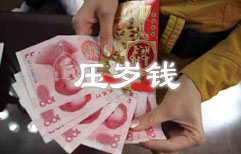
Let me give a supplemental explanation about 压岁钱 from 百度百科. The goblin the mother mentioned in the dialogue was called "祟" (sui4), and "祟" has the same sound (谐音) as "岁" (sui4, age, year).
And, 压 (ya1) connotes "repress" in Chinese, so 压岁(= 祟)钱 means "压抑邪祟(= 岁)的钱" (the money for repressing an evil goblin). By the same token, you can also use the word "押岁钱" instead of 压岁钱.
In the case a younger guy gives an elderly person 压岁钱, the word is literally interpreted, "the money for compressing age (= become younger)". In other words, it's 祝你健康长寿. Please give me 压岁钱!
pearltowerpeteJanuary 30, 2009
Hi leeht
祝福 and 祝贺 are slightly different. 祝福 is to wish someone well, to express good wishes. 祝贺 is to express congratulations.
Please also note that 祝贺卡 are holiday cards to send in the mail, and that 贺岁片 are the "feel-good-movies" (in the late 90s-early00s, often directed by 冯小刚 Feng Xiaogang) that tend to come out around Chinese New Year.

billJanuary 30, 2009
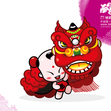
We gave 红包 to a red dragon at dinner this evening. It was a Tet New Year's celebration. Lots of fun !
Bill

chrisJanuary 30, 2009
I gave a hongbao to my secretary for new year, my nephews (all still kids) and my wife, but that's as far as it goes. I work with quite a large number of staff and I'd like to have hongbao'd them all as well, but it would bankrupt me quickly if I did so!
Chris
leehtJanuary 30, 2009
In the podcast, I heard Jenny mentioning these 2 words “祝福” and “祝贺”. Is there any difference between these 2 words?I hear people say: "我祝福你“. Can we also say: "我祝贺你"? Do they convey the same meaning or do we use each for different occasions?

calkinsJanuary 30, 2009
alexyzye, I got a 红包 from my boss' parents! It was only NT$200 (about US$6), but I was surprised and amazed with the generosity. This doesn't really answer your question, but it's an example.
mikenotinjubeiJanuary 30, 2009
Happy New Year to all!
I hope my brain improves and I retain a bit more this year. (And the same wish to others who forget more than they would like as well)
This lesson has lots of wonderful 4 character expressions. I think this was mentioned before but I forget. And I have no listend to the lesson yet as I am at work and can only peak at the test.
Anybody remember ? As I live in Japan they had a series on these in Japanesepod101 called"Yojijukugo"
The Kanji (Hanzi) characters are 四字熟語 I guess in chinese this would be (sìzìshúyǔ) Does this exist in chinese language as well?

alexyzyeJanuary 30, 2009
We all know that kids get 红包. However when it comes to adults, things get murkier. Do adults get them as long as they are not married? Or until they start working? Or not at all, i.e. only for real kids? Should people who are already working/married give 红包 to their elderly parents or grandparents? I used to have a certain understanding of these rules, however lately I've met people with different practices.
Is there a place (online) where I can refer to the definite rules on who should give or get 红包?
Thanks.
josthJanuary 29, 2009
Hi to all of you and a happy new year!
I'm in Shenzhen right now and really enjoin the atmosphere here. I was invited by one of my business associates to spend new year with him and his family, great exercise and jolly good fun all around, just as listening to your lessons!
Sure I had my 红包 ready for the kids but kneeling.... no way! Fire crackers, plenty of food and many glasses of maitou where my share...
Best regards!

roscovanbastenJanuary 29, 2009
flyrealhy,Yes, we do have staff in the office this week to cover customer questions.I actually responded to your email yesterday regarding your question. Please check your email account and email support@praxislanguage.com if you cannot locate the response.
Ross
flyrealhyJanuary 29, 2009
Jenny,
thanks very much, i tried since tuesday but figured everyone was home for new year.
thanks
jennyzhuJanuary 29, 2009
foleadu,
Yes, parents stop giving 红包 to their kids once they get married, and very soon they'll be giving to their grandkids.
jennyzhuJanuary 29, 2009
flyrealhy,
I've forwarded your problem to our CRM colleague, who are at work this week. You will get a response very soon.
Sorry for the inconvenience caused.
flyrealhyJanuary 29, 2009
Hi,
Is everyone on their chinese new year break now, because i need help with my discount code for the digital pack. I am getting an error ( i was told my code has expired. I tried emailing you guys but no respond yet.
thanks
jennyzhuJanuary 29, 2009
matt_c,
The kids in your family are so appreciative. They kneel? In my family and pretty much all kids I've seen in Shanghai feel fully entitled to their 红包。The most you get from them is '谢谢’。

foleaduJanuary 29, 2009
Great lesson! I celebrated Chinese New Year with my wife's family this year, and I heard almost all of the 祝福 mentioned in the lesson. One of the relatives pointed out that this year, in the midst of a 金融危机, it is 不吉利 to say 财源滚滚 as 财源 (financial resources) sounds like 裁员 (lay off employees). Be careful what you wish for!
When do parents/relatives stop passing out 红包 to the kids? Once the kids get married?

matt_cJanuary 29, 2009
The giving of 红包 this year was great fun with my in-laws and family. My nephew is still too small to kneel and bestow new year's greetings upon the givers of 红包 but we found other ways for him to ask for his goodies. Anyone else take part in Chinese New Year's morning silliness and festivities?
What did you notice in this lesson?
You are posting as a guest. Your reply is reviewed before it appears. Log in to post without review.