

pearltowerpeteAugust 25, 2009
Hi desluo949
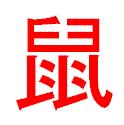
I had always thought of 乖 as showing a fly-by-night watch salesman, opening his coat to show off his wares. But maybe machine guns lead more directly to obedience.
By the way, I had a teacher who hinted delicately in class that it was best to practice Chinese characters while high, and listening to Led Zepplin. He was a great teacher, and I while I've never made use of his suggestion, I pass it along in hopes that it will improve some poddie's Chinese ability.
maeann_ramirezAugust 25, 2009
To me it seems that the character for 'well-behaved' shows a man opening out his trench-coat to expose a pair of machine-guns. It's just occured to me I should try to memorise characters under the influence of pot - maybe then I would see things in the characters I'd never seen before - it might help me remember them.


dunderklumpenJanuary 24, 2009
Hi jaimemayo,
9 months ago I didn't know a single word in chinese neither. Nor did I know about tones. Nothing. I don't think you are the only beginner :) 200,000+ registered users and 300,000 people who come to ChinesePod every month...
There is a huge pinyin guide here. Part 7.1: "numerals instead of tone marks". If you want to type pīnyīn you can go here. (On the left side: "type pinyin")
All the sounds in chinese here.
These are some newbie podcasts on tones:Newbie - The First ToneNewbie - The Second ToneNewbie - The Third ToneNewbie - The Fourth ToneNewbie - The Neutral ToneElementary - Tone Rule: Changes for 'bu'Elementary - Tone Rule: Two Third Tones
Dictionaries: http://www.nciku.com/, http://www.xuezhongwen.net/chindict/chindict.php

jaimemayoJanuary 23, 2009
Thanks again, dunderklumpen. Being a complete beginner (again, probably the only one here) I didn't know the diacritical marks meant different tones. I only know how to do diacritical marks in Spanish, French and Portuguese. That's why I couldn't type the diacritical mark for "guai1".
dunderklumpenJanuary 23, 2009
jaimemayo
I don't know why you can't see it. It's a PDF so I guess you should be able to. But I'm no good with computers...Actually, in the PDF it is guāi. Not guai1. I typed guai1 because that is simpler to type than guāi :)
jaimemayoJanuary 23, 2009
Thanks, dunderklumpen. I had thought it was the first tone. But where did you see "guai1" on the transcript? I looked at the PDF transcript again and didn't see that. Could it be because I have a Mac and not a PC?
wudangsuifengJanuary 23, 2009
Ah, how great! A lesson about dogs ^^ ! Did I mentioned, that I love ChinesePod-Lessons :D ?
dunderklumpenJanuary 23, 2009
Hi jaimemayo,
both of my dictionaries and the lesson transcript says guai1 (first tone).
jaimemayoJanuary 23, 2009
I think I'm the only true newbie on this site! That said, I have a question about the tones of "zhen guai". Ken seems to be saying that "guai" is the fourth tone and Jenny says it is the first tone. To me they both sound like first tones. Can anyone help me? What tone is "guai"?


connieJanuary 31, 2008
Hi bazza,
you can't lose the 2nd 我的.
"my dog is my best friend"
我的狗是我最好的朋友。
Wǒ de gǒu shì wǒ zuìhǎo de péngyou.

bazzaJanuary 31, 2008
Would "my dog is my best friend" be:
我的狗是我的最好朋友。
Or can you lose the 2nd 我的?
我的狗是最好朋友。
dhunt74August 20, 2007
This is my first pod cast and since I have 6 dogs I thought that it would be a good place to start. I think I will teach my dogs Mandarian commands!

amberJuly 29, 2007
hi Rich and CanadaMartin,
很 (hěn) very
真 (zhēn) real, really
真的 (zhēn de) real, really
Rich- you can often use 很 (hěn) and 真的 (zhēn de) interchangeably. However, please note, you can't say: 这个真的好 (Zhège zhēn de hǎo.) You have to say either:
这个真好。(Zhège zhēn hǎo.) This is really good.
or
这个真的很好。(Zhège zhēn de hěn hǎo.) This is really very good.
Also, it is correct to say both:
我真想见到你。(Wǒ zhēn xiǎng jiàndào nǐ.) I really want to see you.
and
我很想见到你。(Wǒ hěn xiǎng jiàndào nǐ.) I really want to see you.
Please note, in come cases, 真的 (zhēn de) and 真 (zhēn) can also mean real, as in:
真皮 (zhēnpí) real leather (here you don't add the de because it is a set phrase)
这个钻戒是真的 (zhège zuànjiè shì zhēn de) This diamond ring is real.
amberJuly 29, 2007
Hi Bazza,
You could say:
中国狗 (Zhōngguó gǒu)
Chinese dog
but perhaps a bit clearer would be to say:
中国品种的狗 (Zhōngguó pǐnzhǒng de gǒu)
Chinese breed of dog

richJuly 28, 2007
My take on that is that 真zhen does NOT mean "very", it means "really". So if you want to say "This is really good", you'd say 这个真的好. Yet I don't know how often that is used. Honestly, I think I say 真 when I should say 很hen. For example, Ioften say:
我真像见到你. I really want to see you.
Yet I think I've been corrected (but can't remember, so I'm asking to be corrected ehre) that I shouldn't say that, that I should say 我很像见到你. Both correct? Should I only use 狠??

canadamartinJuly 28, 2007
Hi,
A quick question I hope someone can give a simple answer to: What is the difference between "hen" and "zhen" as translated to "very". When is each used and what is the rule?
Thanks for your help!

richJuly 24, 2007
Oh weird, I count 200 newbie lessons in my folder for them, but the Lessons tabs say 208...whats with that? I know I have exactly the number of mp3 files that are counted by the file name here. Weren't all the 7 week intros merged with the newbie lessons in the switch?
elevenJuly 23, 2007
it is very hot today!
in chinese it can be:今天真热!
and also can be:今天很热!
and also can be:今天好热!
sometimes,"真""很""好" have the same meaning .
about " 好",
when it is adj.,it means good/nice.
but when it is adv., it means very/so.same meaning as "很"
that is it.
i hope that could help you.
Eleven from China
bazzaJuly 23, 2007
It's an orange drink or it was, not sure if you can still get it.
https://www.youtube.com/watch?v=5LvLn9PWln8
nelfieJuly 23, 2007
很好的lesson. 我是newbie. 这是我的第一次post. 我喜欢狗. 让我介绍一下我的狗, Betty. 他也好乖.
very good lesson. I am a newbie on the edge of 'elly' level. This is my first post. Let me introduce my dog, Betty. She is also very obedient. She's the one in the picture...no it's not me dressed up. btw I like the grinch costume! I'm taking the hint about writing so forgive any mistakes. It's quite scary at first.
maxiewawaJuly 22, 2007
好 can be 'very' or 'good', so 'very good' can be 好好。好 really can mean almost anything in Chinese!
amberJuly 22, 2007
Hi Bazza,
It depends on the context. This translation is assuming you were buying something, and someone asked who it's for:
只给我和我的狗。(Zhǐ gěi wǒ hé wǒ de gǒu.)

changyeJuly 22, 2007
Hi DocMom and Rich!
The usage of 好容易 and 好不容易
is a little confusing. When they are used
as adverbs, both mean “barely” or “manage to”.
好容易才把这个作业做完了….barely finished
好不容易才把这个作业做完了….barely finished
When used as adjectives,
you can translate them literally.
I hope I have clarified them correctly.
把这个作业做完不容易….not easy
把这个作业做完好容易….very easy
把这个作业做完好不容易….very difficult
ps Thanks, Amber!
amberJuly 22, 2007
bingge,
You can say:
这张照片上的狗真可爱。
(Zhè zhāng zhàopiàn shàng de gǒu zhēn kě'ài.)
The dog in this photo is really cute.
amberJuly 22, 2007
Hi AZERDocMom,
Yes, it's quite strange, but 好容易 (hǎoróngyì) is a set phrase that means "with great difficulty" and
好不容易 (hǎobùróngyì) also means "very difficult."
好容易才找到他。
(Hǎoróngyì cái zhǎodào tā.)
and
好不容易才找到他。
(Hǎobùróngyì cái zhǎodào tā.)
both mean:
It was with great difficulty that I found her.
amberJuly 22, 2007
hi bailang,
好 (hǎo) and 很 (hěn) both mean very when used in this context. 好 (hǎo) has a little bit of a 'cuter' feel to it, it's more often used by women than men. But they can be used interchangeably.
amberJuly 22, 2007
lunetta,
我弟弟的狗很不乖
Wǒ dìdi de gǒu hěn bù guāi
that's perfect! And to say:
I took him for a walk earlier today and he was not being a good boy
早一点的时候我带它去散步,但是它很不乖。
(Zǎo yīdiǎn de shíhou wǒ dài tā qù sànbù, dànshì tā hěn bù guāi.)
frankJuly 22, 2007
Bazza, that's a brilliant mnemonic. I own that character now. Actually, now I own three of them. :-)
binggeJuly 22, 2007
狗在这张照片真可爱!(did i say that right?) Reminds me of my first 狗, a samoyed husky. Such a 漂亮动物. Except, 她 wasn't so 真乖 :)
Bailang, thanks for asking that question about hen and hao, I was confused about that, too.
bazzaJuly 22, 2007
Maybe 乖 was meant to represent a thousand obedient troops marching towards the north?
Good mnemonic anyway. :)

henningJuly 22, 2007
Bob!
Good to have you back! :)
We already got worried:
https://chinesepod.com/connections/viewpost/henning/connect/%22Age+Pyramid%22+of+the+CPod+community%3F+%5Busage+not+biological+age%5D

MexicoBobJuly 22, 2007
Hi AZERDocMom,
Yeah, I know. Since the change to version three I have been on a long pout. Confined myself to lurking. I am just getting over it. Time to grow up, eh? Thanks for the shout. You made my day.

MexicoBobJuly 22, 2007
Rich,
"(And why do we say "Hello" when we see someone? Isn't that just the inverse of "Oh, Hell"... ? ;)"
I think you are right. Remember the line from "Paint Your Wagon"?
"Do you know where HELL is?
HELL is in 'HELLO'
Heaven is in 'GOODBYE'
When it is time to GO!"
azerdocmomJuly 22, 2007
lester
"...好(hao3) is being used more and more in place of very. ... it was common in Taiwan ..." That's really interesting because I think that's totally true. I use (hao3) much more than 很(hěn)
rich
"So 不容易 and 好容易 are the same" Are you certain? This makes no sense whatsoever. 好容易 Hao3rong2yi4 means really easy or very easy; it's equivalent to hen3rong2yi4. 不容易Bu4rong2yi4 means not easy. Perhaps Amber can clarify.
The dog avatars are really cute, hao3ke3ai4ah!!
brent1953July 22, 2007
After a year of Basic membership I finally upgraded to Premium, and I started making noticable improvement,
I recomend to everyone who is serious about learning Chinese to do so, very efective, fun, entertaining, good job CPOD!
Brent
richJuly 22, 2007
Yeah, it's from the Dr. Seus children's story "How the Grinch Stole Christmas"... not sure how popular it is outside of the western world. Jim Carrey stared in a movie of the book 7 years ago, which is when my 3 roommates and I through a Grinch Christmas party and each dressed up as a different character... I got stuck as the dog since I already had the costume from being the Big Bad Wolf from Little Red Ridding Hood at Halloween.
changyeJuly 22, 2007
Hi Rich!
Thanks a lot for your new avatar,
which is presumably intended to resemble
a retired red-nosed reindeer or something like that.
I showed your photo to my lovely dog,
I hate to say it, but she is a bit scared about it.
She told me that she would much prefer bailang's dog.
By the way, I totally agree with your
writing-is-vital-in-learning-languages theory.
That is the prime reason why I post here every day.

lunettaJuly 22, 2007
谢谢!I have begun to exercise handwritting a bit but what I'm doing right now is copying the expansion sentences by typing them myself, not just doing copy & paste. This way I remember the hanzi much better.
lesterJuly 22, 2007
Excuter,
I heard in one Cpodcast that 好(hao3) is being used more and more in place of very. They said it was common in Taiwan to use it this way and that it was catching on on the mainland. They attribute it to the fact that languages change over time. That makes sense to me, since every year, the dictionary publishers are updating their wares.
richJuly 22, 2007
没问题。You can only really learn Chinese when you start to just write. To be willing to MAKE MISTAKES is the only way to learn any language.
My Chinese improved this year only because I started to just write Chinese as much as I could in my notebook... when in class, when listening to a sermon at church, when planning my day... and I would let Chinese read it if they wanted to, even though they would laugh at some of it. It took me 4 years of constantly studying Chinese day-in and day-out before I was comfortable writing characters.
Of course hand-writing Chinese is not for everyone (yet I still encourage it, and don't try to write every character correctly, it is just remembering where they go is important), but typing like you are is 很好!!
lunettaJuly 22, 2007
Thanks Rich! After about a month here I'm trying to generate my own sentences whenever I can and it's nice to have someone to help me.
richJuly 22, 2007
changye,
changed my avatar just for you! :P (yes, that's me as the Grinch's dog Max...)
richJuly 22, 2007
@lunetta:
You sentence looks correct grammatically, and I'm guessing your usage of 乖 is correct, even though I've only thought of using 乖 with children before, yet I would assume it works with pets too.
Oh, behave....
richJuly 22, 2007
executer is right, 好 can also mean very, and yes, in a softer manner. In sense English has it a little like this too, such as "a good number of people" (lots of people) or "good going" or "good luck" (very lucky) Okay, maybe not the best examples since there is still more of a measure of "good" in my examples than in "好小". Yet remember, languages aren't 1:1 translateable!
But you will find it gets even more confusing is that 好 in some cases means 不好! The main usage I've seen of this is 好容易 (hǎo róngyì). Literally that means good-easy. Dictonary actually says that phrase means "with great difficulty"! (http://www.mdbg.net/chindict/chindict.php?dss=1&wdqdef=with+great+difficulty&wdrst=1&wdqdefm=0)
So 不容易 and 好容易 are the same, with actually the latter seeming to be a higher degree of "not" (or, as I would look at it, as a sarcastic comment "oh, yeah, thaaat's easy").
Okay, this is a little over the newbie level, but my point was to show that 好 is used unlike English's "good." (and long-winded at that I am) I mean, come on, from our first word in Chinese, 你好, it is used differently than we would in English! (Are we asking them if they are good? But that isn't a question like when 吗 is at the end... Are we saying they look good when we greet them? Hmm... *lol*)
(And why do we say "Hello" when we see someone? Isn't that just the inverse of "Oh, Hell"... ? ;)
lunettaJuly 22, 2007
Is this sentence correct:
我弟弟的狗很不乖
I took him for a walk earlier today and he was not being a good boy.... The dog, that is :-)
excuterJuly 22, 2007
@bailang
很 is very, but in cases like in this podcastdialouge 好 is used and you will probably hear that more often and get a feel for the use of that. I guess it´s just changed to hao to soften it a bit.
barrybJuly 22, 2007
I try to remember tone 1 characters by linking them to things at the top level, in the heavens, the sky (helpfully, tian1kong1). We often call obedient children "little angels", and angels come from heaven. These obedient little angels make their parents go all gooey-eyed and "goo eye" sounds like "guai".

bailangJuly 22, 2007
I'm a little bit confused about the 好 (hǎo) that is used in this lesson. I thought that 很(hěn) means "very" and not 好(hǎo), which means "good".
In which situation do I use 很 and in which 好 as "very"?
Or was it just a mistake?

jlswedbergJuly 22, 2007
You use "jiao4" as a command? I only ever talk about barking in the negative...as in, I want them to stop making a fuss about the deer out in the yard!
Although now that I think of it, I guess some people do teach their dogs to "shuo1". :-)
Many thanks to ChinesePod for the canine lesson. I and my household of three dogs were waiting and hoping!
angledluffaJuly 22, 2007
The pdf has "jiao4" as the command for bark and "bu2 jiao4" as the command for don't bark. If you tried to teach two commands that sound similar but mean opposite things, there is a good chance the dog wind up horribly confused. I taught my dog "jiao4" and "bi4 zui3" instead...
What did you notice in this lesson?
You are posting as a guest. Your reply is reviewed before it appears. Log in to post without review.